Northern Morocco is a different country from Marrakech, Fez, and the south. The light is sharper, the air is cooler, the food is more Mediterranean, and Spanish is as common as French. Two destinations dominate the region: Tangier, the port city where Africa meets Europe, and Chefchaouen, the famous blue mountain town. They are 115 km apart, 2 hours by road, and most travelers visit both in the same trip.
If you only have time for one, here is how to decide.
The 30-second answer
| You want | Pick |
|---|---|
| Iconic blue painted streets | Chefchaouen |
| Cosmopolitan port city with history | Tangier |
| Small, walkable, peaceful | Chefchaouen |
| Big city with nightlife and food | Tangier |
| Ferry to/from Spain | Tangier |
| Mountain air and hiking | Chefchaouen |
| Beach access | Tangier |
| Easy 1-day visit | Chefchaouen |
| Multi-day cultural deep dive | Tangier |
| Photography trip | Chefchaouen |
Location and how to get there
Tangier sits on the Strait of Gibraltar, the northernmost tip of Africa. It is the closest African point to Europe (the Spanish coast is 14 km away across the strait). Tangier has a full international airport (TNG) with direct flights from major European cities, a high-speed train link to Casablanca (2 hr 10 min on Al Boraq, the fastest train in Africa), and frequent ferries to Tarifa and Algeciras in Spain.
Chefchaouen is in the Rif mountains at about 600 m elevation, 115 km southeast of Tangier and 200 km north of Fez. There is no airport and no train. You get there by:
- Bus from Tangier (2 hours, 50 MAD on CTM or Supratours)
- Bus from Fez (4 hours, 80 MAD)
- Private transfer (around 1,000 MAD from Tangier, 1,500 MAD from Fez)
- Day trip from Tangier or Fez with a tour company
Most travelers use Tangier or Fez as a hub and bus into Chefchaouen for 1 to 2 nights.
What each place actually is
Tangier (population around 1.2 million) has had more lives than any other Moroccan city. Phoenician trading post, Roman city, Portuguese fortress, English colony, Spanish protectorate, then an "international zone" from 1923 to 1956 that drew Paul Bowles, William Burroughs, the Rolling Stones, and Jean Genet. The city today is a busy port, a growing financial center (the Tanger Med port is the largest in Africa), and an increasingly hip cultural destination with renovated medinas, art galleries, and boutique hotels. It feels more European than any other Moroccan city thanks to its location and history.
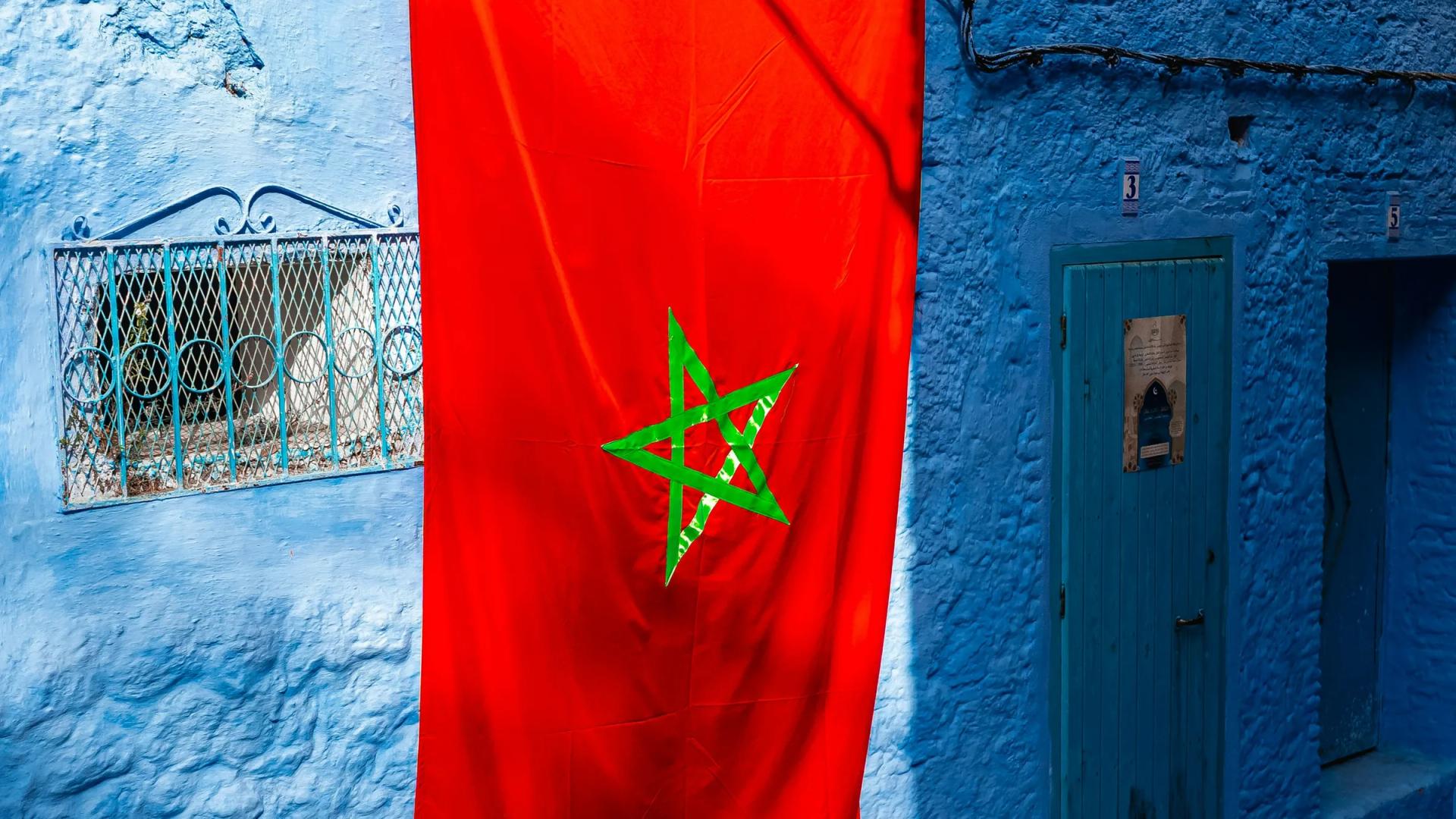
Chefchaouen (population around 45,000) is a small mountain town founded in 1471 as a refuge for Muslims and Jews fleeing the Spanish reconquista. Around 1930 the residents started painting the medina blue. There are several theories why (to repel insects, to mark Jewish identity, to keep the streets cool), but the result is the most photographed small town in Morocco. The medina is tiny, walkable in a few hours, and surrounded by the Rif mountains.
The headline attractions
Tangier, must-see
- The Kasbah Museum (great view of the strait, the Atlantic, and Spain on a clear day)
- Cap Spartel (where the Atlantic and Mediterranean meet)
- Caves of Hercules (just outside the city)
- Grand Socco and Petit Socco squares
- Medina walks and the renovated American Legation Museum (the first U.S. diplomatic property outside North America)
- Cafe Hafa (where the Beats and Mick Jagger drank mint tea on the cliff)
- Tangier Beach and the Corniche
- Day trip to Asilah (a smaller, even more charming coastal town)
- Day trip to Tetouan (UNESCO-listed Andalusian-style medina)
Chefchaouen, must-see
- Walk the entire blue medina (it is small, this is the whole point)
- Outa el Hammam square at sunset
- The 15th-century Kasbah with its small ethnographic museum
- Hike to the Spanish Mosque overlooking the town (45 min uphill, free, the best photo spot)
- Day hike to Akchour waterfalls (1 hour drive, then a 2-3 hour valley walk)
- Buy local goat cheese, wool blankets, and natural dyes
- Eat dinner in the square at golden hour
Atmosphere and pace
Tangier feels like a real, working, multilingual city. You hear Darija, French, Spanish, and increasingly English on the same street. It has nightlife (the Corniche bars), upscale restaurants, art galleries, and a hipster cafe scene around the renovated Cinema Rif. It is not a sleepy town. Tourist hassle in the medina exists but is moderate compared to Marrakech.
Chefchaouen is the opposite. It is small, slow, mountain-cool, and gentle. Tourist density is high in the central blue streets during the day, but at night the town empties out and feels like a village again. Almost no one drinks. Most things close by 10 PM. It is the kind of place where you walk the same square three times in two days.
Who lives there, who visits
Tangier attracts a wide mix: international business travelers, Spanish day-trippers, Moroccans from the rest of the country, expats (especially French and British), and increasingly cultural tourists looking for somewhere less obvious than Marrakech. It is becoming Morocco's New York.
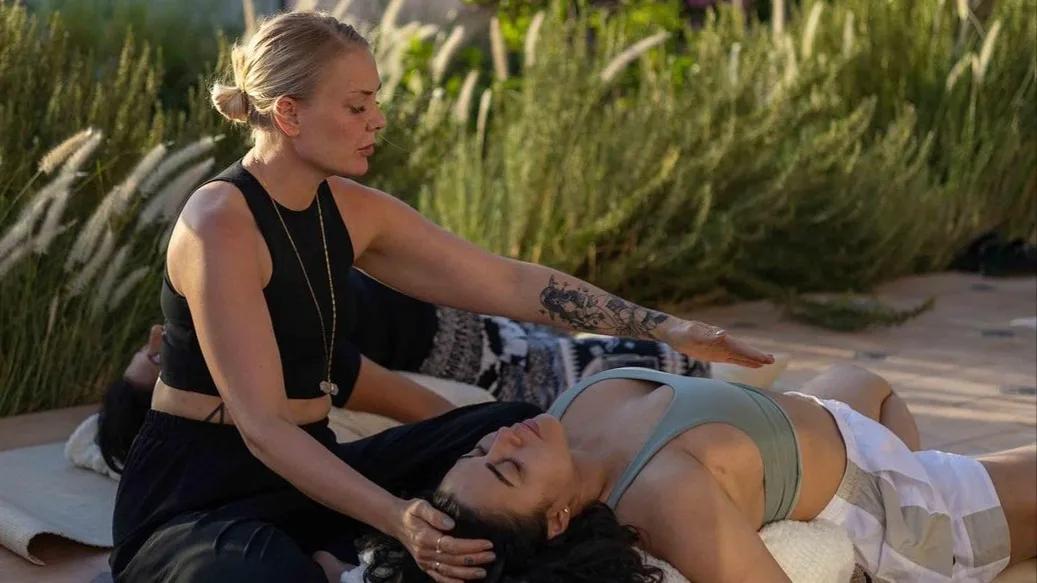
Chefchaouen attracts photographers, backpackers, retirees on slow trips, yoga retreat groups, and people who saw the blue streets on Instagram and want to walk them themselves. It is essentially a photography pilgrimage town that also happens to have great hiking.
Food
Tangier is the regional food capital. Strong seafood scene (especially around the port), good Mediterranean-Moroccan crossover restaurants, and the best Spanish food in Morocco outside Casablanca. Tapas bars, fresh fish, and Moroccan classics done well. Cafe culture is excellent.
Chefchaouen has limited but pleasant food. Goat cheese is a local specialty (a rarity in Morocco). Mountain tagines with prunes and almonds are excellent. There are no fancy restaurants, just dozens of cafe-restaurants on the squares serving similar honest menus. The mint tea is great because the mint grows in nearby valleys.
Cost
Both are reasonably priced, but Chefchaouen is cheaper:
- Mid-range guesthouse in Chefchaouen: 400 to 800 MAD per night
- Mid-range hotel in Tangier: 700 to 1,400 MAD per night
- Tagine for two in Chefchaouen: 150 to 250 MAD
- Tagine for two in Tangier: 200 to 400 MAD
Tangier has more luxury options (the Hilton Tangier, the Hotel Continental, several renovated boutique riads) at prices similar to mid-range European cities. Chefchaouen tops out at boutique guesthouses at around 1,200 MAD per night; there is no luxury hotel.
Weather
Both are coolers than southern Morocco:
- Tangier: Mediterranean climate. Summers warm (24 to 30 C). Winters mild but rainy (10 to 16 C). Windy in spring.
- Chefchaouen: Mountain climate at 600 m. Summers warm in the day, cool at night. Winters cold, occasional snow on the surrounding peaks. Rainy fall and winter.
For winter trips, Tangier is more comfortable. For summer escapes from southern heat, Chefchaouen is the move.
How long to stay
Tangier: 2 to 3 nights is a great fit. Day 1 the kasbah, medina, and Cafe Hafa. Day 2 Cap Spartel and Hercules caves. Day 3 a day trip to Asilah or Tetouan.
Chefchaouen: 1 to 2 nights. Honestly one full day plus a morning is enough for most travelers. Add a second night if you want to hike to Akchour.
How to combine them
The best northern Morocco itinerary uses Tangier as a base and Chefchaouen as a 1-night side trip:
- Night 1-2: Tangier
- Night 3: Chefchaouen
- Night 4 (optional): Tetouan or back to Tangier
- Onward to Fez by train or to Spain by ferry
Or, if coming from the south:
- Fly into Fez
- 2-3 nights in Fez
- Bus or transfer to Chefchaouen, 1 night
- Bus or transfer to Tangier, 2 nights
- Fly home or ferry to Spain
Who should pick Tangier
- You are flying into Tangier or arriving by ferry
- You want a real city with food, nightlife, and culture
- You are pairing Morocco with a Spain trip
- You like architectural depth and literary history
- You want a base for day trips (Asilah, Tetouan, Cap Spartel)
Who should pick Chefchaouen
- You came for the photos
- You want a slow, restorative mountain stop
- You hike
- You are on a yoga or wellness trip
- You only have one northern stop and want the iconic one
FAQ
Is Chefchaouen worth visiting
Yes, if you have the time to add 1 to 2 nights or a full day trip. It is one of the most photogenic small towns in the world and a unique cultural experience. If your itinerary is tight, Tangier is easier to reach.
How far is Chefchaouen from Tangier
About 115 km, roughly 2 hours by road. Buses cost 50 MAD on CTM or Supratours. Private transfers run around 1,000 MAD.
Can you do Chefchaouen as a day trip
Yes, from Tangier or Fez. Day tour companies offer round-trip transport with 4 to 5 hours in town. It is rushed but doable. An overnight gives you the magical late-afternoon and early-morning light.
Why is Chefchaouen blue
The most common theory is that the Jewish community painted the houses blue from the 1930s to mark their quarter and symbolize the sky. Others suggest it repels insects or keeps streets cool. Today the painting is maintained for tradition (and tourism).
Is Tangier safe
Yes, generally safe with the same urban precautions you would use anywhere. The port area and some medina alleys can have pickpockets and persistent fake guides. See our Morocco safety guide for details.
Can you take a ferry from Tangier to Spain
Yes. Ferries from Tangier Med (the new port, 40 km east of the city) and from Tangier Ville (the city port) run to Tarifa and Algeciras multiple times daily. Crossing is 1 to 2 hours.
What language do they speak in Chefchaouen and Tangier
Darija (Moroccan Arabic) is the main language. Spanish is widely understood in both, more than French in some neighborhoods (especially Chefchaouen and inland Rif areas). See our languages of Morocco guide for the full picture.
Is there a beach in Chefchaouen
No. Chefchaouen is a mountain town, around 70 km inland from the Mediterranean. The closest beach is Oued Laou, about 90 minutes by road.
Are Tangier and Chefchaouen colder than Marrakech
Yes, both. Tangier has a Mediterranean climate and can be quite mild in winter. Chefchaouen sits at 600 m elevation and can be cold in winter, with occasional snow on the surrounding peaks. Both are significantly cooler than Marrakech in summer.