Morocco welcomes around 14 million international visitors a year, and the U.S. State Department lists it at Level 2: Exercise Increased Caution, which is the same level given to France, the UK, Italy, and most of Western Europe. For context, that means routine awareness, not "avoid travel." Americans travel to Morocco safely every day, including solo women, families with young children, and older couples on cruise excursions.
That said, "safe" does not mean "no friction." Morocco has its own specific patterns of petty crime, tourist scams, and cultural friction points that catch Americans off guard if nobody warns them. This guide is the honest version, written from the perspective of people who live here, not a generic travel-blog reassurance.
The big picture: what the data actually says
Violent crime against tourists is rare. Murders, armed robberies, and assaults targeting foreigners are statistically very low compared to most U.S. cities. The U.S. State Department's main concerns are:
- Petty theft and scams in tourist medinas (Marrakech, Fez, Tangier)
- Terrorism risk is rated low but possible in any country in the region, with the last significant tourist-targeted incident in 2018
- Demonstrations in Rabat and Casablanca, which are almost always peaceful and easy to avoid
- Driving risks, which are higher than in the U.S. due to chaotic urban traffic
If you take normal urban precautions (the same ones you would use in New York or Paris), you will almost certainly have a smooth trip.
What actually happens to American tourists
The realistic risk profile, ranked by how often it happens:
1. Souk scams (the most common issue)
In the medinas of Marrakech and Fez, you will be approached by strangers offering to "show you the way," "guide you to the tanneries," or warn you that "the square is closed today, follow me." Roughly 80% of bad tourist experiences in Morocco start this way.
The play: they walk you to a shop where you are pressured to buy carpets, leather, or argan oil at 5 to 10 times the fair price, and they take a commission. Or they walk you in circles and demand a large tip at the end.
Defense: Politely say La, shukran (no, thank you) and keep walking without eye contact. If you need directions, ask inside a shop or cafe instead of accepting help from someone on the street.
2. Taxi overcharging
Petit taxis (the small in-city taxis) are legally required to use the meter. Many drivers in tourist areas will refuse and quote a flat fare 3 to 5 times the real price.
Defense: Ask for the meter (compteur, sil vous plait) before getting in. If they refuse, get out and find another taxi. Or use the inDrive app, which is widely used in Casablanca and Marrakech and works like Uber.
3. Pickpocketing in crowded spaces
Jemaa el-Fna at peak hour, packed buses, and the Marrakech medina entrances are the main hotspots. Phones in back pockets and unzipped bags are the typical targets.
Defense: Front pockets only, a crossbody bag worn in front in crowds, no flashy jewelry. The same rules you would follow at Times Square.
4. Photo scams
Snake charmers, monkey handlers, and water sellers in Jemaa el-Fna will pose for photos and then aggressively demand large tips. Even a quick snap from across the square can prompt a chase.
Defense: If you want the photo, agree on the price first (20 MAD is reasonable). Otherwise, take wide square shots from above (rooftop cafes are perfect) where nobody is identifiable.
5. Romance scams (online)
Mainly affects older travelers who meet someone on Facebook, Instagram, or Tinder before arriving. The pattern: an attractive local "falls in love," then needs money for a sick relative, a visa, or a flight to visit the U.S. This is one of the few patterns where significant sums of money are routinely lost.
Defense: Never wire money. Never send Western Union to someone you have not met in person.
Is Morocco safe for women, including solo
Yes, with caveats. Catcalling, persistent attention, and unsolicited "marriage proposals" are common in tourist medinas and on city streets, especially Marrakech and Tangier. They are almost always verbal, not physical. Solo female travelers report it ranges from background noise to genuinely exhausting depending on personality.
What helps:
- Dress modestly: Shoulders and knees covered. You can still wear what you want, but it makes the day quieter.
- Sunglasses and walking pace: No eye contact, steady walking pace, no hesitation, signals "I am not lost."
- Stay in central, well-reviewed riads rather than apartments in unknown neighborhoods.
- Travel between cities by train (ONCF is excellent) rather than night buses.
We have a deeper guide on this: solo female travel in Morocco.
Is Morocco safe for LGBTQ travelers
This is the most honest section in this post: same-sex relations are technically illegal under Moroccan law (Article 489 of the penal code), though enforcement against tourists is essentially nonexistent. Discreet same-sex couples travel here all the time, share riad rooms, and have no issues.
What to keep in mind:
- Public displays of affection are inadvisable for any couple, gay or straight, in conservative areas
- Some riads are visibly welcoming; others are more traditional. Read recent reviews.
- The risk is overwhelmingly social (uncomfortable conversations) rather than legal, but the legal status is real and worth knowing before you go
Areas to be more careful
A few specific places deserve extra awareness:
- Marrakech medina at night: Generally fine in the main arteries, much sketchier in dark side alleys. Walk with purpose.
- Tangier port area: Pickpockets and overly persistent fake guides target arrivals from the ferries.
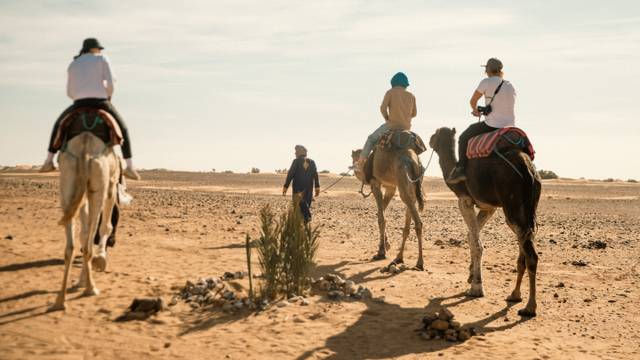
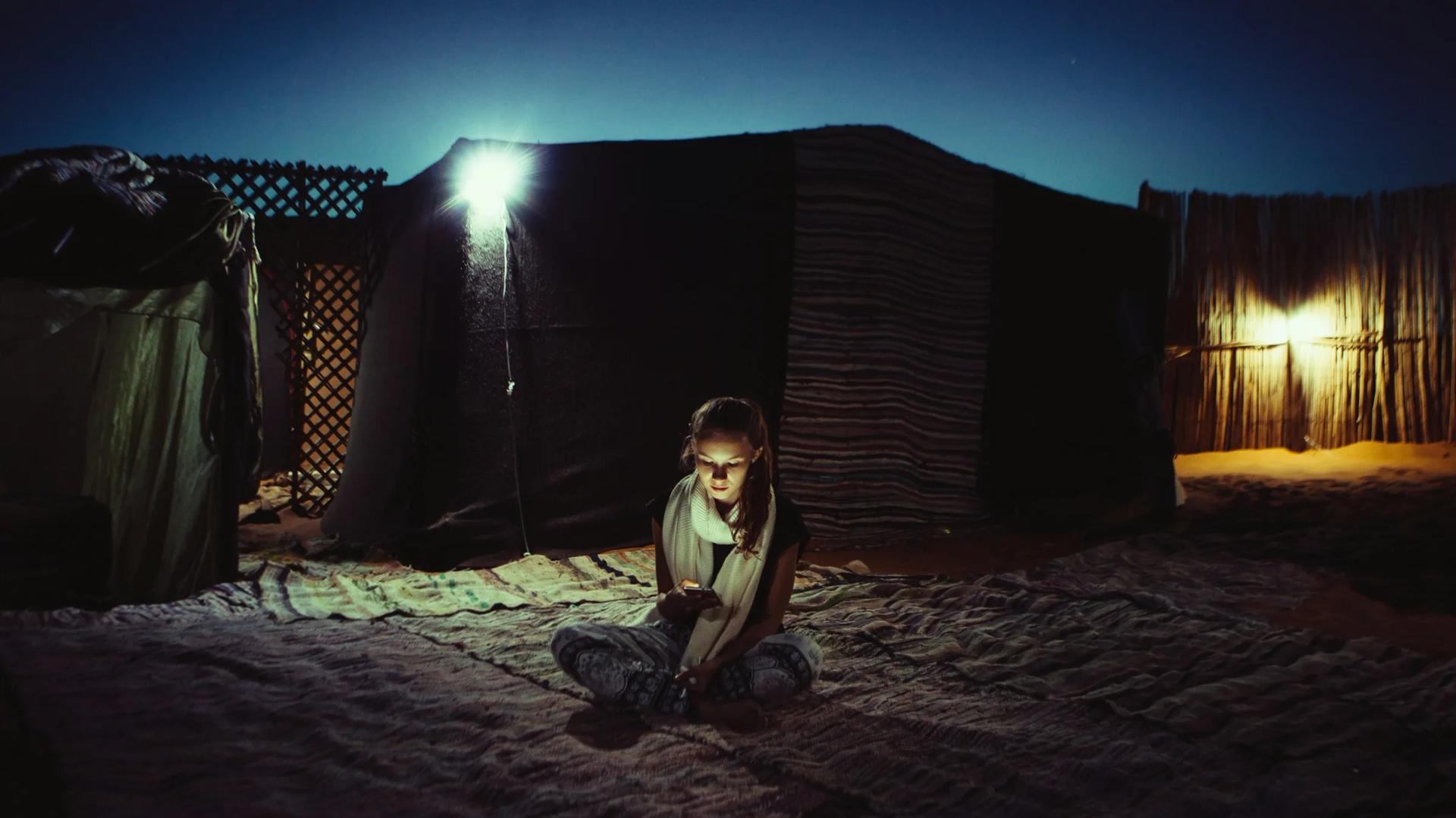
- Sahara desert tours: Pick a well-reviewed operator. Cheap shared 4x4 tours occasionally have issues with breakdowns far from help.
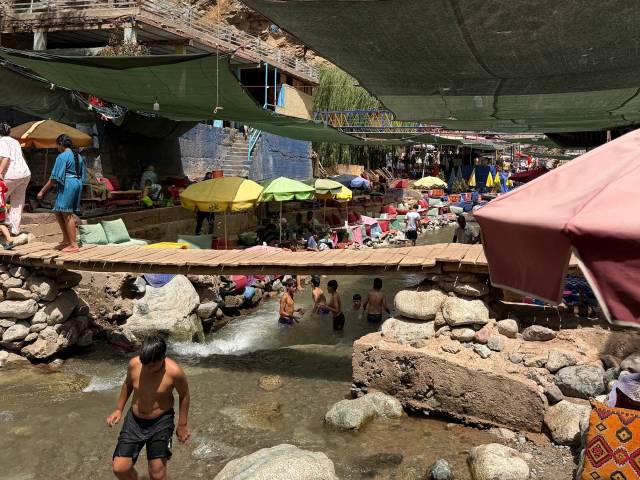
- Atlas mountain hikes: Always tell your riad your route. Cell coverage drops fast.
Areas that are extra safe
Some destinations in Morocco are remarkably hassle-free for first-time visitors:
- Chefchaouen: Small, walkable, mostly female-friendly, fewer scams
- Essaouira: Laid-back coastal town, lower-pressure souks
- Rabat: The capital is quieter and more residential than Marrakech
- Agadir: Beach-resort feel, less medina chaos
Health and emergency essentials
- Tap water: Drink bottled. Brushing teeth with tap water is fine.
- Travel insurance: Strongly recommended. Quality private hospitals (Polyclinique du Sud in Marrakech, Clinique du Littoral in Casablanca) accept foreign insurance.
- Emergency number: 19 for police, 15 for ambulance.
- U.S. Embassy: ma.usembassy.gov, located in Rabat, can issue emergency passports.
Bottom line
For the vast majority of American travelers, Morocco is safer than most international destinations they have already visited. The friction is real but manageable: it is mostly low-stakes hassle (scams, catcalling, persistent vendors) rather than dangerous crime. Travelers who arrive with realistic expectations and a few key local phrases consistently have great trips.
If you want to skip even the low-stakes hassle, the best move is to start your trip with a guided local experience (a cooking class, a souk tour with a licensed guide) so you build context and confidence on day one instead of figuring it all out at the medina entrance.
FAQ
Is Morocco safe for American tourists in 2026
Yes. The U.S. State Department rates Morocco at Level 2 (Exercise Increased Caution), the same level as France or Italy. Violent crime against tourists is rare. The main risks are scams, pickpocketing, and persistent vendors in tourist medinas.
Is Marrakech safe at night
Generally yes in the main streets, Jemaa el-Fna square, and well-lit areas. Avoid wandering deep into medina side alleys alone after dark. Use registered taxis to return to your riad.
Is Morocco safe for solo female travelers
Yes, with the caveat that catcalling and persistent attention from street vendors is common, especially in Marrakech and Tangier. It is almost always verbal, not physical. Dressing modestly and projecting confident body language helps a lot.
What is the biggest scam to avoid in Morocco
The "the square is closed, follow me" routine in Marrakech and Fez medinas. Strangers offer to guide you somewhere, then walk you to a shop where you are pressured to buy. Politely refuse and keep walking.
Is the food safe to eat
Restaurant food and cooked street food in busy stalls are generally fine. Stick to bottled water for drinking and brushing if you have a sensitive stomach. Avoid raw salads in places without a strong reputation.
Are taxis safe in Morocco
Yes, but insist on the meter (compteur) in petit taxis, or use the inDrive app for transparent pricing. Grand taxis (shared longer-distance) are safe but cramped.
Is it safe to travel to Morocco with children
Yes. Moroccan culture is famously welcoming to children. Marrakech, Fez, Essaouira, and the Atlas mountains are all family-friendly. Riads with pools are easier than crowded medinas with toddlers.
What is the safest city in Morocco for first-time visitors
Chefchaouen and Essaouira are the most hassle-free. Both are small, walkable, and have softer-pressure souks. Marrakech is the most exciting but also the most overwhelming for first-timers.