The Kingdom That Photographs Itself
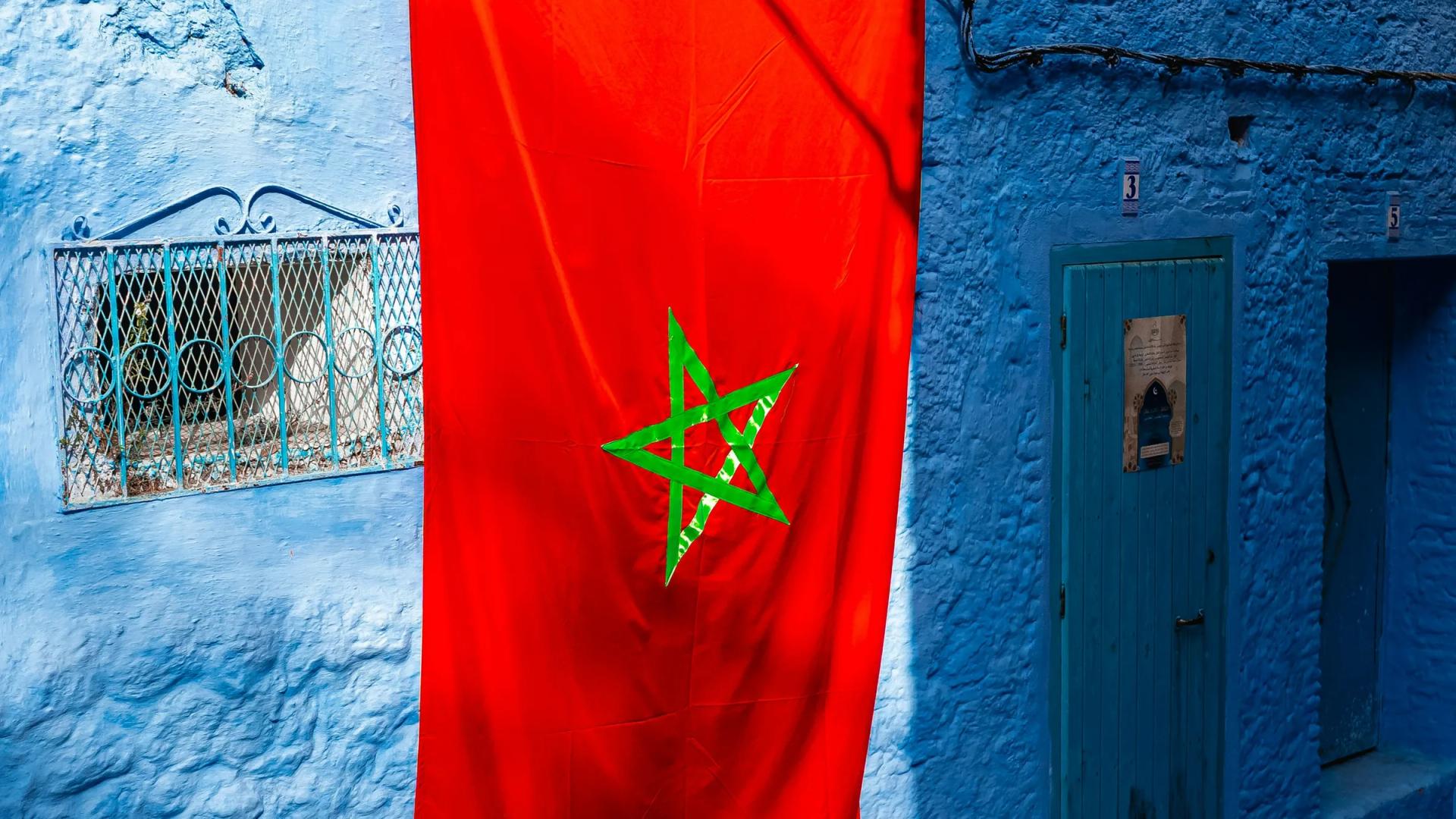
Morocco is one of the most photographed countries on earth. The red walls, the blue alleys, the golden dunes, the mountain villages, and the chaotic architecture of the souks. Most travellers go home with the best photos they have ever taken. But there are written and unwritten rules that decide whether your photos are wonderful memories or sources of regret. Here is the honest guide.
Rule One: Ask Before Photographing People
The single most important rule. Moroccans are the most photographed people in North Africa. Many are tired of being photographed without permission, especially in the medinas where new tourists arrive every day with their cameras.
The simple practice:
- If a person is the subject of the shot (not just part of a wide street scene), ask first
- A simple gesture toward the camera, raised eyebrows, a smile, works in any language
- "Mumkin sura?" in Moroccan dialect (may I take a photo?) is appreciated
- "Photo s'il vous plaît?" in French works everywhere
If they say no, smile, lower the camera, and move on. Do not argue. Do not steal a quick shot from the hip. Both are bad practice and both are obvious.
If they say yes, you may be asked for a small tip. 10 to 30 dirhams is standard for a posed photo of a craftsman, vendor, or street performer. If the snake charmer in Djemaa el-Fna says yes, expect to pay 30 to 50 dirhams. If a shopkeeper says yes while you are browsing, no tip is needed, but it is polite to buy something small.
Where to Tip and Where Not To
Always tip:
- Snake charmers, monkey handlers, henna ladies in Djemaa el-Fna square (30 to 50 dirhams)
- Folk performers (musicians, storytellers, dancers): 20 to 30 dirhams
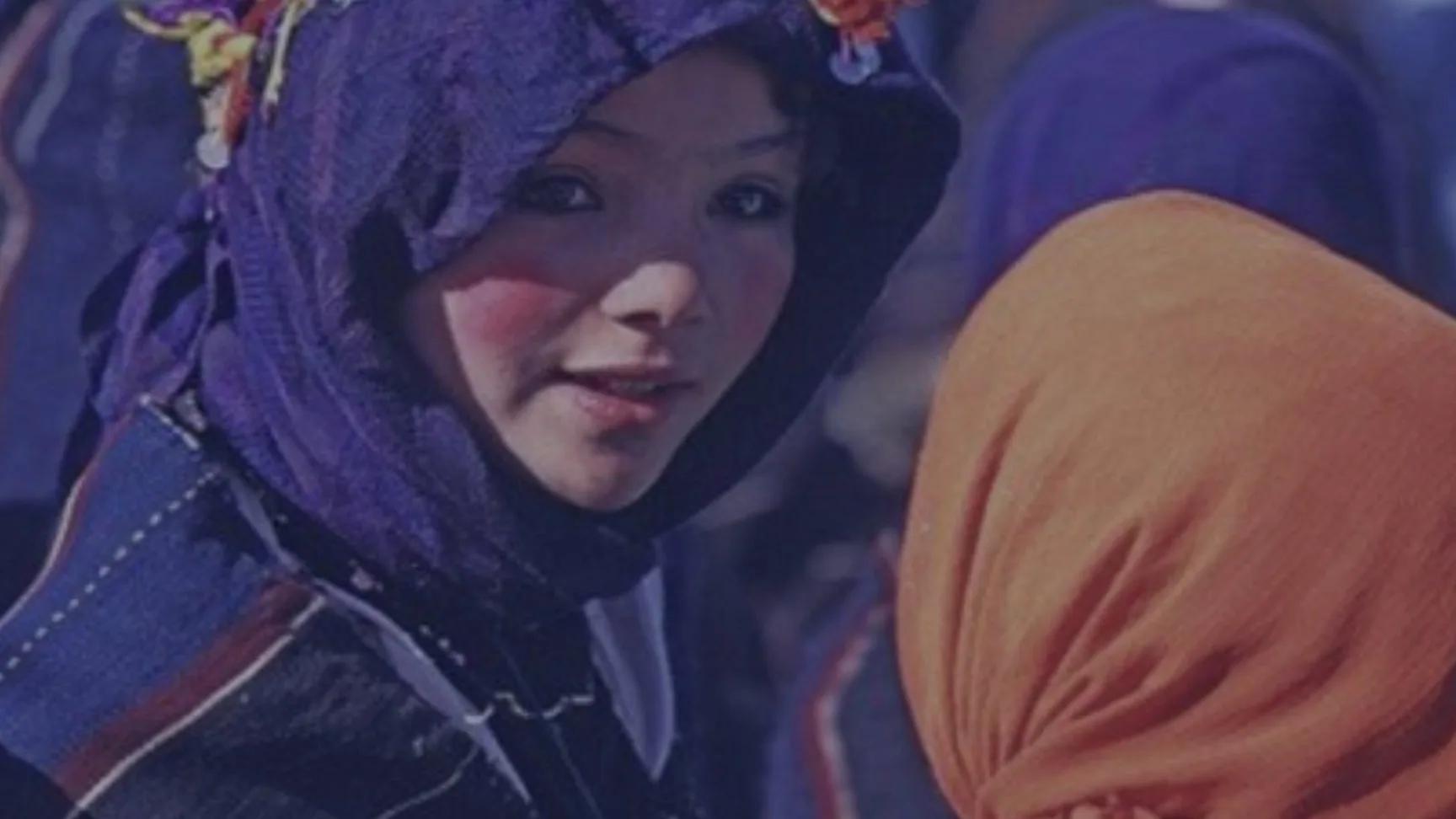
- Berber women in colourful dress at viewpoints (usually 20 dirhams per photo, agreed in advance)
- Posed photos of craftsmen in their workshops (10 to 30 dirhams, or buy something small)
Do not tip:
- People you captured in a wide street scene where they are not the focus
- People who demand "one dirham for the photo" whom you did not photograph
- Friends or hosts at a meal or social occasion
- Children. Never give money to children for photos. It teaches harmful behaviour. If you want to give them something, give pencils, a small toy, or nothing.
Forbidden and Restricted Photography
Morocco is generally relaxed about photography, but a few categories are forbidden by law or custom.
Forbidden:
- Royal palaces, royal residences, and royal vehicles. This includes the gates and walls of any royal palace in use. The Sultan's palace in Fes (the gates are famous, you can stand in the square but guards may challenge obvious photos of the palace).
- Police stations, military installations, and border points.
- Any government building with a guard at the entrance.
- The interior of mosques (you cannot enter as a non-Muslim, except the Hassan II Mosque in Casablanca, which has a guided tour).
Restricted by custom:
- Inside private homes without explicit permission
- Inside hammams (no cameras allowed, ever)
- Souk stalls without the shopkeeper's permission (most are fine if you ask, some are not)
- Religious schools (medersas) sometimes restrict interior photography
- Shrines of saints (zaouias) are open to non-Muslims in some cases, and photography varies
When in doubt, ask. A polite question always gets a better response than a quick assumption.
Drone Rules in 2026
This is the most frequently asked question. The honest answer is complicated.
Drones are largely banned in Morocco. Officially, importing a drone requires a permit from the Ministry of Communication, obtained in advance. Flying a drone in public places without a licence is illegal. Customs officers at airports have been confiscating drones from travellers for several years.
In practice:
- Many tourists bring drones in their checked luggage and are not stopped
- A growing number are stopped and the drone is confiscated, then returned to them when they leave the country
- Flying a drone in Marrakech (over the medina, near Djemaa el-Fna square, near the airport) is risky and likely to attract police attention
- Flying a drone in remote areas (desert dunes, Atlas peaks) is more relaxed but still officially illegal without permits
If your itinerary is built around drone footage, apply for the permit in advance through your country's Moroccan embassy. If you are casually planning a few drone shots, accept that you may lose the drone at customs and that you should not fly it in the cities.
For most travellers, leave the drone at home. Use a phone with a wide lens. Use a real camera with a good lens. Modern cameras and phones produce exceptional photos and videos without aerial shots.
The Best Times of Day for Each Place
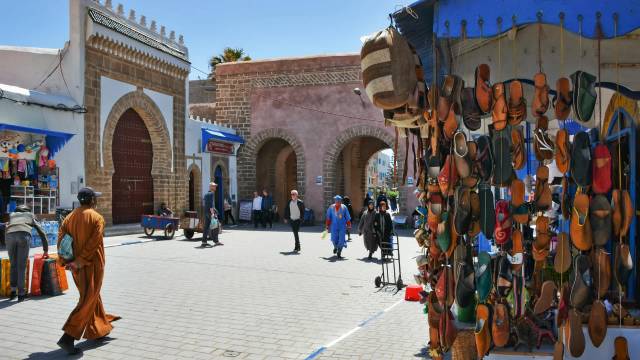
The Marrakech medina. Afternoon and the golden hour (one hour before sunset). The red walls glow. The light reflects in the alleys. The crowds are thinner because the shops close briefly before iftar. After dark, Djemaa el-Fna square comes alive with food stalls and rising steam at night.
Bahia Palace, the Saadian Tombs, Ben Youssef Medersa. Mid-morning (10am to 11:30am) when the light fills the courtyards. Avoid midday (light from above) and the afternoon when these courtyards lose direct light.
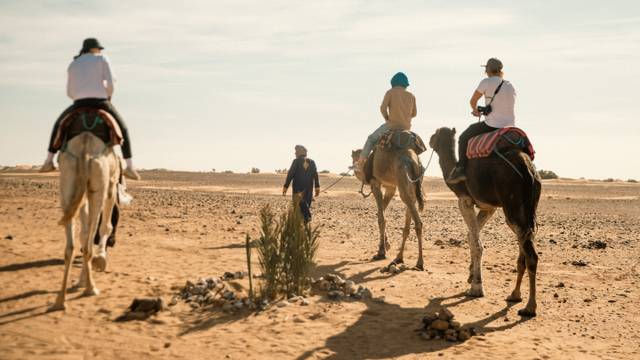
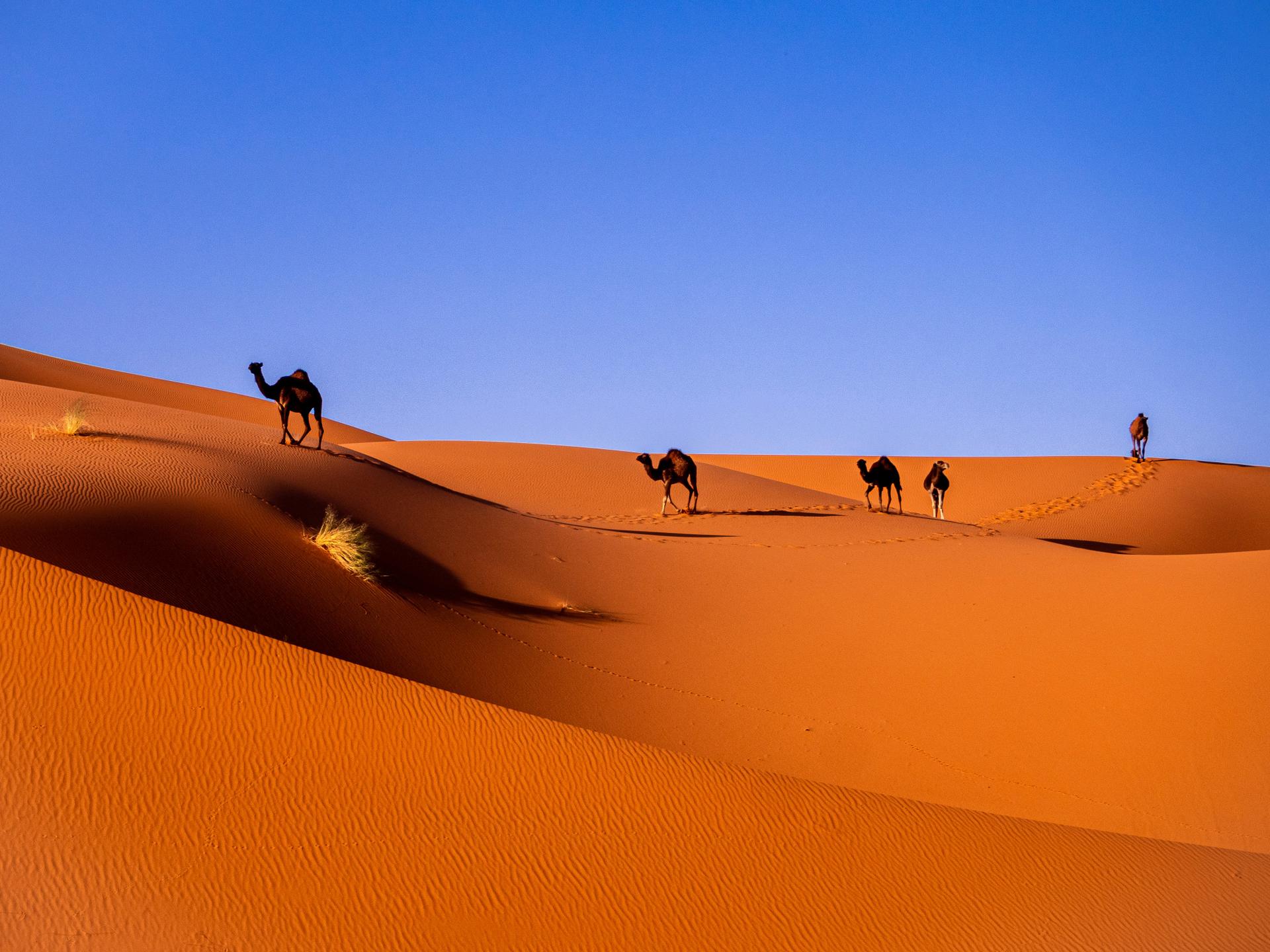
The desert dunes. Sunrise and sunset, only. The dunes glow orange to red. Midday is harsh and flat. Bring a wide lens and a long lens (a long lens compresses the dunes beautifully). Have your camera ready 30 minutes before sunrise. Walk away from the camp to avoid camp traces in your shot.
The Atlas Mountains. Morning is best in summer (clear skies, less haze). Afternoon is dramatic in winter (snow and clouds). Afternoon for the villages.
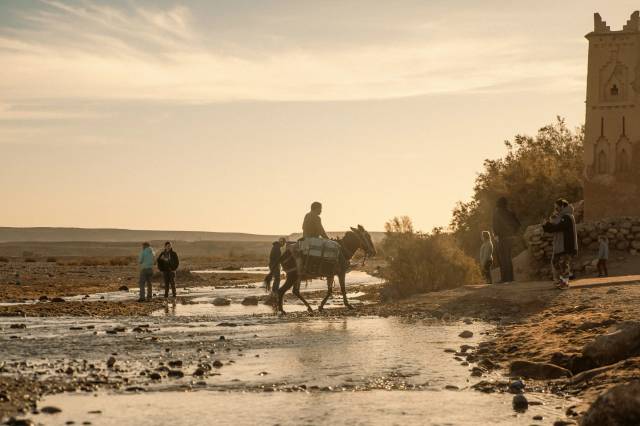
Aït Benhaddou. Afternoon, without a doubt. The kasbah glows orange against a blue sky. The light at sunset from the riverside is the famous shot. Sunrise from the top of the kasbah is also exceptional, with few tourists.
Chefchaouen. Morning (7am to 9am) before the tour groups arrive. The blue alleys are best in the soft morning light. After 11am the streets are crowded.
The Fes medina. The tanneries are best photographed in mid-morning (10am to 12pm) when the leather workers are active and the colours are at their best.
Essaouira. Afternoon at the harbour (boats, seagulls, workers). Morning on the medina ramparts (light over the Atlantic).
Lens and Gear Recommendations
For most travellers, a single lens setup is enough.
Phone only. A modern iPhone (12 or later) or Pixel produces excellent photos in 90% of situations. The wide and ultra-wide lenses cover most needs. Night mode handles the medina at dusk. The only thing a phone cannot do well is good telephoto and moving low-light subjects.
Camera with a lens. A mirrorless camera with a versatile 24-70mm zoom covers almost everything, from wide street scenes to portraits, and a small prime lens handles low-light interiors and the desert at dawn.