La règle d'or, avant toute chose
Le Maroc est plus souple en matière vestimentaire que ce que de nombreux guides de voyage laissent entendre, mais il est aussi plus traditionnel que ce à quoi certains voyageurs s'attendent. Après avoir accueilli des voyageurs du monde entier, j'ai constaté à quel point les vêtements peuvent influencer votre ressenti, la manière dont les gens interagissent avec vous et votre niveau de confort.
Dans des villes comme Marrakech, Casablanca, Rabat et Tanger, vous verrez presque de tout. Le Maroc est un pays moderne, et les femmes marocaines elles-mêmes portent aussi bien des djellabas et des caftans traditionnels que des jeans, des T-shirts, des robes et des sandales.
Dans les petites villes, les villages traditionnels, la médina de Marrakech, Fès et les zones plus rurales, les gens ont tendance à s'habiller de manière plus conservatrice. Cela ne signifie pas que vous devez vous couvrir entièrement. Cela signifie simplement qu'une tenue un peu plus modeste vous mettra généralement plus à l'aise et montrera votre respect pour la culture locale.
Ma règle simple est la suivante : si vous visitez une médina, un village ou un lieu religieux, couvrez vos épaules et vos genoux. En dehors de ces lieux, vous avez beaucoup plus de liberté de porter ce que vous voulez.
Et pour les femmes, il n'est pas obligatoire de porter un foulard en tant que touriste au Maroc. Vous verrez des femmes marocaines avec et sans foulard, portant de nombreux styles de vêtements différents. Le Maroc n'est pas uniforme partout, et il n'y a pas une seule façon de s'habiller pour tout le monde.
Pour moi, il ne s'agit pas de vous dire que vous ne pouvez pas porter quelque chose. Il s'agit de savoir où vous êtes, de comprendre la culture locale et de trouver un équilibre entre être élégant, se sentir confiant et être respectueux.
La médina de Marrakech vs Guéliz
La médina (la ville fortifiée) est plus conservatrice. La nouvelle ville (Guéliz, Hivernage) est essentiellement une ville moderne. Vous pouvez porter un short et un T-shirt à Guéliz. Dans la médina, vous serez plus à l'aise et attirerez moins l'attention en couvrant vos épaules et vos genoux.
Pour les femmes : une longue jupe fluide ou une robe longue jusqu'aux chevilles, un pantalon ample en lin ou une robe longue conviennent à toutes les températures. Une chemise légère à manches longues ou un kimono par-dessus votre tenue couvre les épaules sans avoir trop chaud.
Pour les hommes : un pantalon léger en lin et une chemise à manches courtes sont idéaux. Les shorts sont techniquement acceptables, mais vous obtiendrez plus de respect dans la médina avec un pantalon long.
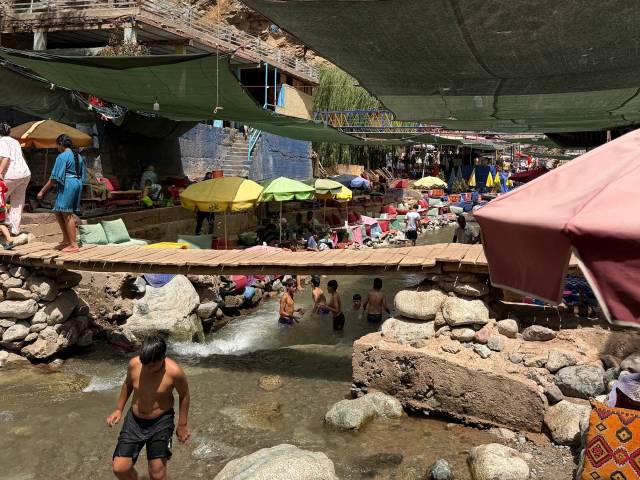
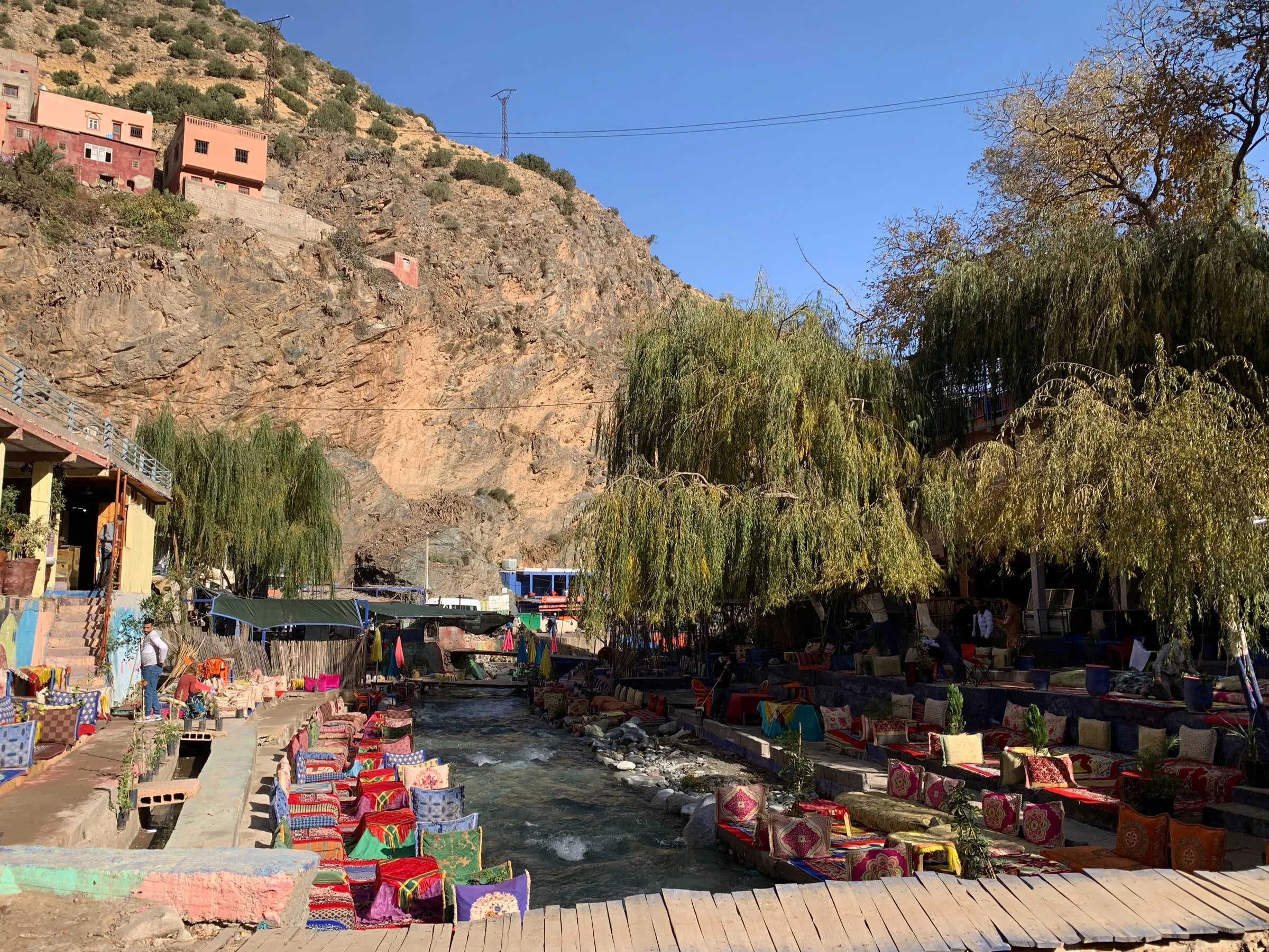
Les montagnes de l'Atlas : les couches.
L'Atlas surprend les touristes. Même en été, la température baisse de 15 à 20 degrés Celsius par rapport à Marrakech lorsque vous atteignez 1 800 mètres. En hiver, elle peut être inférieure à zéro à cette altitude. Portez toujours des couches.
Une liste de choses à emporter pratique pour l'Atlas (toutes saisons) :
- Un pull chaud ou une veste légère
- Un pantalon long (les pantalons convertibles sont utiles)
- Des chaussures de marche robustes (pas des baskets)
- Une veste coupe-vent (pour la pluie ou le vent soudains)
- Un bonnet chaud et un chapeau de soleil
- Une écharpe légère (polyvalente)
- De la crème solaire (le soleil à cette altitude est intense, même en hiver)
Image
Pour le camping spécifiquement (Toubkal, une nuit à Imlil) : de bonnes chaussures de randonnée, une couche de base thermique et des gants sont essentiels d'octobre à avril.
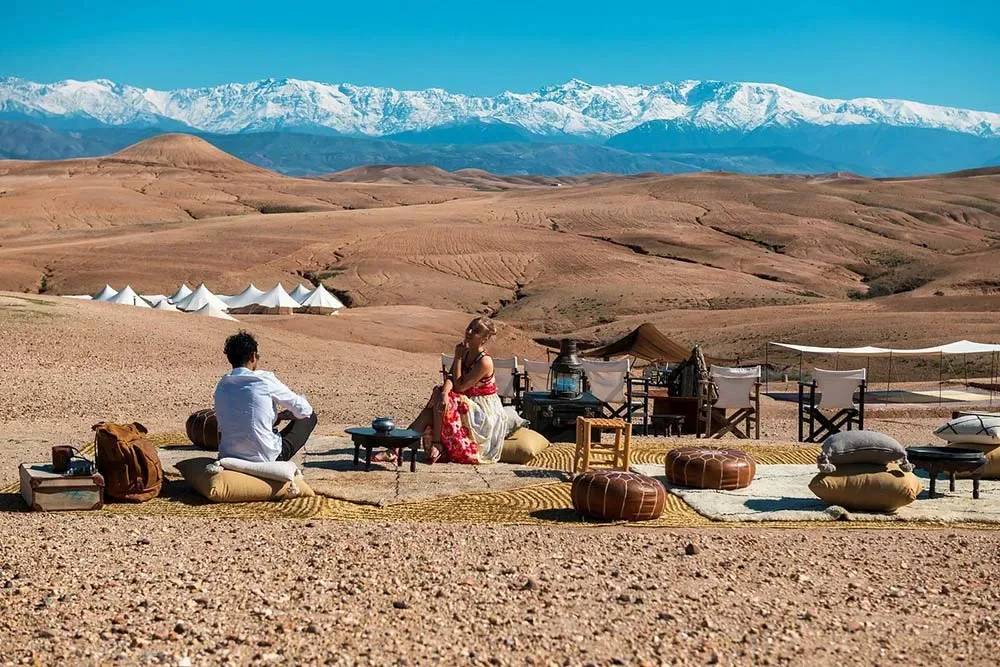
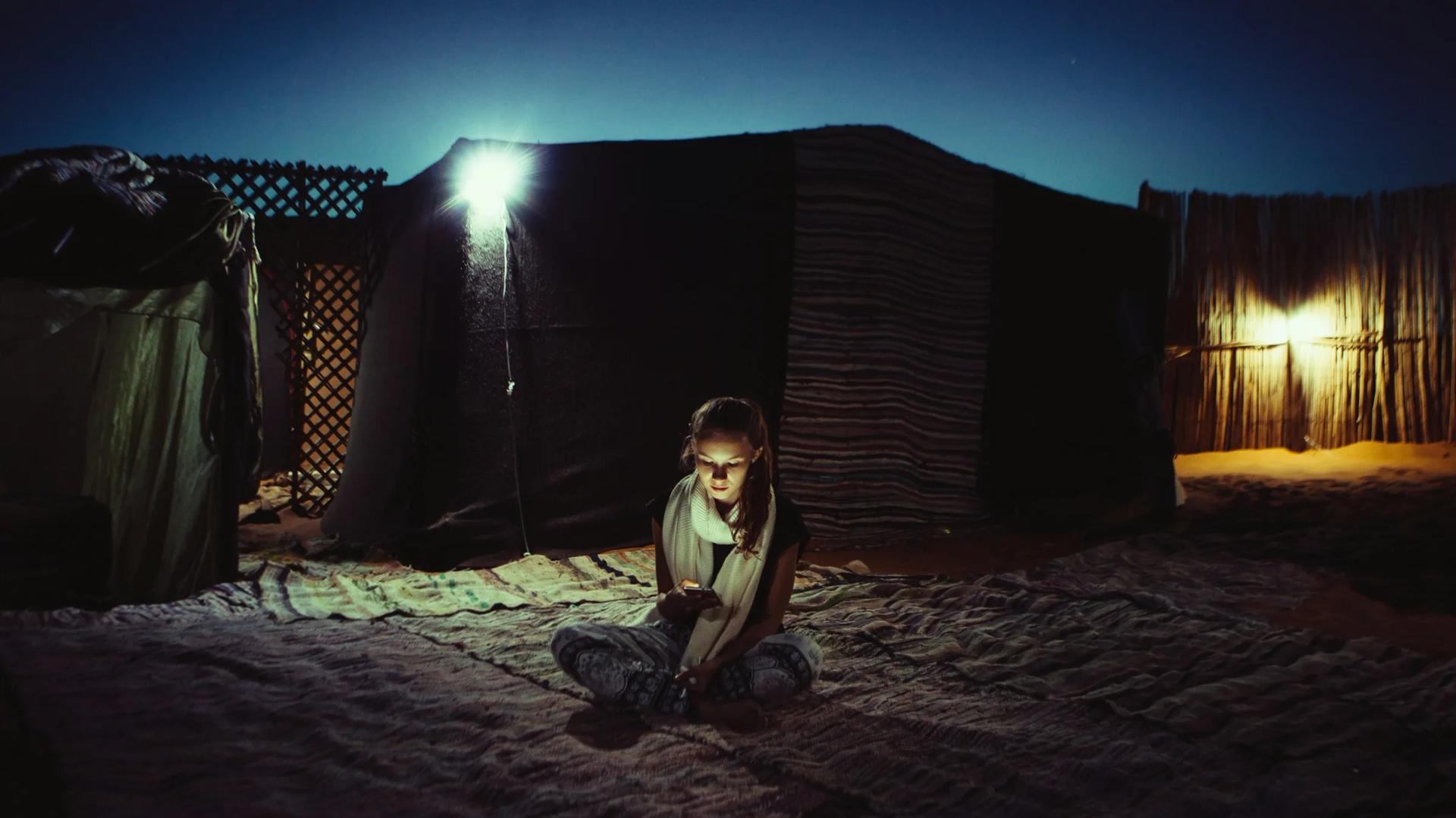
Le désert : journées chaudes, nuits froides
L'erreur la plus courante. Les touristes préparent des vêtements pour le temps chaud et arrivent dans le Sahara à 4 heures du matin pour trouver 5 degrés Celsius et du vent.
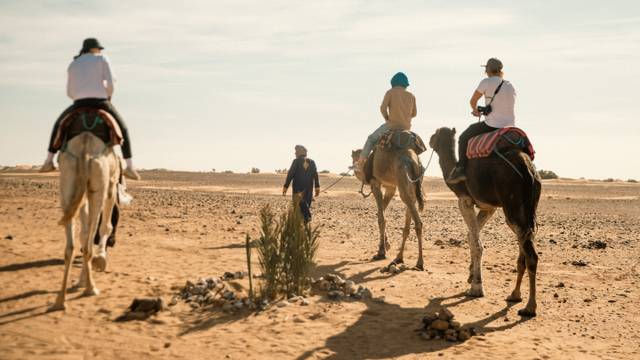
Dans le désert (le Sahara ou Agafay), vous aurez besoin de :
- Chemises amples à manches longues (lin ou coton, pas synthétique)
- Pantalons longs légers
- Une écharpe ou un chèche (essentiel pour le sable et le soleil)
- Des chaussures fermées pour le camp, des sandales pour le chameau
- Un manteau chaud pour la nuit, même en été
- Un chapeau à larges bords ou un foulard
the big sahara
Pourquoi des manches longues et des pantalons sous la chaleur du désert ? Ils vous protègent du soleil et maintiennent l'humidité près de votre peau. Vous aurez plus frais, et non plus chaud, avec des vêtements amples et longs qu'avec un short et des sandales.
Couleurs : les couleurs claires réfléchissent la chaleur. Le bleu foncé et le noir (la couleur des hommes berbères et touaregs) repoussent la chaleur corporelle vers l'extérieur, ce qui est surprenant mais efficace. Le blanc est une bonne option. Évitez les couleurs synthétiques vives. Elles ne conviennent pas au désert et emprisonnent la chaleur.
Journée hammam : ce dont vous avez besoin
Le hammam de quartier (60 à 80 dirhams) est un monde complètement différent du hammam de spa (400 à 1 000 dirhams). Les deux ont les mêmes règles de base concernant la tenue vestimentaire.
Que porter au hammam :
- Bas de sous-vêtements ou bas de bikini (pour les femmes)
- Shorts ou maillots de bain (pour les hommes)
Une chose importante : de nombreuses femmes qui travaillent dans les hammams se plaignent des touristes qui se dénudent dans le hammam. Il n'est pas respectueux de montrer vos parties intimes aux femmes, gardez toujours vos vêtements.
Ce qu'il faut apporter :
- Des sandales en plastique (essentielles, car le sol est mouillé et chaud)
- Un petit seau ou une tasse en plastique
- Du savon noir et un kessa (gant exfoliant)
- Un change de sous-vêtements pour après
- Une grande serviette (souvent non fournie dans les hammams économiques)
Dans un hammam de riad spa, tout est fourni. Vous entrez enveloppé dans un peignoir, ressortez enveloppé dans une serviette propre et buvez du thé à la menthe sur une chaise longue.
Chaussures : la décision la plus sous-estimée
La médina de Marrakech est pavée de manière inégale, parfois humide, et souvent bondée de mobylettes et de charrettes tirées par des ânes. Les chaussures sont importantes.
Ce qui fonctionne :
- Des chaussures de marche confortables ou des baskets
- Des sandales robustes avec une sangle (Tevas, Birkenstocks avec une sangle arrière)
Ce qui ne fonctionne pas :
- Les talons (vous vous tordrez une cheville)
- Les tongs (vos pieds seront noirs à l'heure du déjeuner et exposés aux éraflures)
- Les chaussures en cuir neuves et rigides (elles provoquent des ampoules en une heure)
L'Atlas : des chaussures de marche au minimum, des chaussures de randonnée pour toute excursion au-dessus du niveau du village.
Le désert : des chaussures fermées robustes pour le camp, des sandales légères pour le chameau, jamais de tongs.
Spécifiquement pour les femmes
Il y a des choses que vous n'avez pas besoin de faire :
- Couvrir vos cheveux (non requis nulle part sauf dans une mosquée en activité, où vous ne serez pas invitée)
- Porter des vêtements informes (vous verrez des femmes marocaines dans des créations contemporaines partout)
- Éviter la couleur (la médina est éclatante de couleurs)
Il y a des choses qui facilitent réellement les voyages en solo :
- Couvrir vos épaules dans la médina
- Couvrir vos genoux dans la médina
- Porter des lunettes de soleil (moins de contact visuel direct réduit l'attention indésirable)
- Réserver les robes sans manches pour la piscine du riad, pas pour les souks de la médina
Un uniforme simple fonctionne pour les femmes dans n'importe quelle ville marocaine : un pantalon ample taille haute, un chemisier ou une tunique légère à manches longues, un foulard dans votre sac pour les épaules ou les cheveux si nécessaire, et des chaussures confortables.
Spécifiquement pour les hommes
Shorts dans la médina : techniquement autorisés, mais visiblement déplacés (aucun homme marocain adulte ne porte de short dans la médina). Vous serez servi et tout ira bien, mais vous serez instantanément identifié comme un touriste. Si vous voulez réduire l'écart de prix dans le souk, portez un pantalon long.
Sites religieux et villages ruraux : pantalon long, chemise à manches courtes, pas de torse nu.
Un uniforme simple fonctionne pour les hommes dans n'importe quelle ville marocaine : pantalon léger en coton ou en lin, chemise à manches courtes ou longues avec col, chaussures de marche confortables, lunettes de soleil et chapeau.
Villes balnéaires : Essaouira, Agadir, Asilah
Les villes côtières sont presque européennes dans leur approche vestimentaire. Les bikinis et les shorts sont normaux sur la plage. Dans la vieille ville d'Asilah, les mêmes règles de la médina s'appliquent (épaules et genoux), mais l'ambiance est plus détendue qu'à Marrakech.
Prévoyez des couches. Le Maroc côtier est très venteux. Essaouira est fraîche et venteuse même en août.
Que mettre dans sa valise pour un voyage mixte de 7 jours (Marrakech, l'Atlas, le désert)
Pour un voyage de 7 jours au printemps ou en automne, pour deux personnes :
- 4 chemises à manches courtes chacun
- 2 chemises légères à manches longues chacun
- 2 pantalons longs et une jupe légère
- 1 pull ou une veste légère chacun
- 1 veste coupe-vent chacun
- 1 ensemble hammam (sandales, maillot de bain, serviette)
- 1 écharpe
- 2 paires de chaussures chacun (chaussures de marche confortables et sandales robustes)
- Lunettes de soleil, un chapeau de soleil et de la crème solaire
Cela couvre une ville, une montagne et un désert dans un seul sac chacun. Les couches sont tout le secret : le Maroc est rarement à une seule température toute la journée.