La Médina Mange Différemment de ce que les Menus de Restaurants Suggèrent
Si vous ne mangiez que ce que les menus de restaurants offrent à Marrakech, vous penseriez que le régime local se résume à tajine, couscous et pastilla, répétés trois fois par jour. En réalité, la médina a un rythme alimentaire complexe, avec des plats différents pour le matin, l'après-midi, le soir et la nuit tardive, chacun dans son propre quartier. Voici les 14 plats qui valent vraiment la peine d'être dégustés, ainsi que les endroits où les trouver.
Matin (6h à 11h)
- Bissara
Une soupe épaisse et réconfortante de fèves, mélangée avec du cumin, du paprika, de l'ail et de l'huile d'olive. À déguster avec des morceaux de khobz frais (pain marocain) pour tremper. Vendue dans de petits stands et de minuscules restaurants dès le lever du soleil. La portion est généreuse et le prix est d'environ 5 à 10 dirhams.
Où : il y a un célèbre stand de bissara juste à l'intérieur de Bab Doukkala, un autre près des souks d'épices, et plusieurs autour du marché alimentaire de Mellah.
Quand : uniquement le matin. À midi, les pots sont vides.
- Sfenj
Beignet marocain. Un anneau de pâte levée, frit devant vous, servi nature, avec du sucre ou du miel. L'extérieur croustillant et l'intérieur moelleux sont différents de tout beignet occidental. 2 à 3 dirhams chacun.
Où : des kiosques dédiés au sfenj ouvrent avant l'aube. Les meilleurs se trouvent près de Bab el Khemis et Bab Doukkala.
Astuce : demandez-en un avec du sucre, mangez-le sur place. Marcher et manger du sfenj est une tradition matinale à Marrakech.
- Msemen et Baghrir
Deux pains de petit-déjeuner à connaître.
Msemen est un pain plat carré plié, en couches avec du beurre et de l'huile, frit à la poêle jusqu'à ce qu'il soit doré, servi avec du miel ou de la confiture. Légèrement croustillant à l'extérieur, moelleux à l'intérieur.
Baghrir est la "crêpe aux mille trous", faite de semoule, avec une texture en nid d'abeille qui absorbe le beurre fondu et le miel. Spongieux, sucré et addictif.
Les deux 3 à 5 dirhams chacun à n'importe quel stand de petit-déjeuner.
- Harira à l'Aube
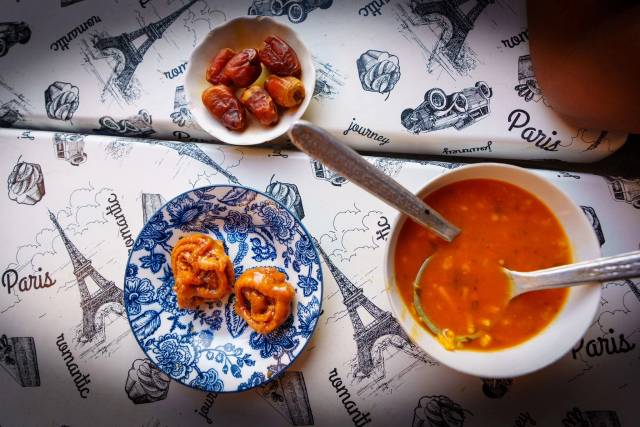
Oui, la harira est la célèbre soupe de rupture du jeûne du Ramadan. Mais c'est aussi un plat de l'aube toute l'année pour les travailleurs qui commencent leur service à 5h. Une base épaisse de tomate avec des pois chiches, des lentilles, de l'agneau, de la coriandre fraîche et une goutte de citron. Servie avec des dattes et des chebakia en accompagnement. Environ 10 à 15 dirhams.
Où : petits restaurants ouvriers ouverts à 4h près des portes de la médina. Demandez "harira sebbah" (harira du matin).
Déjeuner (12h à 15h)
- Tangia
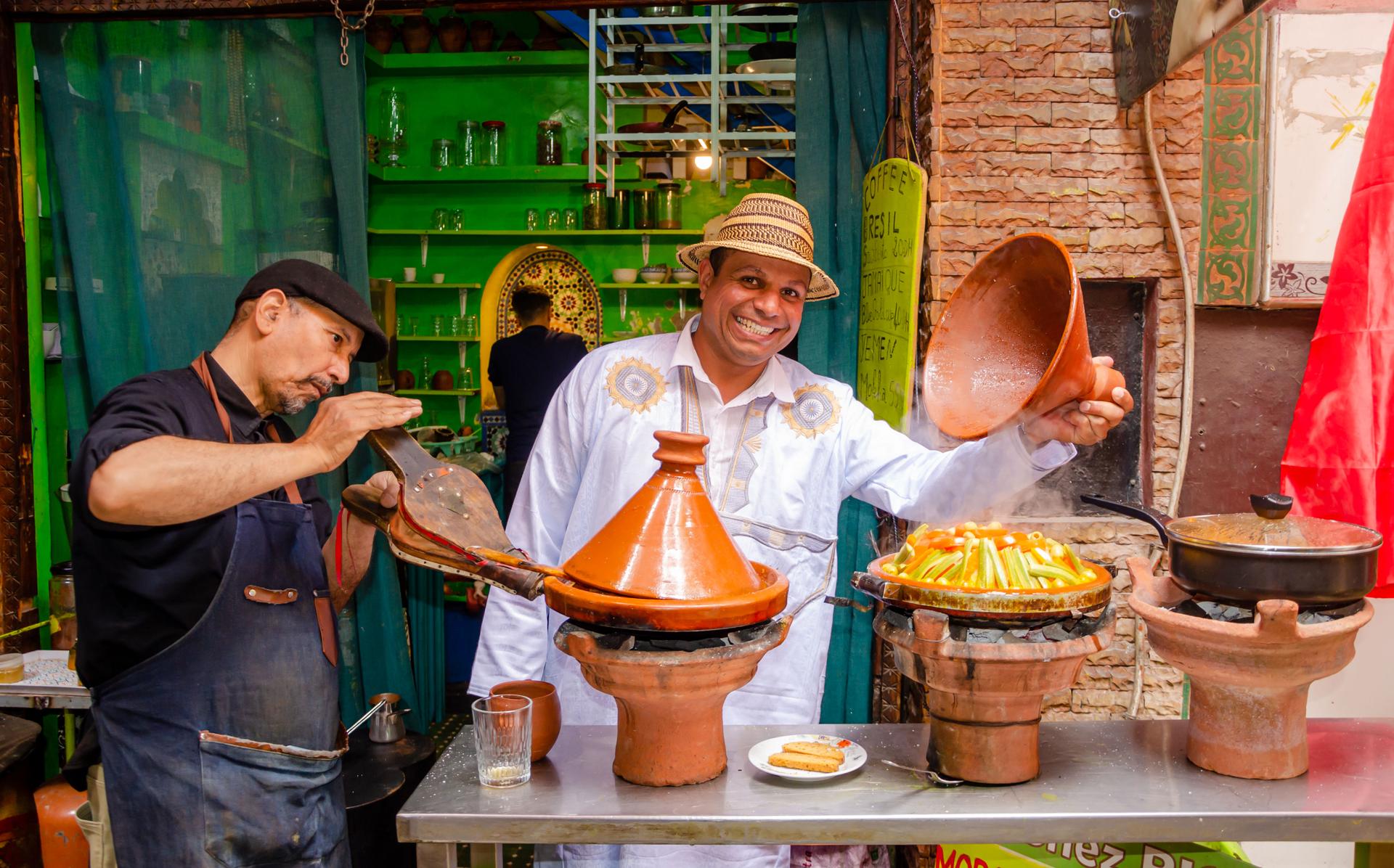
Le plat le plus associé à Marrakech spécifiquement. Agneau, ail, citron confit, cumin, safran, smen (beurre vieilli), scellés dans un pot en argile haut, puis cuits lentement pendant 6 à 8 heures dans les braises d'un four de hammam.
Le résultat : viande si tendre qu'elle glisse de l'os, riche en huile et profondément aromatique.
Où : endroits spécialisés près de la Place des Ferblantiers et Dar el Bacha, ou stands locaux dans le Mellah.
Astuce : la tangia est lourde. Commandez-en une à partager.
- Tajine de Poulet au Citron Confit et Olives
Le classique quotidien. Morceaux de poulet entier cuits lentement avec des olives vertes, du citron confit, du gingembre, du safran et des oignons. Lumineux, acidulé et salé.
Où : n'importe quel restaurant populaire dans la médina.
Prix : 50 à 80 dirhams localement, plus élevé dans les restaurants touristiques.
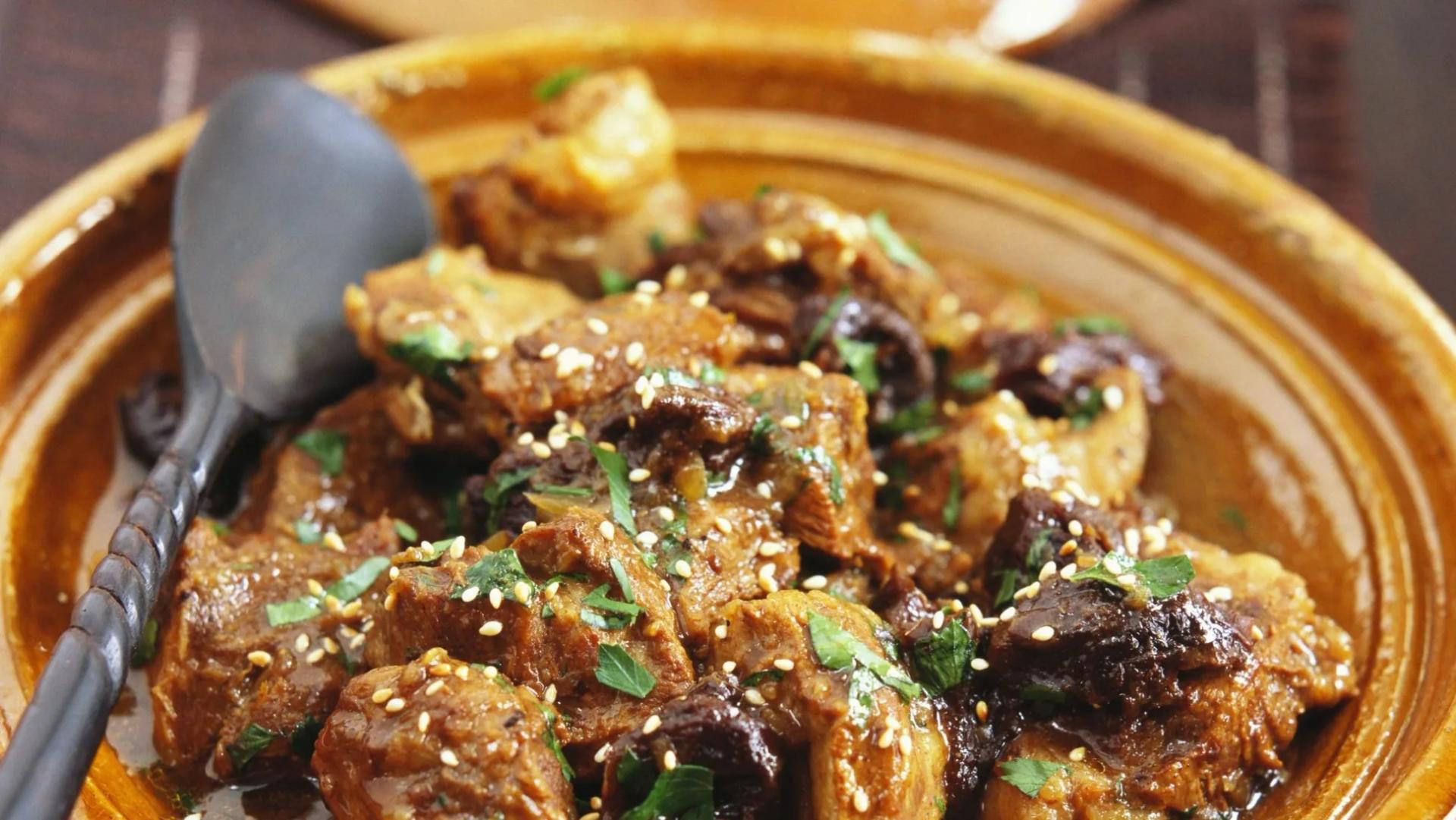
- Tajine d'Agneau aux Pruneaux et Amandes
Un classique sucré et salé. Agneau cuit avec des pruneaux, des amandes frites, de la cannelle et une légère touche florale.
Où : restaurants traditionnels, surtout ceux qui cuisent leur propre pain.
Prix : 80 à 130 dirhams.
- Pastilla
Originaire de Fès, mais bien préparée à Marrakech. Couches de pâte remplies de poulet ou de pigeon, amandes, œufs, cannelle et sucre.
Où : commandez dans des restaurants assis.
Prix : 90 à 150 dirhams.
Collations de l'Après-midi (15h à 18h)
- Soupe d'Escargots (Babouche)
Escargots bouillis dans un bouillon épicé de cumin, anis, thym et poivre. À déguster avec un cure-dent, suivi de la consommation du bouillon.
Où : chariots à Jemaa el Fna et près de Dar el Bacha.
Prix : 10 à 20 dirhams.
- Brochettes
Brochettes de viande grillées servies avec du pain et une salade simple. Kefta et boulfaf sont les plus populaires.
Où : Jemaa el Fna et endroits de grillades locaux dans la médina.
Prix : 15 à 25 dirhams par brochette.
Soirée à Jemaa el Fna (18h à 23h)
- Les Stands Qui Valent la Queue
Il y a des dizaines de stands, mais tous ne se valent pas. La clé est simple : suivez les familles marocaines, pas les vendeurs les plus bruyants.
Ce qu'il faut essayer :
Tajine de kefta aux œufs
Couscous du vendredi
Oubliez les boîtes touristiques, voici les vrais délices quotidiens :
Chebakia
Briouats
Sfenj au miel
Dattes farcies
Cookies Ghoriba
Nous avons tellement de locaux qui offrent ce type de tour gastronomique où vous pouvez essayer toutes ces dégustations. Vous pouvez choisir n'importe quel guide local et profiter du tour. La plupart des tours gastronomiques commencent à 18h ou 11h. Dites-nous dans les commentaires si vous l'avez déjà fait.
FAQ
Quels plats devrais-je essayer dans la médina de Marrakech
Commencez par la saucisse merguez grillée, la soupe harira, les crêpes msemen, les briouats, la tangia (viande cuite lentement dans un pot en argile de Marrakech), et un verre de jus d'orange frais de Jemaa el Fna. Gardez de la place pour la chebakia collante et un verre de thé à la menthe pour finir.
La nourriture de rue à Marrakech est-elle sûre
Principalement oui si vous mangez là où les locaux mangent et où la nourriture est cuite fraîche devant vous. Évitez les plats précuits sous des lampes chauffantes. Les viandes grillées, le pain frais, et la bissara préparée à la commande dans un stand propre ne causent presque jamais de problèmes.
Un tour gastronomique à Marrakech vaut-il le prix
Cela vaut le coup lors de votre premier ou deuxième jour car un bon guide vous évite les pièges à touristes, commande correctement, et explique ce que vous mangez. Un tour gastronomique typique de 3 heures en soirée coûte 40 à 70 euros par personne et couvre 8 à 14 dégustations.
Qu'est-ce que la tangia et où puis-je l'essayer
La tangia est une spécialité de Marrakech : agneau ou bœuf cuit lentement dans une urne en argile enterrée dans les cendres du four de hammam. Les endroits de la médina près de Mouassine et les ruelles de Jemaa el Fna servent les meilleures versions. Attendez-vous à patienter, ce n'est pas de la restauration rapide.
Dois-je manger aux stands de nourriture de Jemaa el Fna
Oui pour l'expérience, avec des attentes réalistes. Certains stands sont des usines à touristes. Restez sur les stands visiblement occupés par les locaux, commandez des aliments grillés préparés à la commande, et évitez tout ce qui est dans des pots depuis des heures.