The Biggest "Scams" Are Just Things You Do Not Understand Yet
Before I tell you about the real scams, I want to soften the word a little. A lot of what tourists call a "scam" in Marrakech is simply a cultural exchange that was never explained to them in advance. The mint tea offered before any negotiation, the small tip expected from a stranger who walked 200 metres with you, and the price flexibility of a souk where two different customers pay two different prices are all normal. These are not scams. This is how the city works.
That said, there are real tricks and you need to know them. Here are the ones that genuinely target tourists.
The Real Scams You Should Know
1. The Henna Ambush
Where: Djemaa el-Fna square, especially in the afternoon and evening.
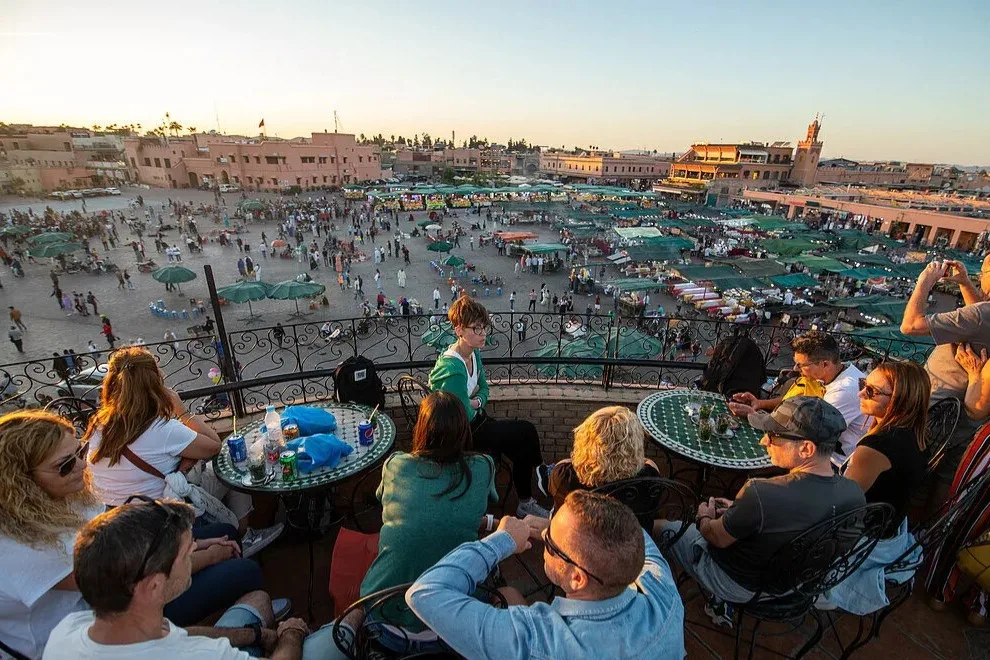
Djamaa El-fna
How it works: A woman in traditional dress smiles at you, takes your hand before you understand what is happening, and quickly draws a small henna design. Then she asks for 100 to 300 dirhams, sometimes more if you are with friends and she has decorated all of you.
How to avoid it: Keep your hands close to your body as you walk across the square. If your hand is grabbed, pull it back firmly without shouting, say "no thank you", and walk on. They will not chase you. And if the henna is already there you can give 20 to 30 dirhams and go. Do not pay more than that for something you did not ask for.
2. The "Tannery Is Closing" Trick
Where: anywhere near the souks, but especially as you approach the leather district.
How it works: A young man asks where you are going, then says "the tannery is closing in 10 minutes, I will take you the back way for free". He leads you through the alleys, "shows" you the tannery (which was never closing), then takes you to a leather shop where you are pressured to buy a jacket "while you are here".
How to avoid it: The tannery is open all day until late evening. You do not need a guide to find it. If you want to see it, ask your riad for a licensed guide or go with a small group tour. The "free" way is never free.
3. The Fake Closed Street
Where: throughout the medina.
How it works: You are walking in a clear direction. A friendly local tells you the street is closed for a "religious procession" or a "prince's visit" and offers to redirect you another way. Twenty minutes later, you are in the carpet shop of the man's uncle.
How to avoid it: Streets almost never close in Marrakech. Smile, say no thank you, and keep walking.
4. The Photo Fee Trap
Where: Djemaa el-Fna square, the snake charmers, the water sellers in red costumes, and the monkey handlers.
How it works: You point your camera. They pose. Then they ask for 50 to 200 dirhams. The fair price is 10 to 20.
How to avoid it: Negotiate the photo fee before you raise the camera. "10 dirhams, okay?" Pay before taking the photo. If they ask for more afterwards, hold your ground.
The hidden version: someone notices you are about to photograph a beautiful door or a view, then places themselves in your frame, then asks to be paid for "appearing in the photo". The fix: do not let strangers manipulate your photography. If they step in, lower the camera and move somewhere else.
5. The Broken Taxi Meter
Where: at the airport, the train station, and outside the medina gates.
How it works: You hail a petit taxi. The driver says the meter is broken. You agree on a fixed fare and pay double or triple.
How to avoid it: In 2026, almost all petit taxis have working meters. Get out and take the next one. From the airport to the medina, the official daytime price is about 100 dirhams. From the airport to Gueliz, about 80 dirhams. Add 50% after 8 p.m. Anything much higher than that is the tourist price.
6. Fake Argan Oil
Where: the tourist souks, and "argan cooperatives" off the main roads.
How it works: A bottle marketed as "100 percent argan oil" is sold for 50 to 100 dirhams. It is basically sunflower oil with a drop of argan added for the smell. Real culinary argan oil costs at least 250 to 400 dirhams a litre.
How to avoid it: Smell it. Real argan has a distinctive roasted, nutty smell. The cheap stuff has no smell. Buy it from a women's cooperative on the way to or from the Atlas (they are everywhere on the road to Safi and the road to Ourika). Check that the bottle has a clear label and a production date.
7. The "I Speak Your Language" Friend
Where: in Djemaa el-Fna square or near the main tourist sites.
How it works: A young man approaches you in your own language ("Hello! French? Spanish? I lived in Madrid for three years!"). He is very friendly. He asks about your hometown, your hotel, and your plans. He walks with you "just because". Eventually he leads you to a shop or asks for a "small gift" for "guiding you".
How to avoid it: Friendly conversation is fine. Following you is not. The moment you realise he is steering you, say a warm goodbye and stay on your route. He will not follow you when you are firm.
8. The Inflated Restaurant Bill
Where: tourist restaurants near the main attractions, including some restaurants on Djemaa el-Fna square.
How it works: The tagine comes at the advertised price, but the bill includes "service" (10 dirhams), "bread" (10 dirhams), "tea" (which you did not order), and "tax". The total is 40 percent higher than the menu.
How to avoid it: Ask whether there are any extra charges before you order. Refuse the bread basket if you are not going to eat it (it will be charged to you). Ask for a written bill. If items appear that you did not order, politely ask for them to be removed.
Things That Are Not Scams (Even Though They Feel Like It)
Mint Tea Before Negotiating
If you sit down in a carpet shop or a leather shop, mint tea will be served before any negotiation begins. This is hospitality, not a scam. You are not obliged to buy because you accepted the tea. You are obliged to behave politely, drink, and talk in good faith. Then you can leave without any purchase, with a smile.
The Small Tip Expected for Help
A young man helps you find your riad. You are grateful. He asks for a tip. This is not a scam, it is the cultural custom in Morocco for small services. 10 to 20 dirhams is fair. If he asks for 100 dirhams, that is too much, and you can give 20 with a friendly "this is what I have" and move on.
Two Prices for Two Different Customers
Your Moroccan friend buys saffron for 50 dirhams a gram. You are quoted 90 dirhams. This is not always a scam, it is sometimes the starting price for tourists. By negotiating, you usually reach 60 to 65 dirhams, which is a fair price. The "tourist price" exists because tourists negotiate less. Knowing this lets you take part properly.
The Riad Tip
A riad has a doorman, a maid, and a kitchen. They expect 30 to 50 dirhams a day, given at the end of your stay. This is not a tip in the Western sense, it is part of the staff's income. Plan for it.
How to Spot a Scam Before It Happens
A few patterns almost always signal a con.
- Anyone who approaches you in your own language right outside a tourist site
- Anyone who says "free" without any context
- Anyone who creates urgency ("now, now, follow me")
- Anyone who tells you a public site or street is "closed" without you asking
- Any restaurant with a host outside who aggressively pulls you in
Quiet places and shops with marked prices rarely scam you. Trust your instincts, keep your pace, and remember that a firm, friendly "no thank you" solves almost everything in Marrakech.