You Will Get Lost. And That Is a Good Thing.
The Marrakech medina is roughly 600 hectares of narrow alleys, thousands of dead ends, and almost no street signs that match what you see on Google Maps. Even after living here my whole life, I still take wrong turns. Getting lost is part of the experience. What you want to avoid is being lost and stressed at the same time. Here is how.
Understanding the Layout
The medina has a logic, even if it does not feel like it on the first day. There are five things to remember.
Djemaa el-Fna square is the centre of gravity. Almost every route eventually leads here. If you are lost, ask "Jemaa el-Fna?" and a friendly shopkeeper will point you the right way. It is often closer than you think.
The souk area is to the north. From Djemaa el-Fna square, all the souks (spices, textiles, leather, metal) are to the north. The street called Rue Semarine leads straight to them.
The Kasbah is to the south. The Saadian Tombs, the El Badi Palace, and the Bahia Palace are south of Djemaa el-Fna square, in quieter streets.
The walls have gates (bab). When in doubt, head for the wall. The main gates (Bab Doukkala, Bab Agnaou, and Bab el Khemis) are on most maps and easy to navigate from.
The medina is small. It may feel endless but you can walk from one side to the other in 25 minutes. Knowing this is psychologically calming when you feel lost.
Save Maps Before You Need Them
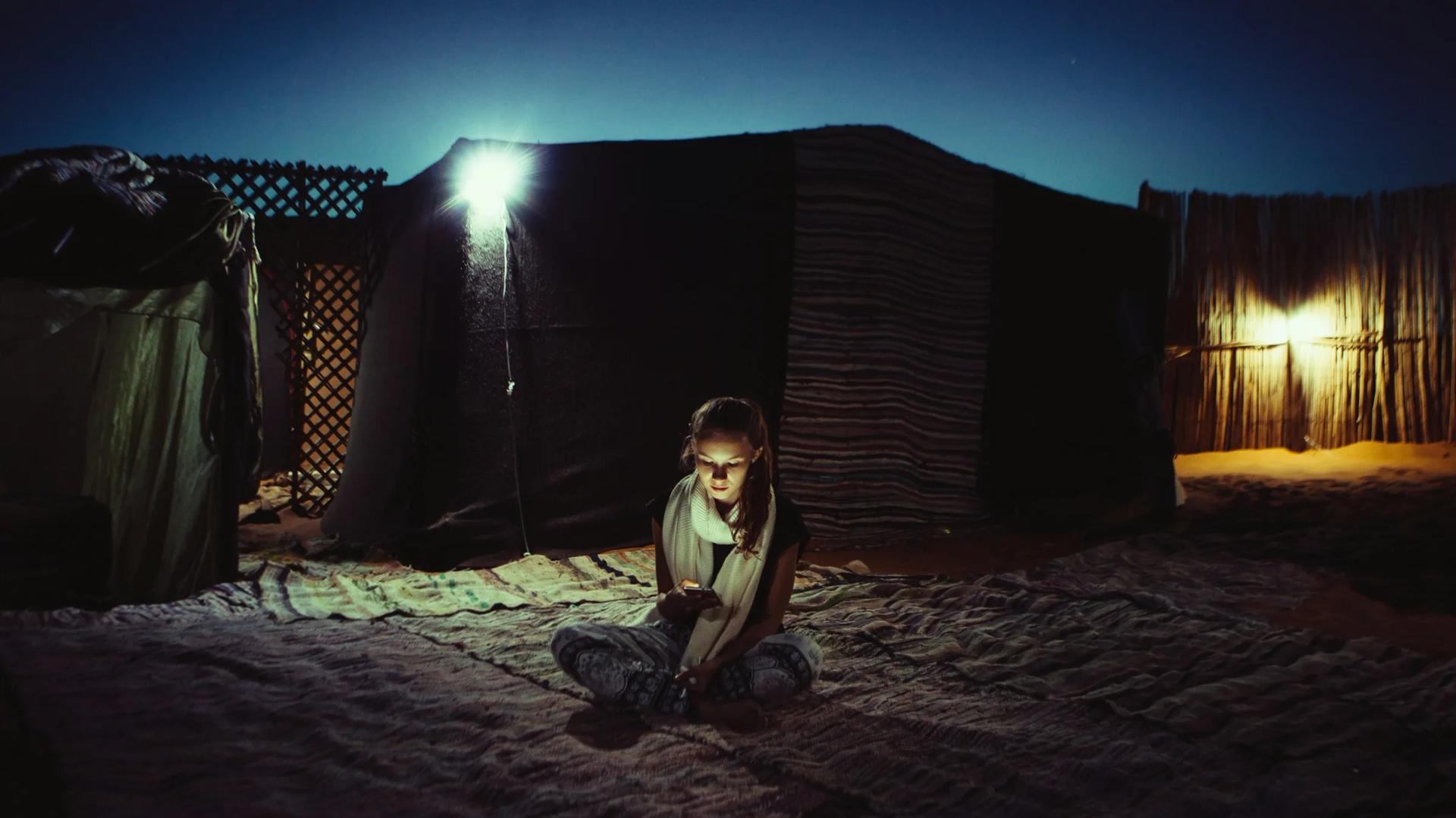
Mobile data works in the medina but the battery drains and the signal drops in the inner alleys. The best move:
- Download the wider Marrakech area from Google Maps
- Save your riad as a starred location
- Save Djemaa el-Fna square and one or two landmarks (the Koutoubia Mosque, the Bahia Palace, Bab Doukkala)
- Take a photo of the outside of the riad on your first day. All the doors look alike at night.
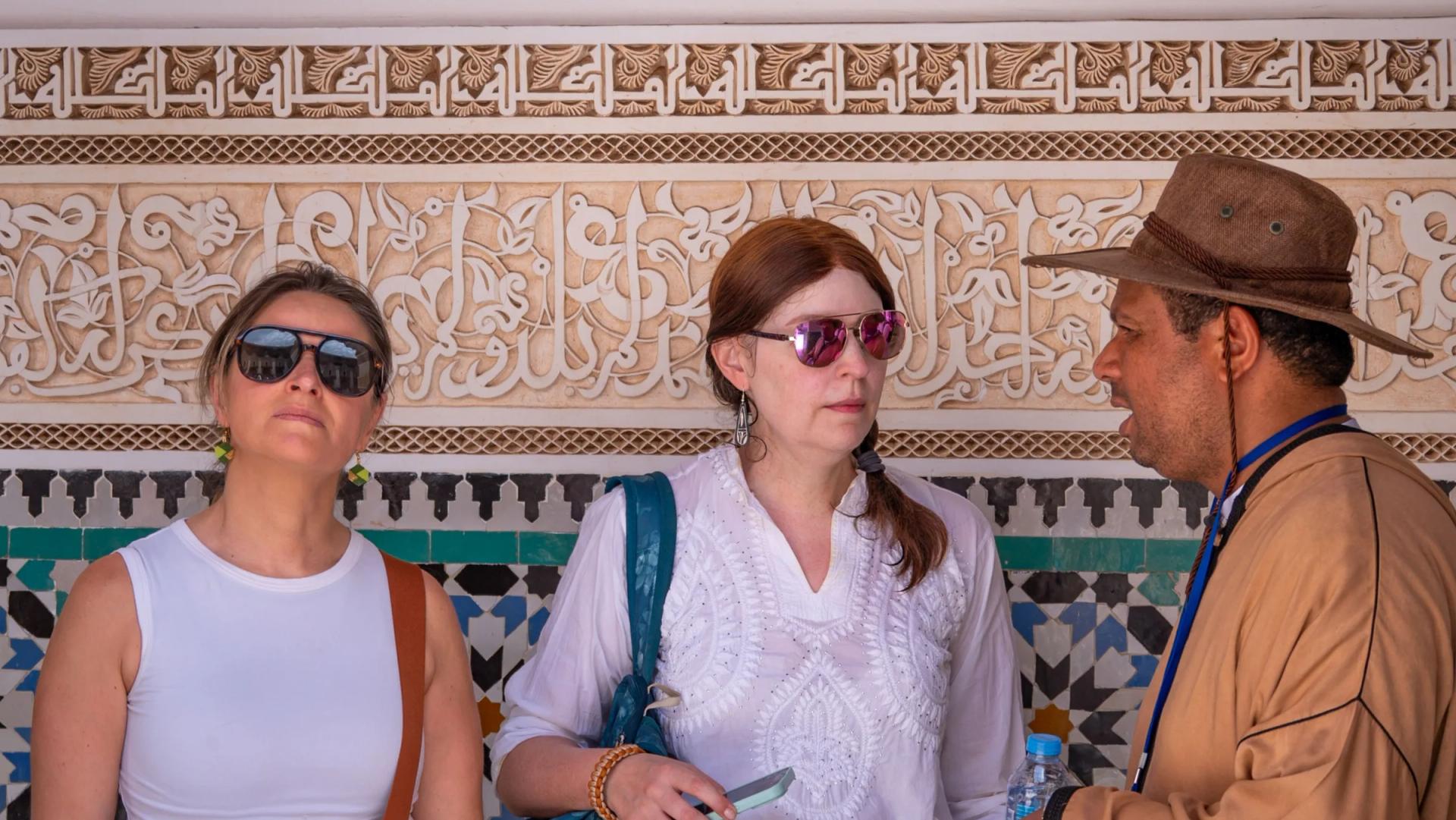
- Take a photo of the riad's name in Arabic. You can show it to any local.
Carry a small power bank. A dead phone in the medina at 10 p.m. is the one anxious scenario.
The "This Street Is Closed" Trick
This is the most common trick. You are walking somewhere clear. A friendly young man approaches and tells you the street ahead is closed for a "religious celebration", a "festival", or a "prince's visit". He politely offers to lead you another way. Twenty minutes later, you are deep in the souks in his cousin's carpet shop, where you are expected to drink three teas and discuss prices.
The fix: streets almost never close. Smile, say "no thank you", and keep walking. If you are genuinely unsure, look at the locals around you. If they are walking through it, so can you.
Other Tricks You Should Know
Fake guides at the tannery. "The tannery is closing in ten minutes, follow me." The tannery is open all day. You will be charged 100 to 200 dirhams for a "tour" that is mostly a leather shop showroom.
The henna ambush. Women at the corner of Djemaa el-Fna square grab your hand and draw a small pattern, then demand 200 dirhams. Keep your hands close to your body. If your hand is grabbed, say no firmly and walk away. They will not follow you.
Photo fees. The snake charmers, the water sellers in red costumes, the monkey handlers. Point a camera and you owe a tip. That is fair. The unfair part is being asked for 50 to 100 dirhams "because you took a few shots". Negotiate first, give 10 to 20 dirhams, smile, and move on.
"Lunch with an Amazigh family" for carpets. This is not quite a trick, but be aware that on some day trips to the Atlas Mountains, the "family meal" is a carpet showroom. There is a real lunch, but the unwritten exchange is that you should be open to seeing carpets afterwards. Decide in advance whether you want this or a tour that skips it.
The "broken" taxi meter. If a petit taxi driver says the meter is broken, get out and take the next one. In 2026, the meters work in 99 percent of taxis.
How to Bargain Without Stress
Bargaining in Morocco is not aggressive. It is a polite social ritual. The rules are:
- Only bargain if you are genuinely interested in buying.
- The opening price is usually 3 to 4 times the realistic final price.
- Counter at 30 to 40 percent of the asking price.
- Move slowly. Drink the tea if it is offered. Talk about something else.
- Walk away once. The price often drops at the door.
- If they let you go, the price was real. Come back the next day if you regret it.
- Do not bargain over food, mint tea, metered taxi rides, or a single 5-dirham souk item. It will look arrogant.
The 30-percent rule has exceptions. Argan oil, real silver, hand-woven Amazigh carpets, and high-quality leather have higher base prices. A genuine 100-percent silk carpet that the seller starts at 8,000 dirhams may really be worth 4,500 dirhams, not 2,500. Ask several shops, not just one.
When Not to Bargain
Some shops in the medina are deliberately fixed-price. These are usually the shops tourists love most: traditional pharmacies, women's cooperatives, some bookshops, and a few high-quality clothing brands. Look for "prix fixe" signs. The prices are fair and the quality is consistent.
Mosque Etiquette and Dress Code
Non-Muslims are not allowed inside most active mosques in Morocco, including the Koutoubia Mosque. The exceptions are the Hassan II Mosque in Casablanca and the Tin Mal Mosque in the Atlas Mountains. You can take exterior photos of any mosque from the public street.
Dress code in the medina:
- Shoulders covered (men and women alike)
- Knees covered
- A light scarf solves any doubt
- A headscarf for women is not mandatory at any time, including in the medina
You will see Moroccan women in everything from a full djellaba to jeans and tank-top dresses. The country is not uniform. But the medina is the most conservative part of the city, and dressing modestly there makes the day more comfortable.
Djemaa el-Fna Square by Day vs Night
By day, Djemaa el-Fna square is a wide, dusty plaza with snake charmers, a few orange juice stalls, monkey handlers, and storytellers. Honestly, this is not the most beautiful version of the square.
In the evening, Djemaa el-Fna square transforms. Around 6 p.m., hundreds of food stalls are assembled. Smoke rises, lights come on, musicians arrive, storytellers gather. This is the famous Djemaa el-Fna square from every documentary.
The strategy: have a mint tea on a rooftop overlooking the square at sunset (Café de France or Café Glacier are the classic options), then come down to the square once the food stalls start working.
When to Walk Away
Three simple rules.
- If a "guide" attaches himself to you without an invitation, walk away. He will ask for money even if he walked beside you for just two minutes.
- If a shopkeeper is very aggressive ("just look, just look, free, free"), walk away. Good shops are quiet and confident.
- If you feel pressured, walk away. Anywhere you feel pressured to decide quickly is a place selling you something at the wrong price.
Phrases That Earn You Respect
A small set of words in Arabic goes a long way. You do not need to be fluent. A simple greeting, said with a smile, changes the whole exchange.
- Salam (hello)
- Shukran (thank you)
- La shukran (no thank you)
- Bezzef (too much, useful while bargaining)
- Inshallah (God willing, used for anything in the future)
- Bslama (goodbye)
Lead with "Salam" before any question, say "Shukran" when you leave a shop even if you bought nothing, and use a friendly "La shukran" to decline anything you do not want. Politeness, not toughness, is what makes the medina easy.