Voici la traduction en français :
La question que tout touriste se pose
"Devrais-je visiter le Maroc pendant le Ramadan ?"
Oui, mais seulement si vous comprenez ce qui change réellement.
Le Ramadan ne met pas le Maroc à l'arrêt. Il modifie le rythme du pays. Certaines choses deviennent moins pratiques, d'autres prennent beaucoup plus de sens. Si vous venez avec des attentes réalistes, cela peut être l'un des moments les plus mémorables pour visiter.
Ce qu'est le Ramadan
Le Ramadan est le neuvième mois du calendrier lunaire islamique. De l'aube (fajr) au coucher du soleil (maghrib), les musulmans pratiquants s'abstiennent de :
- Manger
- Boire
- Fumer
- Toute activité sexuelle
- Tout comportement "malveillant" (se disputer, jurer ou médire)
Au coucher du soleil, le jeûne est rompu avec l'iftar, en commençant traditionnellement par des dattes et du lait, suivis de la soupe harira, de pâtisseries comme chebakia et enfin d'un repas complet.
Après l'iftar, les soirées sont sociales et spirituelles - visites familiales, cafés et prières de fin de soirée (tarawih).
Comme le calendrier est lunaire, le Ramadan avance d'environ 10 à 12 jours chaque année.
Dates prévues du Ramadan (calendrier grégorien)
| Année | Date de début estimée | Date de fin estimée (Aïd el-Fitr) |
|---|---|---|
| 2025 (1446 AH) | 1er mars 2025 | ~29 mars 2025 |
| 2026 (1447 AH) | 18 février 2026 | ~19 mars 2026 |
| 2027 (1448 AH) | 8 février 2027 | ~8 mars 2027 |
Remarque : Le début exact dépend de la vision du croissant de lune (hilâl). Les dates peuvent varier de ± 1 jour selon la région.
Le pays ferme-t-il ?
Non. Le Maroc continue de fonctionner mais sur un rythme différent.
Ce qui reste ouvert
- Les principaux sites comme le Palais Bahia, les Tombeaux Saadiens, Volubilis et le Jardin Majorelle (souvent avec des horaires légèrement plus courts).
- Les riads et les hôtels (le service complet se poursuit, bien que le personnel puisse être réduit pendant l'iftar).
- Les transports (les principaux services ferroviaires
ONCFet routiersCTMfonctionnent, mais les horaires peuvent être compressés). - Les hammams et les spas.
- Les tour-opérateurs et les excursions.
- Les banques, les distributeurs automatiques, les pharmacies (souvent avec des horaires modifiés).
Ce qui change
- L'"Heure Morte": Entre environ 17h30 et 19h30 (selon le coucher du soleil), les rues deviennent presque dénuées de vie. Il est extrêmement difficile de trouver des taxis car les chauffeurs rompent leur jeûne.
- Restaurants locaux: La plupart des petits restaurants locaux et des cafés de la médina ferment pendant la journée et ne servent pas publiquement.
- Options pour le déjeuner: Limitées aux restaurants orientés touristes, aux restaurants de riads ou aux chaînes internationales en dehors de la médina.
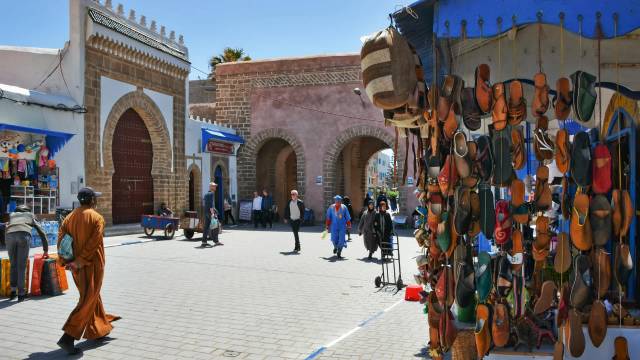
- Souks: Peuvent ouvrir un peu plus tard et peuvent interrompre leur activité juste avant l'iftar.
- Administrations et banques: Ferment souvent plus tôt, généralement vers 14h00 - 15h00, et fonctionnent de manière continue.
- Alcool: De nombreux restaurants de gamme moyenne cessent de servir de l'alcool pendant le mois. Seuls les bars d'hôtels haut de gamme ou les établissements spécifiquement autorisés restent généralement ouverts.
Le Maroc ne s'arrête pas, il compresse l'activité de la journée et étend la vie nocturne.
Ce qu'est l'Iftar (le point culminant)
C'est le moment qui définit le Ramadan.
Au coucher du soleil, souvent marqué par l'appel à la prière (adhan) et dans certaines zones par un canon cérémoniel, tout s'arrête. Les rues se vident presque instantanément. Les familles se rassemblent pour rompre le jeûne.
Pendant environ 15 à 20 minutes, la médina devient inhabituellement calme. Puis la vie reprend doucement d'abord, puis pleinement.
L'Iftar typique comprend :
- Des dattes (Tmer) et du lait
- La soupe harira
- Des pâtisseries (chebakia, briouats, Sellou)
- Un repas complet après la rupture initiale du jeûne
Options de restauration pour l'Iftar :
- Les riads proposent des dîners d'Iftar sur mesure.
- Les restaurants avec des menus spéciaux (environ 150-300 MAD).
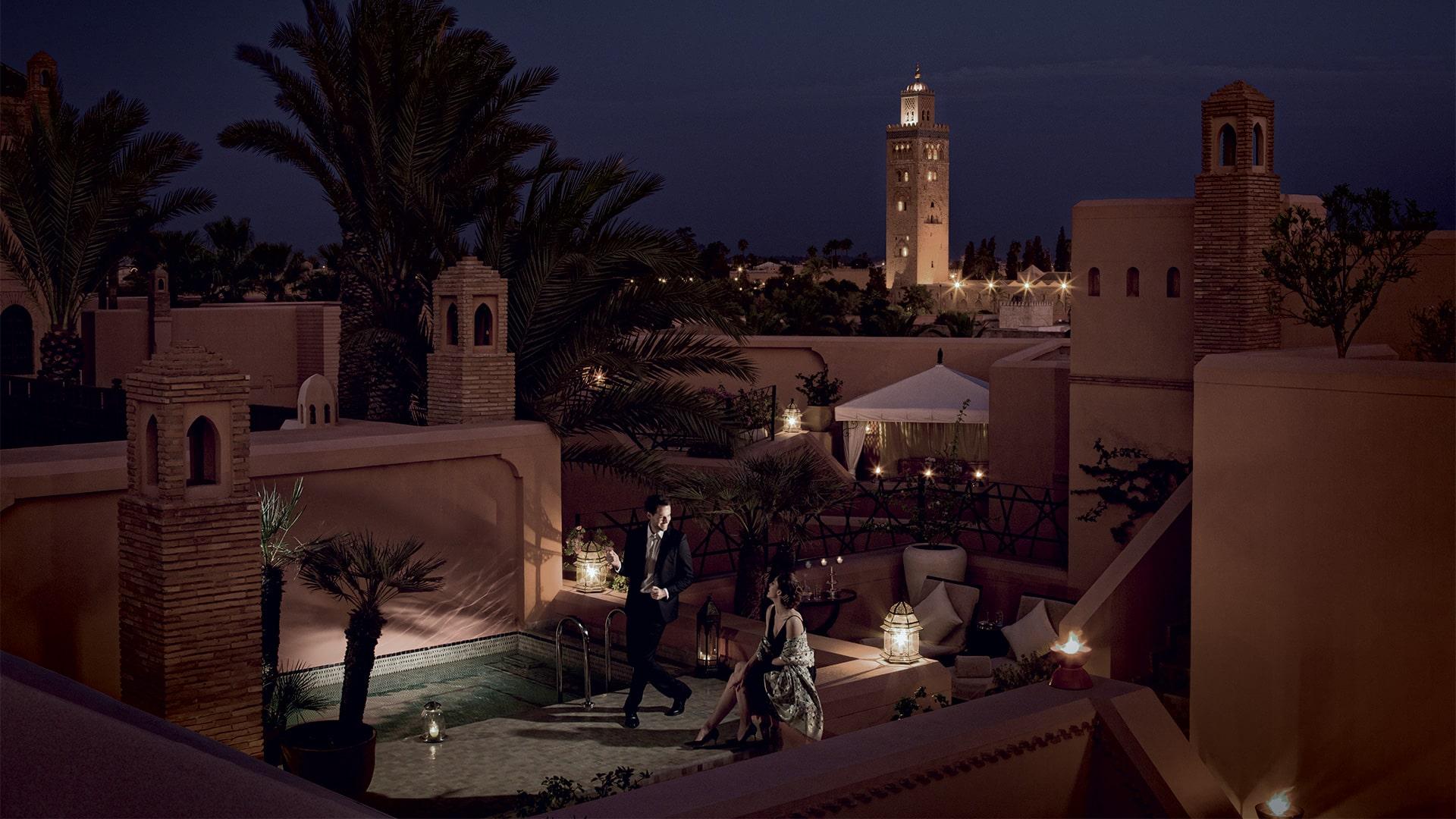
- La restauration sur les toits près de la place Jemaa el-Fna ou avec une vue sur la mosquée Koutoubia.
- Les cafés locaux proposent des options d'Iftar plus modestes (50-100 MAD).
Si vous visitez pendant le Ramadan, vivre l'Iftar au moins une fois est considéré comme essentiel.
Comment se montrer respectueux
Pendant la journée (espaces publics)
- Évitez de manger, boire ou fumer de manière visible dans la rue, surtout dans la médina.
- Mangez à l'intérieur des riads, des hôtels ou des restaurants touristiques désignés.
- Buvez de l'eau discrètement si nécessaire.
- Habillez-vous modestement (plus que d'habitude) en gardant les épaules et les genoux couverts en permanence.
- Limitez les marques d'affection publiques.
Avec les habitants
- N'offrez pas de nourriture ou d'eau pendant les heures de jeûne.
- Si vous êtes invité à l'Iftar, acceptez, c'est un geste authentique d'hospitalité. Apportez un petit cadeau (pâtisseries ou dattes).
Salutations courantes
- "Ramadan Mubarak" (Bon Ramadan)
- "Ramadan Karim" (Ramadan Généreux)
Comportement général
- Attendez-vous à un service plus lent en fin d'après-midi.
- Soyez patient, le jeûne affecte les niveaux d'énergie.
- Gardez le bruit bas avant le coucher du soleil.
Le rythme quotidien
Matin (8h00 - 12h00)
- Le plus proche de la normale.
- Meilleur moment pour les visites guidées et les excursions.
- Meilleur moment pour explorer les souks avant qu'ils ne deviennent très bondés ou ne commencent à se calmer.
Déjeuner (12h00 - 14h00)
- Les restaurants touristiques sont ouverts et peuvent être calmes.
- Les options de la médina sont très limitées.
- C'est le moment de planifier vos repas si vous avez besoin de types de nourriture spécifiques.
Après-midi (14h00 - 17h00)
- La partie la plus lente de la journée.
- Certains magasins peuvent fermer temporairement.
- Bon moment pour la photographie de rues calmes ou des visites détendues de sites.
Pré-Iftar (17h00 - coucher de soleil)
- Moment le plus intéressant culturellement.
- Les rues commencent à se remplir alors que les gens se préparent pour l'iftar, puis se vident soudainement environ 30 minutes avant le coucher du soleil.
- Évitez d'interrompre les gens qui se préparent activement pour l'iftar.
Iftar (coucher de soleil)
- Tout s'arrête pour la rupture du jeûne.
- Les restaurants commencent à servir le repas d'iftar.
- Les réservations sont fortement recommandées pour les endroits les plus populaires.
Soirée (20h00 et plus)
- La ville s'anime de nouveau après l'iftar.
- Les cafés, les marchés et les familles emplissent les rues.
- Les nuits du Ramadan sont animées et sociales.
Fin de soirée (22h00 - 2h00)
- Heures de pointe sociales pendant le Ramadan.
- De nombreuses boulangeries et points de restauration rouvrent pour servir les clients de fin de soirée.
Où loger
- Riads de la médina : Idéal pour l'atmosphère et l'immersion culturelle. Beaucoup proposent des repas d'iftar - vaut la peine de vérifier lors de la réservation.
- Hôtels de Gueliz / Hivernage : Pour une routine plus internationale et pratique, souvent avec plus d'options alimentaires et de boissons facilement disponibles.
Où déjeuner (options fiables)
- Restaurants touristiques à Gueliz.
- Restaurants de riad (nécessitent souvent une réservation).
- Toits-terrasses autour de la place Jemaa el-Fna.
- Cafés style occidental.
- Chaînes internationales.
Visites et activités
- Excursions dans l'Atlas : Fonctionnent normalement.
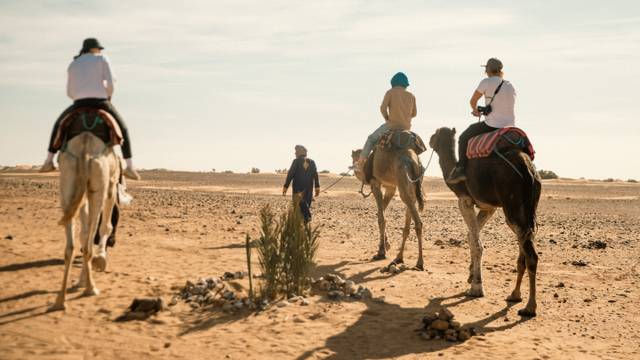
- Excursions dans le Sahara : Pleinement opérationnelles ; les repas sont ajustés aux heures de jeûne.
- Hammams et spas : Ouverts, parfois avec des horaires modifiés, surtout avant l'iftar.
- Quad, dromadaire et autres excursions : Inaffectées.
- Cours de cuisine : Certains peuvent faire une pause ou ajuster leur programme - à vérifier à l'avance.
Règle générale : Le tourisme se poursuit, mais la programmation et la disponibilité peuvent subir de légères modifications.
Aïd el-Fitr (Fin du Ramadan)
L'Aïd dure 2 à 3 jours et est plus perturbateur que le Ramadan lui-même.
À prévoir :
- La plupart des entreprises et des commerces fermés pendant au moins 1 à 2 jours (surtout dans les plus petites villes).
- Disponibilité limitée des transports car les gens voyagent pour être avec leur famille.
- Les sites touristiques peuvent être partiellement ou complètement fermés le premier jour.
Mais aussi :
- Les familles célébrant joyeusement.
- Les gens portant de nouveaux vêtements, partageant des friandises et rendant visite à la famille.
Pour les voyageurs :
- Prévoyez du temps libre ; envisagez de séjourner dans un riad bien équipé ou un spa.
- L'activité normale reprend généralement pleinement d'ici le 3e ou 4e jour de l'Aïd.
- Réservez l'hébergement et les transports bien à l'avance si vous prévoyez de voyager pendant l'Aïd lui-même.
Coûts
Les prix restent largement stables :
- Riads, excursions, taxis : généralement aux mêmes tarifs que les autres périodes de l'année.
- Menus d'iftar : généralement entre 150 et 350 MAD.
- Une baisse occasionnelle de la demande peut entraîner des expériences plus calmes, mais pas toujours des baisses de prix significatives.
Faut-il visiter pendant le Ramadan ?
Oui, si vous :
- Voulez moins de foule.
- Valorisez l'immersion culturelle et une atmosphère unique.
- Êtes flexible avec les repas et les horaires.
- Êtes curieux des traditions locales et des observances spirituelles.
Peut-être pas, si vous :
- Voulez une culture alimentaire de jour complète partout où vous allez.
- Voyagez avec des emplois du temps très stricts et non négociables.
- Avez besoin d'une totale commodité et d'un service facilement disponible à toute heure.
- Prévoyez de visiter pendant l'Aïd sans flexibilité pour les fermetures.
Conclusion
Le Ramadan révèle un Maroc différent, plus lent, plus calme et plus introspectif le jour, et vibrant la nuit.
Vous ajustez légèrement votre programme :
- Le déjeuner devient un événement planifié à l'avance.
- Les après-midi ralentissent considérablement.
- Les nuits deviennent le point culminant, remplies d'énergie sociale et spirituelle.
En échange, vous vivez quelque chose que de nombreux touristes ne voient jamais : un pays fonctionnant dans son rythme le plus significatif. Pour de nombreux voyageurs, ce n'est pas un compromis, c'est la version la plus authentique du Maroc.
FAQ
Est-il correct de visiter le Maroc pendant le Ramadan ?
Oui, et cela peut être l'un des moments les plus gratifiants pour visiter. Le pays ne s'arrête pas pour les touristes. Les hôtels, les riads, les monuments et la plupart des restaurants touristiques restent ouverts. L'ambiance après le coucher du soleil, quand les familles se rassemblent pour l'iftar et que les ruelles s'emplissent de vie, est quelque chose que vous ne pouvez pas voir à un autre moment de l'année.
Puis-je manger et boire en public pendant le Ramadan ?
Légalement oui pour les non-musulmans, mais par respect, la plupart des voyageurs mangent et boivent à l'intérieur des hôtels, des cafés qui restent ouverts pour les touristes, ou de manière discrète. Évitez de manger, boire ou fumer de manière visible dans la médina pendant la journée. Une bouteille d'eau dans un sac à dos entre les arrêts est acceptable.
Les restaurants sont-ils ouverts pendant la journée pendant le Ramadan ?
Moins que d'habitude, mais les endroits axés sur les touristes à Marrakech, Fès, Chefchaouen et Essaouira maintiennent un service de jour. Les cafés locaux ferment souvent jusqu'à l'iftar. Les restaurants d'hôtels sont touj