The Surprise Almost Every Vegetarian Visitor Has
Most travellers arrive in Morocco worried they will be living on bread and salads. They leave saying it was one of the easiest countries to eat plant based in. The reason is simple: traditional Moroccan home cooking is built around vegetables, legumes, olive oil and spices. Meat is often a small accent, not the centre. Once you know what to ask for, the country opens up.
Here is the honest guide to eating vegetarian and vegan in Morocco, written by someone who has guided many plant based travellers through it.
The Foundation: Naturally Vegan Moroccan Dishes
These exist all over the country, in restaurants, cafés and home kitchens. None of them require special menus or substitutions.
Zaalouk. Smoked aubergine and tomato salad with garlic, cumin and olive oil. Served warm or cold with bread. Always vegan when prepared traditionally.
Taktouka. Roasted pepper and tomato salad. Like a smoky cousin of zaalouk. Always vegan.
Bissara. A thick warming soup of broad beans or split peas, served with olive oil, cumin and bread. A breakfast staple in winter, naturally vegan.
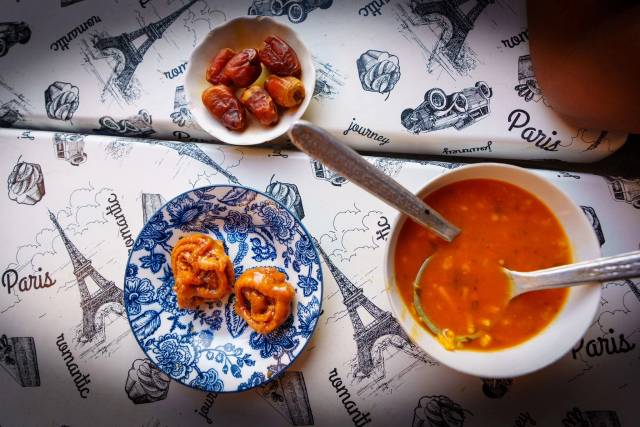
Harira. The famous Moroccan soup. Tomato base, chickpeas, lentils, vermicelli, herbs. Traditionally has a small amount of meat (lamb or beef stock) but vegetarian versions are everywhere, especially during Ramadan. Always ask: "Harira sans viande?" or "Harira khaliya min lahm?" (without meat).
Vegetable couscous. The Friday lunch tradition. Steamed semolina with seven vegetables (carrot, courgette, pumpkin, turnip, cabbage, chickpeas, onion) in a vegetable broth. Almost always available, always vegan when meat is omitted (just ask).
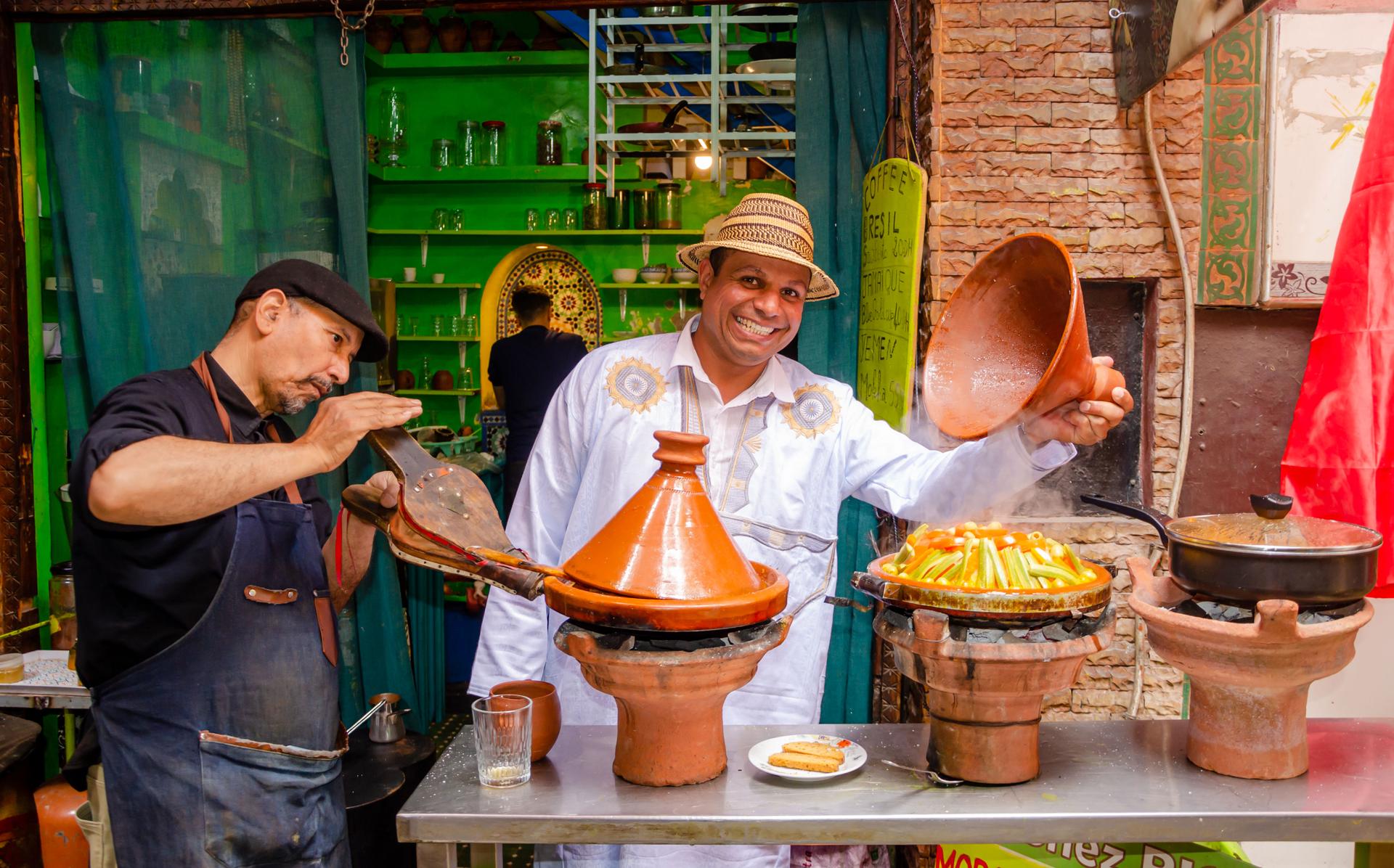
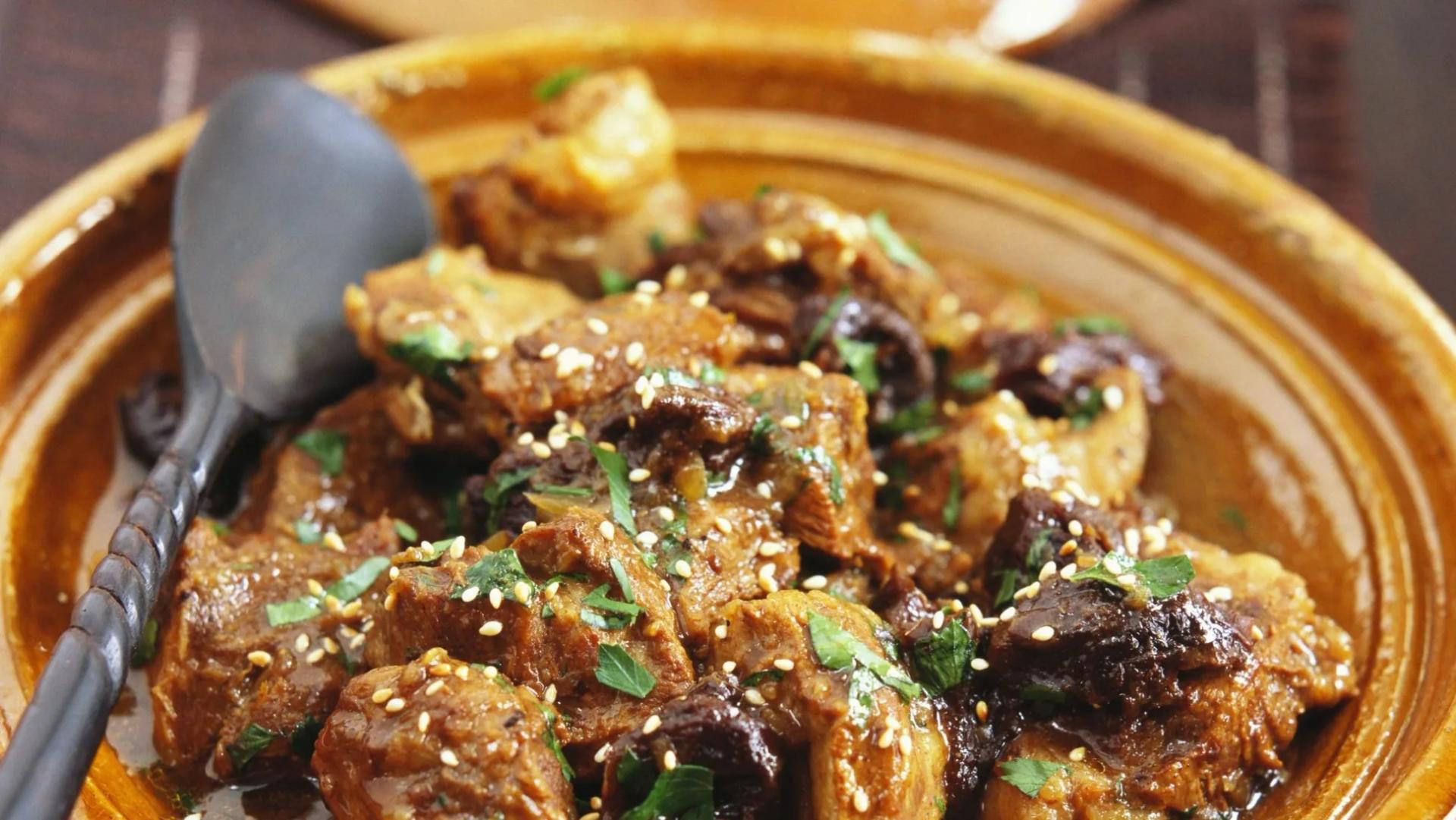
Vegetable tagine. Aubergine, courgette, potato, carrot, peppers, with prunes or olives or preserved lemon. Naturally vegan. Found in every restaurant.
Loubia. White bean stew with tomato and garlic. Common street food, served with bread.
Hummus and bread. The Lebanese influence has crossed the country, hummus is everywhere now.
Briouates filled with vegetables. Filo pastries filled with spinach, cheese (vegetarian) or vegetables. Always check the filling because some are filled with meat.
Olive oil and bread. The simplest combination. Fresh khobz (round bread) dipped in argan oil with cumin or za'atar is a meal in itself.
Common Phrases That Open Doors
The most useful Darija phrase for vegetarians:
"Ana nabati" (I am vegetarian, masculine)
"Ana nabatia" (I am vegetarian, feminine)
"Bla lahm, bla djaj, bla hut" (without meat, without chicken, without fish)
For vegans, add:
"Bla zibda, bla halib, bla baid" (without butter, without milk, without eggs)
In tourist areas, French is widely spoken:
"Je suis végétarien(ne)" (I am vegetarian)
"Je suis végan(e), sans produits animaux" (I am vegan, without animal products)
"Sans viande, sans poisson, sans œufs, sans produits laitiers" (without meat, fish, eggs, dairy)
In tourist restaurants in Marrakech, Fes and Essaouira, English works fine.
Where to Eat
Riad breakfasts. Almost universally have a vegetarian or vegan option. Fresh bread, olive oil, jam, msemen (a flaky pancake, typically vegan when made with oil, but always ask, sometimes butter is used), olives, tomato salad, fresh orange juice. Eggs are optional. Mention vegan when you arrive at the riad and breakfast will be adjusted from day 1.
Local restaurants in the medina. Every medina has a row of small restaurants serving tagines and couscous. Ask for "tagine khodra" (vegetable tagine) or "couscous khodra" (vegetable couscous). 40 to 80 dirhams per dish.
Street food in Jemaa el Fna. Many stalls have vegetarian options. Snail soup is famous (not vegan, also not for everyone). Bissara stalls and harira stalls work well. Avoid the busy meat grills if you are strict.
Modern cafés in Gueliz. Marrakech has a growing scene of trendy cafés with explicit vegan menus. Salads, grain bowls, smoothies. 80 to 150 dirhams per dish.
Argan oil cooperatives. On the way to Essaouira or out of Marrakech, women's cooperatives offer tastings of argan oil with bread, amlou (an almond and argan paste, vegan), olive tapenade and herbal teas. Excellent stop for vegans.
Tea houses and orange juice stands. Mint tea is vegan (sugar and mint, no milk). Fresh squeezed orange juice for 4 to 10 dirhams. The simplest snacks of any trip.
What to Watch Out For
Hidden ghee (smen). Some traditional dishes use smen (preserved butter). Ask: "Bla smen?"
Couscous broth. Sometimes the broth uses chicken stock even when no meat is in the dish. In tourist restaurants, the broth is usually vegetable. In village kitchens, ask.
Bread. Almost all Moroccan bread is vegan (flour, water, salt, yeast). Some bakery breads use butter or milk. The standard round khobz is vegan.
Pastries. Most traditional Moroccan pastries (chebakia, kab el ghazal, briwat) contain butter or honey. Honey is debated for vegans; butter is a no. Ask before you eat.
Tagine in some restaurants. Some tourist restaurants prepare a "vegetable tagine" by removing the meat from a meat tagine. The vegetables are still cooked in the meat juices. Be specific: "tagine entirement vegetal, sans cuisson avec viande" (entirely vegetal tagine, not cooked with meat).
Soup add ons. Harira often has a small amount of bone broth even in the vegetarian version. For strict vegans, ask if the broth was made with meat or vegetables.
Vegan in the Sahara and Atlas
Two scenarios where most travellers worry. Here is the reality.
Sahara desert camps. Most desert camps cook traditional Berber meals. The good news: most desert camps already cook a separate vegetarian tagine. Mention "vegan, no butter, no dairy" when you book the trip. The camp staff will prepare a vegetable tagine, lentil soup, vegetable couscous and bread. You will eat well.
Atlas mountain villages. Berber families cook vegetable based meals daily. Tagines, breads, mint tea. Ask for "vegan" or "no meat, no dairy" when you book a homestay or guided lunch. The mother of the family will prepare zaalouk, taktouka, bread, olives, tea. Often vegans say their best meal of the trip was an Atlas village lunch.
Vegan Dessert Reality
This is where Morocco gets harder for vegans. Most traditional pastries use butter, eggs or honey. Chebakia (sesame fried sweet) has honey. Kab el ghazal (gazelle horns) has butter. Almond pastries can be vegan but usually have butter.
Vegan desserts that work:
- Fresh fruit (always available)
- Dates (a Moroccan staple, eaten on their own)
- Amlou with bread (almond and argan paste, sometimes with honey, ask)
- Sliced oranges with cinnamon and orange flower water
- Fresh fruit smoothies in Gueliz cafés
- Some modern cafés have vegan brownies, banana bread, energy balls
If you have a serious sweet tooth, plan to bring a small stash of vegan snacks for the trip.
Vegetarian Friendly Cities
Marrakech. Easiest. Many vegetarian and vegan restaurants in Gueliz. Modern cafés. Riad breakfasts. Plenty of medina options. Local cooking classes that focus on vegetarian Moroccan dishes.
Essaouira. Even easier. Coastal town with many international restaurants, fish heavy menus, but also strong vegetarian options. Argan products everywhere.
Fes. Slightly harder but doable. Tourist restaurants in the medina have vegetarian tagines. Ask for "tagine khodra" and you will be fine.
Chefchaouen. Easy. Backpacker friendly town with cafés explicitly catering to vegan travellers.
Smaller towns and villages. Slightly harder. Stick to tagines and couscous. Always carry some snacks (dates, almonds, fruit) as a backup.
A Sample Vegetarian Day in Marrakech
Breakfast at the riad: msemen with olive oil and amlou, fresh orange juice, mint tea, fruit salad, hard boiled egg (skip if vegan).
Mid morning: fresh squeezed orange juice from a Jemaa el Fna stall, 5 dirhams.
Lunch in the medina: vegetable couscous and a small zaalouk, plus mint tea. 70 to 100 dirhams.
Afternoon: dates from a souk stall, a handful for 10 dirhams.
Dinner on a rooftop: vegetable tagine with prunes, side of taktouka, bread, mint tea. 150 to 200 dirhams.
Evening snack: roasted almonds from a street stall, 20 dirhams.
A full delicious vegetarian day for around 300 dirhams (30 euros).
What to Bring From Home
Most vegan travellers do not need anything. A few suggestions for very strict vegans:
- A small jar of nutritional yeast (the Moroccan version is hard to find)
- A small supply of plant based protein bars for long driving days
- A reusable water bottle (tap water is not safe to drink, but bottled water and filtered water are everywhere)
- A small jar of your favourite spread (peanut butter, tahini)
Honestly though, most vegans tell me they ate so well in Morocco they did not need anything from home.
A Common Misconception
Some travellers worry that asking for "no meat" will offend a traditional Moroccan host. The opposite is true. The host will be delighted to feed you well. Vegetable cooking is the soul of Moroccan home kitchens. The mother of the family will produce 6 dishes you have never seen before. The grandmother will tell you what each one is called. You will eat the best food of your trip in a Berber home kitchen.
Final Honest Advice
Morocco is one of the easier countries to eat vegetarian or vegan in once you know the rhythm. The key habits:
- Learn 3 to 5 Darija or French phrases
- Default to vegetable couscous and vegetable tagine
- Use riad breakfasts as your reliable safe meal
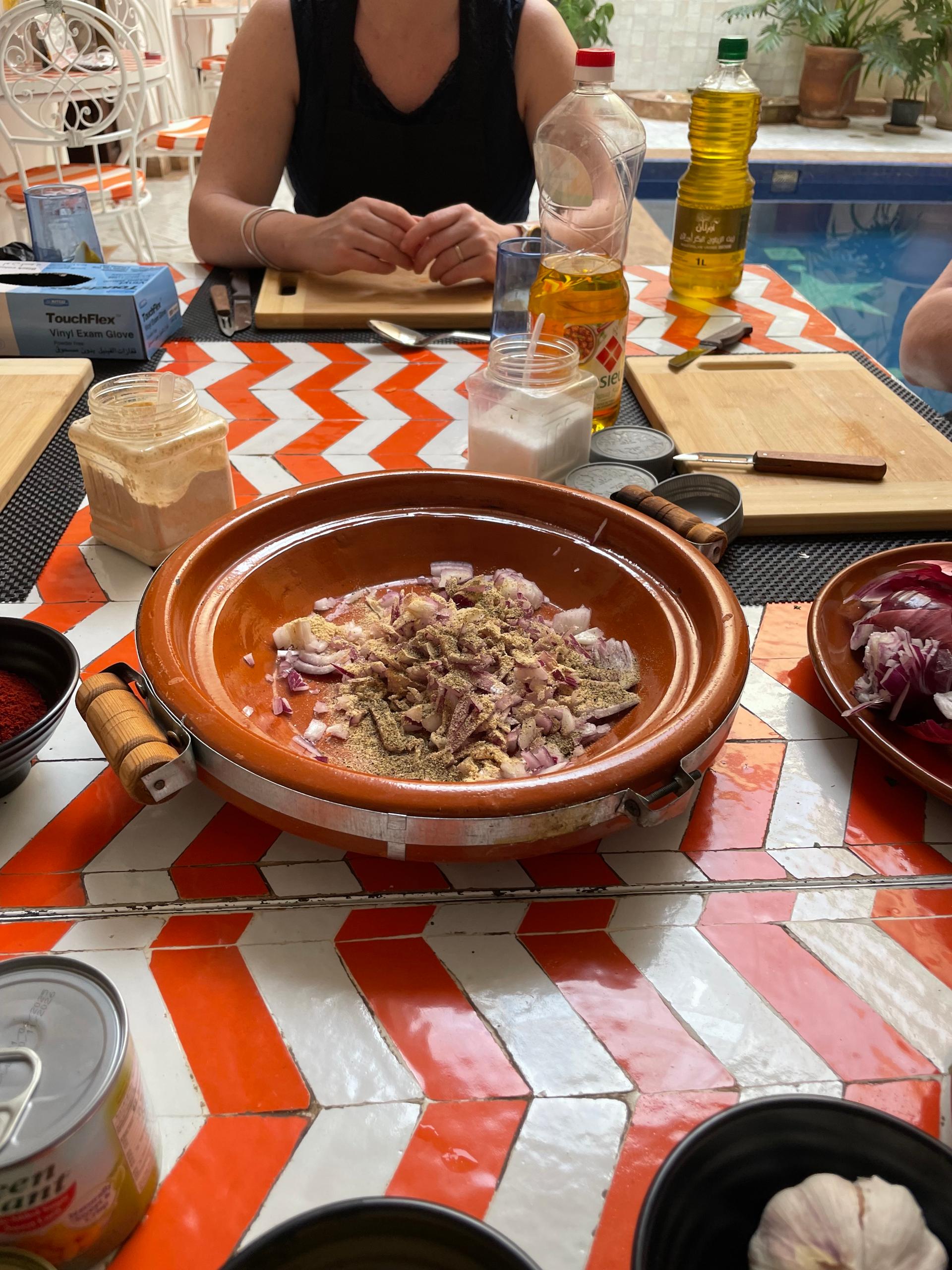
- Try a local cooking class once (you will leave knowing 5 vegan dishes)
- Be specific in restaurants ("entirely vegetal, not cooked with meat")
If you are vegan and going to the Sahara or the Atlas, mention it when you book. Every responsible operator can adapt. We do this on every custom tour, with the desert camp and the Atlas family lunch both fully vegan when needed. Just tell us when you book.
FAQ
Is it easy to be vegetarian in Morocco
Yes. A surprising amount of traditional Moroccan food is naturally vegetarian: harira (in its non meat version), zaalouk, taktouka, bissara, msemen, lentil dishes, and vegetable tagines. The challenge is that meat broth sometimes hides in soups, so a quick question helps.
Is vegan harder than vegetarian
A little. Butter (smen), eggs in pastries, and honey show up often. Most Moroccan breakfasts are vegan friendly with bread, olive oil, jam, and mint tea. Vegan tagines need to be ordered specifically because the default version may have meat broth or smen.
How do I say vegetarian and vegan in Moroccan Arabic and French
Vegetarian: "ana nabati" (Arabic) or "je suis vegetarien / vegetarienne" (French). Vegan: "ana nabati saafi, makanaklch hatta haja men l hayawan" or "je suis vegan, pas de produits animaux." Show the words written on your phone if pronunciation is shaky.
Will I find vegan options in small towns and the desert
Yes, with planning. Berber bread, olives, dates, fresh fruit, vegetable tagines, and bissara are everywhere. Sahara camps and rural guesthouses can do plant based meals if you tell them at booking. Last minute requests on the road are harder.
Are dairy and eggs hidden in unexpected dishes
Sometimes. Pastilla is usually meat or seafood and often has egg. Couscous broth can include smen. Pastries lean heavily on butter and honey. Asking about smen and broth (marqa) covers most situations.