Just an hour's drive from the bustling, sun-baked medinas of the Red City, a pristine world of emerald greenery and snow-capped peaks awaits. If you are dreaming of escaping the city heat in Marrakech, there is no better destination than the magnificent Ourika Valley. Famous for its sweeping mountain vistas, babbling river, and authentic cultural encounters, a trip to explore Ourika Valley Marrakech offers a wonderfully refreshing contrast to the urban chaos.
Whether you are an avid hiker, a culinary enthusiast, or simply a traveller looking to unwind in nature, this lush gorge has something spectacular to offer.
Why Choose a High Atlas Mountains Day Trip?
Often lovingly referred to as the vallée Ourika by locals and Francophone visitors, this winding green haven is widely considered the most accessible High Atlas Mountains day trip available.
Travellers planning their itineraries frequently find themselves weighing up an Ourika vs Imlil day trip. While Imlil is renowned as the primary base camp for serious mountaineers tackling Mount Toubkal, the Ourika Valley offers a much gentler, more relaxing introduction to the Atlas region. Its lower elevation and excellent paved roads make it the ideal choice for families, casual walkers, and those who want to immerse themselves in nature without embarking on an extreme trek. Because Ourika and Marrakech are so closely connected, you can easily venture into the mountains, enjoy a full day of exploration, and be back at your riad by sunset.
Exploring Exquisite Gardens and Bustling Markets
The journey to Ourika is just as enchanting as the destination itself. Before you even reach the higher altitudes, the valley floor offers a wealth of sensory delights.
Botanical Wonders
Nature and art lovers should absolutely carve out time for the Anima Garden André Heller. Created by the acclaimed Austrian artist, this whimsical, two-hectare botanical space masterfully blends striking, colourful sculptures with lush exotic plants, framing perfect views of the Atlas Mountains.
For a deeper dive into the region's unique agricultural heritage, a visit to Le Jardin du Safran aromatic garden is highly recommended. Here, you can wander through fragrant patches of herbs, learn about the notoriously labour-intensive process of harvesting saffron, and enjoy a restorative cup of spiced tea.
Authentic Local Commerce
If you want to experience the vibrant pulse of rural Moroccan life, you must keep an eye on the Tnine Ourika souk schedule. Held every Monday, this bustling country market is a magnificent spectacle. Farmers from surrounding mountain villages descend upon the town, bringing their produce on donkeys to trade everything from fresh vegetables and spices to livestock and handcrafted goods.
Immersing Yourself in Local Traditions
A true Ourika Valley experience goes far beyond the landscapes; it is deeply rooted in the people who have called these mountains home for centuries.
Booking a traditional Berber culture tour allows you to step inside a typical mud-brick mountain home. Here, you can share a customary glass of sweet mint tea with a local family, gaining a first-hand understanding of their enduring hospitality and daily routines.
Along the valley road, you will also notice numerous sustainable argan oil cooperatives run entirely by local women. Visiting these cooperatives allows you to observe the incredibly arduous process of cracking and grinding the nuts by hand. It is also the perfect place to purchase high-quality, ethically sourced cosmetic and culinary oils whilst directly supporting the local economy.
Whilst visiting these villages, you may also encounter local herbalists eager to share traditional Berber medicine and botanical secrets. You will learn fascinating insights into how native mountain plants, wild thyme, and natural minerals are used to treat common ailments and maintain radiant skin.
The Highlights: Waterfalls and Riverside Charm
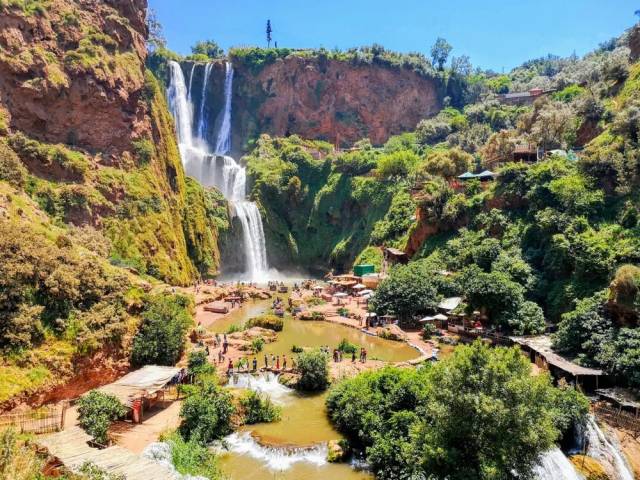
As the winding road comes to an end, you will arrive at the village of Setti Fatma, the ultimate crown jewel of the region. This lively settlement is the primary starting point for exploring the famous Ourika Valley waterfalls.
Trekking the Cascades
The main draw for adventurous visitors is undoubtedly the Setti Fatma seven waterfalls hike. The trail begins with a scenic walk across rickety wooden suspension bridges before ascending into the rocky gorge. The first waterfall is relatively easy to reach, providing a beautiful backdrop for photographs and a refreshing misty breeze.
However, as you scramble higher up the rocky, uneven paths to the subsequent tiers, the crowds begin to thin out. Reaching the upper levels of the Ourika waterfalls requires a bit of agility, but it generously rewards climbers with tranquil rock pools and spectacular panoramic views over the valley below.
Dining in the River
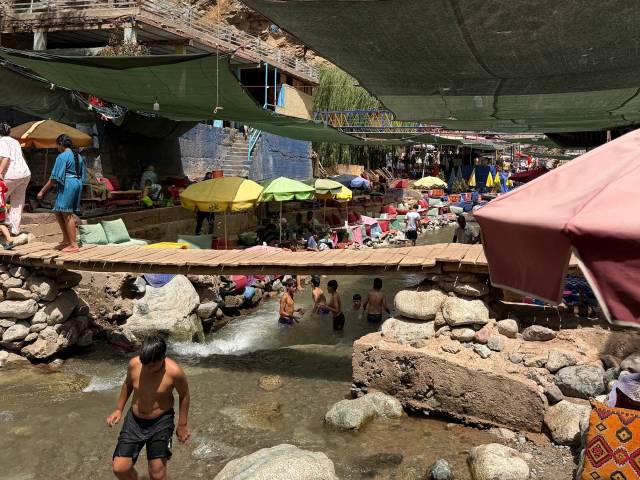
After your descent, it is time to indulge in a truly unique culinary experience: riverfront dining in the Atlas. Local restaurateurs set vividly coloured tables, chairs, and Berber rugs quite literally in the shallow edges of the Ourika River. Enjoying a hearty, slow-cooked lamb tagine whilst the cool, crystal-clear mountain water rushes gently past your ankles is a quintessential Ourika Valley experience that you simply cannot miss.
Practical Planning for Your Visit
To ensure your trip is as seamless and enjoyable as possible, keep these practical tips in mind:
- When to go: The best time to visit Ourika is during the spring (March to May) and autumn (September to November). During spring, the valley is remarkably lush and green, and the waterfalls are at their most powerful, fuelled by melting mountain snows.
- Getting there: When arranging transportation to Setti Fatma, you have several options. You can hire a private taxi (grand taxi) from Marrakech, join an organised group tour for a hassle-free day, or rent a car if you feel confident navigating winding mountain roads.
- Dressing appropriately: Knowing what to wear for Atlas trekking is vital. Sturdy, comfortable walking shoes with good grip are essential, as the rocks around the cascades can be wet and slippery. Layered clothing is also highly advisable; temperatures can drop quite suddenly in the shaded mountain gorges, even when it feels sweltering back in the city.
- Hiring a guide: While it is perfectly possible to hike to the lower falls independently, hiring a local guide for the higher cascades is strongly recommended for your safety. Standard mountain hiking guide fees usually range between 150 to 200 Moroccan Dirhams for a group, but it is always wise to politely agree on the final price before setting off.
Final Thoughts
Stepping out of the vibrant chaos of the city and into the serene embrace of the mountains is an absolute must for any Moroccan itinerary. Whether you are scaling rocky paths to find a hidden cascade, uncovering ancient herbal remedies, or simply enjoying a leisurely lunch with your feet in a mountain stream, the valley offers a rejuvenating escape. Plan your journey carefully, respect the local environment, and allow the timeless magic of the Atlas Mountains to captivate you.