A Question Most Marrakech Visitors Ask
Aït Benhaddou is the most famous kasbah in Morocco. A UNESCO World Heritage Site. A filming location for Game of Thrones, Gladiator, The Mummy, Lawrence of Arabia, and many more. It is 4 hours from Marrakech in each direction. So is the day trip worth it? Here is the honest answer.
What Aït Benhaddou Actually Is
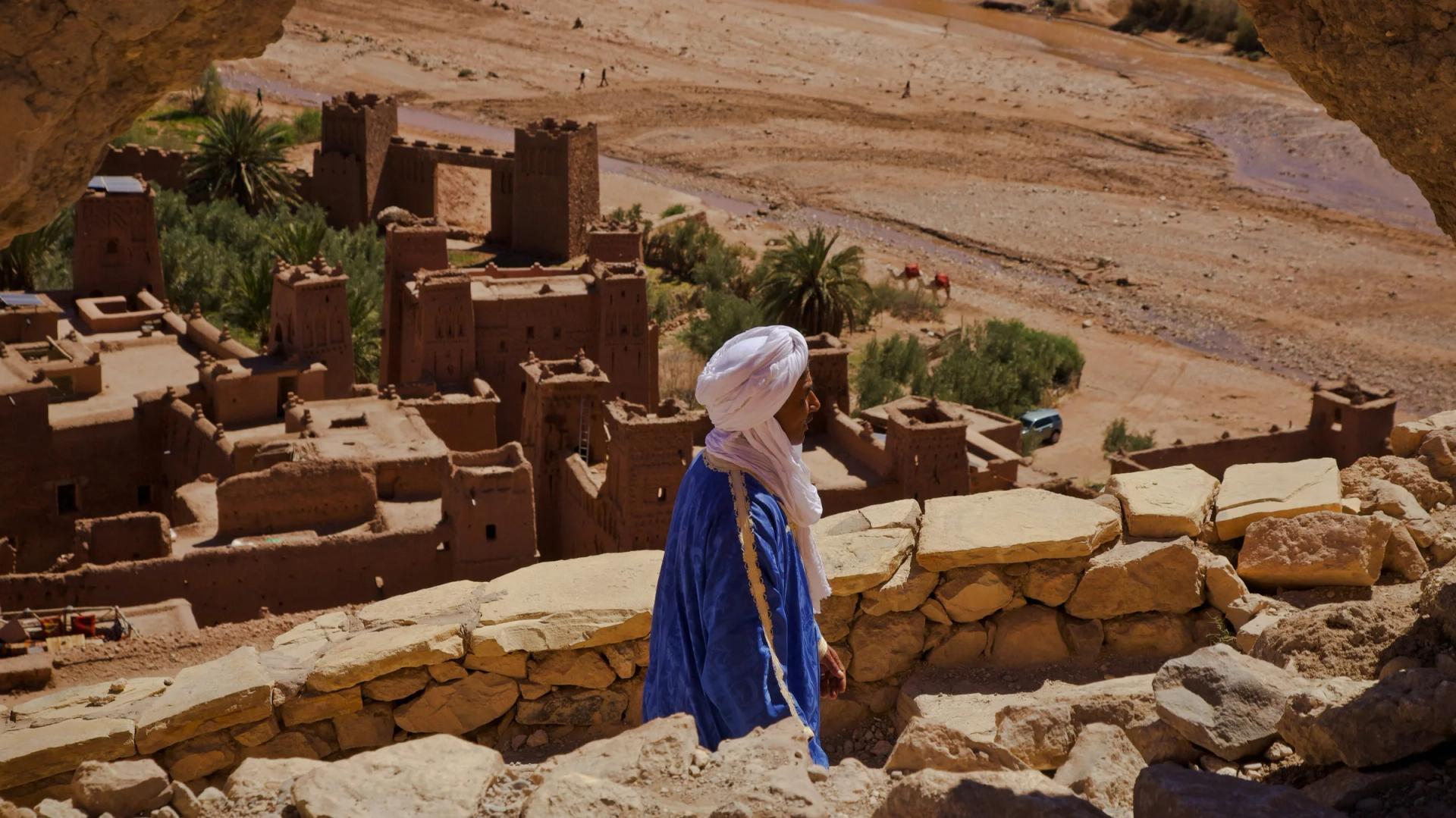
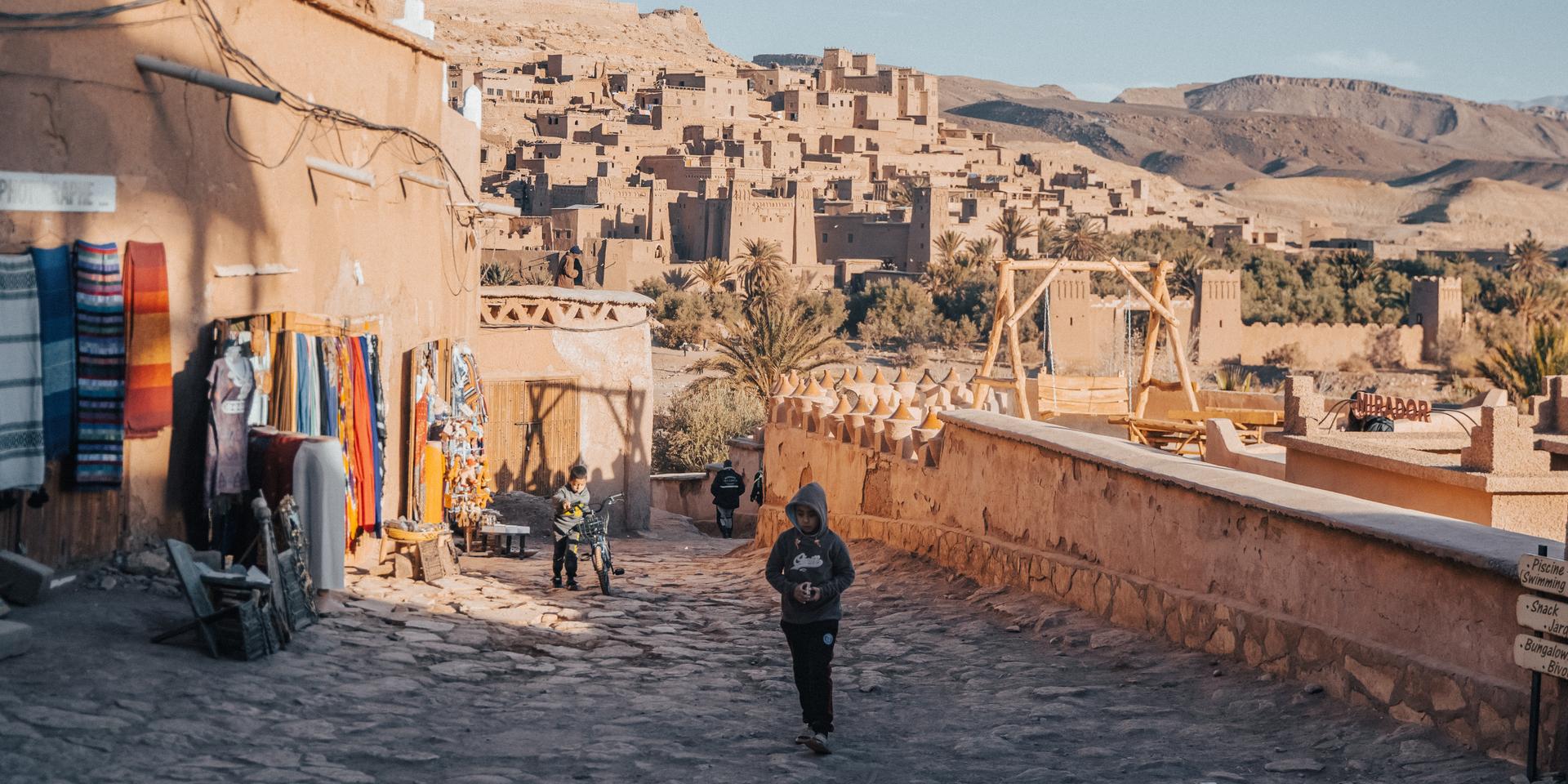
A fortified earthen town on the southern slopes of the Atlas Mountains. Built with rammed earth, straw, and palm wood, the same technique used for thousands of years in the Sahara. The site has been continuously inhabited since at least the 11th century. Today, only a few families live inside the walls; most residents moved to a modern village on the other bank of the river decades ago.
It is genuinely beautiful. The earthen towers, the maze of alleys, the views from the top, and the river running below. In the right light, especially in the afternoon, the kasbah glows orange against a deep blue sky. There is a reason it is one of the most photographed places in Morocco.
The Honest Geography Problem
Aït Benhaddou is 195 kilometres from Marrakech via the Tizi n'Tichka. It is a winding mountain road that climbs from 450 metres to 2,260 metres before descending. Driving time:
- From Marrakech to Aït Benhaddou: 4 hours, sometimes 4.5 in peak summer
- From Aït Benhaddou to Marrakech: the same
So a day trip is 8 to 9 hours of driving against two to three hours at the kasbah. This is the main argument about this trip.
When the Day Trip Is Worth It
If you have one spare day in Marrakech and really want to see Aït Benhaddou, the day trip works. Here is the realistic schedule.
- Pick-up at 7am at your riad
- 7am to 11am: driving over the Tizi n'Tichka with two photo stops
- 11am to 1pm: arrive at Aït Benhaddou, walk through the kasbah, climb to the top, and come back down
- 1pm to 2:30pm: lunch in or near the village (usually at a riad with a view of the kasbah)
- 2:30pm to 6:30pm: driving back to Marrakech, with a stop at Telouet Kasbah and an Atlas village
- 7pm: arrive in Marrakech
Total: 12 hours away from your riad. About 8 of them in the car.
Cost: 1,200 to 1,800 dirhams per person in a small group, 2,500 to 4,000 dirhams for a couple in a private 4x4.
This is doable. Many travellers do it and enjoy it. But honestly, it is a long day for a relatively short visit.
When the Day Trip Is Not Worth It
If you are also planning a desert trip, do not visit Aït Benhaddou as a separate trip. The desert loop already passes through Aït Benhaddou on the first day. You will see it twice, once on the way out and once on the way back, often with a proper hour-and-a-half visit.
If you are pressed for time and trying to squeeze it in alongside the Atlas, the medina, and other priorities, forget it. You will be exhausted and you will not enjoy the kasbah.
If you want to see "the kasbahs" and Berber architecture without the long drive, Telouet Kasbah is closer (2.5 hours each way) and the Imlil valley has several smaller traditional kasbahs and villages. These are not as famous but they are more intimate.
The Smart Combination: Aït Benhaddou plus Ouarzazate and Telouet
If you do a day trip, the most rewarding version is one split over two days. Stay in Ouarzazate or at a guesthouse near the kasbah, then return the next day.
Day one. From Marrakech to Telouet (3 hours), visit the abandoned Glaoui Kasbah (45 minutes), then on to Aït Benhaddou (1.5 hours). Settle into a riad in or near the village. Walk up to the top of the kasbah at sunset. Have dinner with the kasbah glowing in the background.
Day two. Sunrise from the top of the kasbah (almost no tourists). A quiet morning. Drive back to Marrakech by a different road or with a stop in Ouarzazate.
This two-day version is much better than the one-day version. You see the kasbah in evening light, you sleep nearby, you see the sunrise, then you drive back rested. The cost is similar to a day trip plus one night (about 600 to 1,200 dirhams per person extra).
If you can spare two days, this is what you should do.
What to See Inside the Kasbah
When you arrive, the visit is simple. Cross the small bridge over the river. Pay 60 dirhams as an entrance fee (or sometimes 30 dirhams from the small side gates). Walk through the narrow alleys, climb to the top of the granary (the agadir), and enjoy the 360-degree view. Come back down. Total time inside the site: one hour to an hour and a half, a little more if you are taking photos.
Things to look for:
- The texture of the rammed-earth walls
- The traditional carved doors
- The abandoned and partly restored areas
- The view from the top toward the Atlas Mountains
- Tea shops on the way up (most are tourist traps but the views are real)
What to skip:
- The "guides" who appear at the entrance and offer to "guide you" for 100 dirhams. They will repeat what is written on every information board. The kasbah is small enough to navigate on your own.
- The cinema history museum at the entrance. Not exciting.
- Long stops at every souvenir shop.
Atlas Studios in Ouarzazate: Skip or Visit?
If your day trip stops in Ouarzazate, you may be offered Atlas Studios. This is the largest film studio complex in Morocco. The tour shows you sets from past films (Cleopatra, Asterix, Game of Thrones). It is fun for film buffs, and not very interesting for everyone else.
Honest verdict: if you have a spare hour and you love films, go. If not, skip it. Spend the time wandering Taourirt Kasbah in Ouarzazate instead, which is more authentic.
Telouet Kasbah: The Underrated Stop
On the same road to Aït Benhaddou, a short detour from the Tizi n'Tichka, sits the abandoned Telouet Kasbah. This was the residence of the Glaoui pasha, the ruler of the French colonial era. The kasbah is half ruined and half preserved. The preserved interiors show exceptional tilework, wood carving, and plaster decoration, almost untouched since the 1950s.
Telouet feels like a secret. The number of tourists is far lower. The crumbling beauty has an atmosphere of its own. Add 45 minutes to a day trip to include it. Almost every traveller who visits Telouet says it was the highlight of the day.
What to Pack
For a day trip:
- Comfortable shoes (you will climb and walk on uneven stones)
- A hat, sunscreen, sunglasses (the sun is strong at the top of the kasbah)
- Layers (the Tizi n'Tichka is cold, the kasbah is hot, your car will be both)
- Snacks, a water bottle (refill it at lunch)
- Cash for the entrance fee, lunch, and small tips
The Best Time to Visit
Light and photography. Late afternoon (4pm to 6pm) is the best light. The orange earthen walls glow against the blue sky. If you can plan to sleep nearby, that evening visit is unbeatable.
Crowds. The morning is the busiest time, when tour groups arrive from Marrakech and the desert loops. Come in the late afternoon and the kasbah quietly empties out.