Pourquoi la moitié des avis sur les tours du Sahara sont décevants
Presque chaque semaine, je lis un avis d'un touriste disant que leur tour dans le désert était "épuisant" ou "pressé" ou "le camp était des tentes sur un sol dur". La vérité honnête est que 90 pour cent de ces plaintes proviennent du choix du mauvais format. Le Sahara est l'un des voyages les plus gratifiants que vous puissiez faire au Maroc. C'est aussi l'un des voyages les plus souvent réservés de manière à presque garantir une mauvaise expérience. Voici le guide honnête.
Tout d'abord, la géographie
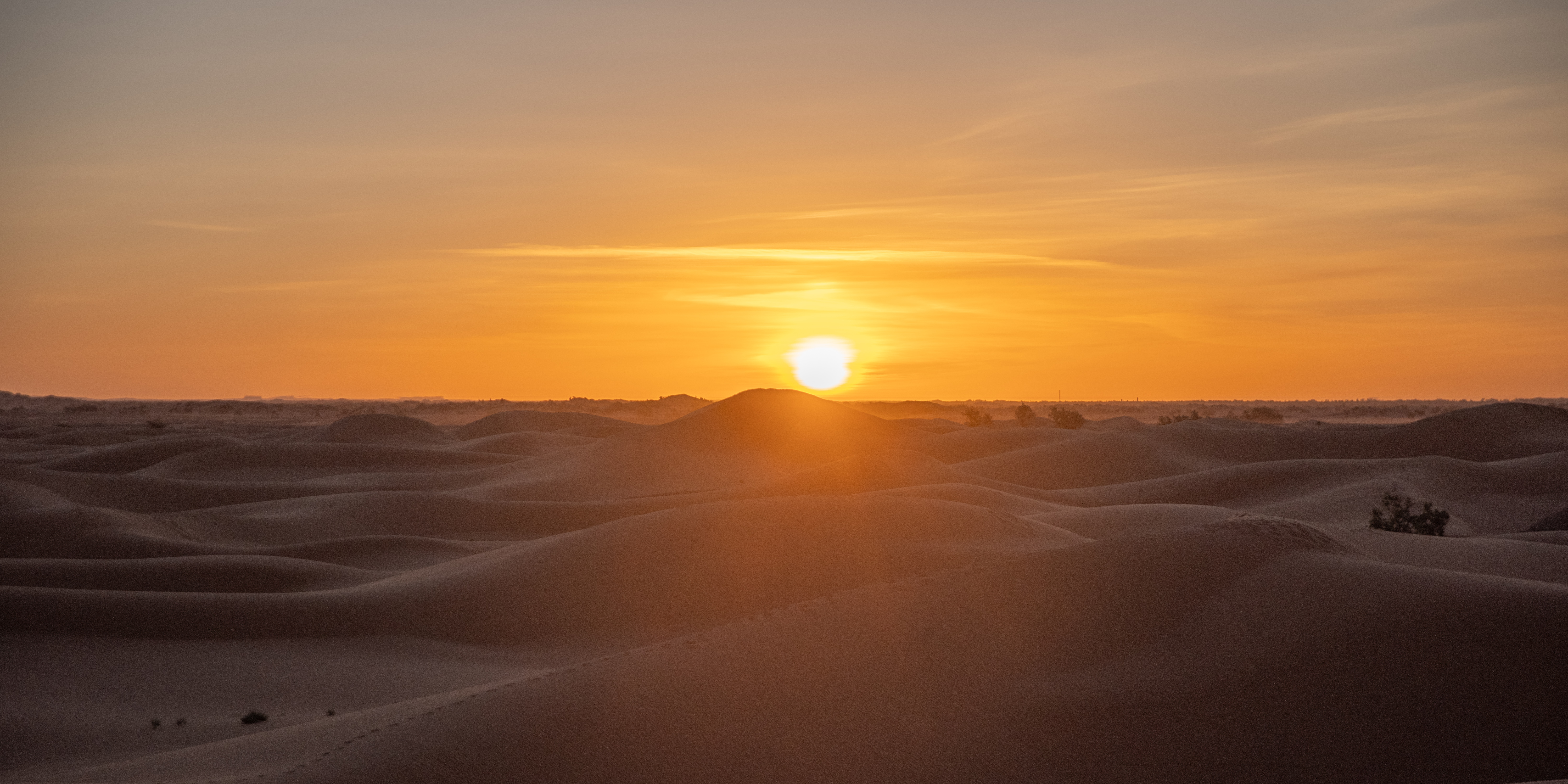
Les dunes du Sahara que tout le monde veut voir se trouvent à Erg Chebbi (près de Merzouga, au sud-est) ou Erg Chigaga (près de M'Hamid, au sud). De Marrakech à l'un ou l'autre, le trajet traverse le Tizi n'Tichka sur le Haut Atlas, puis descend devant Aït Benhaddou, Ouarzazate, et les principales vallées du sud avant d'atteindre le désert.
La distance de Marrakech à Merzouga : environ 560 kilomètres. Temps de conduite en 4x4 privé : 9 à 10 heures. En minibus partagé avec arrêts : 11 à 12 heures.
C'est le fait le plus important concernant les tours du Sahara : vous ne pouvez pas faire cela confortablement en deux jours. Vous verriez les dunes pendant 16 heures au total et passeriez 18 heures dans un véhicule.
Pourquoi le voyage de deux jours dans le désert est une erreur
Le tour "deux jours dans le désert depuis Marrakech" est l'option la moins chère que vous verrez en ligne. De 600 à 1 000 dirhams par personne. L'itinéraire ressemble à ceci :
La réalité de ce programme : 27 heures dans des véhicules sur 48 heures. Vous voyez les dunes pour juste un coucher de soleil et un lever de soleil. Vous ne faites rien de significatif à aucun des arrêts. Vous rentrez chez vous épuisé.
Évitez cette version. Toujours.
L'itinéraire de trois jours : le minimum réaliste
La version de trois jours est une véritable expérience du désert.
Premier jour. Marrakech, le Tizi n'Tichka (Montagnes de l'Atlas, 2 260 mètres), Aït Benhaddou (kasbah UNESCO, le site le plus photographié du Maroc), Ouarzazate, puis la vallée du Dadès. Nuit dans un hôtel à Dadès. Environ 8 heures de conduite avec des arrêts appropriés.
Deuxième jour. La vallée du Dadès le matin, les gorges du Todra en milieu de matinée, puis une longue mais belle traversée du plateau pré-désertique jusqu'à Merzouga. Arrivée vers 15h ou 16h. Balade à dos de chameau au coucher du soleil (1 à 1,5 heures dans les dunes). Dîner dans un camp berbère. Musique autour du feu. Nuit dans un camp du désert. Environ 6 heures de conduite.
Troisième jour. Lever de soleil sur les dunes. Balade à dos de chameau pour retourner au véhicule (ou transfert en 4x4 si votre camp est profond). Un repas léger rapide. Puis le long trajet de retour à Marrakech. Environ 10 heures.
Le troisième jour est le jour difficile. Vous atteignez Marrakech vers 19h à 21h, fatigué mais souriant.
C'est la version que la plupart des gens devraient réserver. Le coût : 1 200 à 1 800 dirhams par personne dans un petit groupe partagé, ou 3 500 à 5 500 dirhams par personne en 4x4 privé pour un couple.
L'itinéraire de quatre jours : le meilleur voyage
Ajoutez une nuit supplémentaire et le voyage devient beaucoup mieux. Voici comment le jour supplémentaire est généralement structuré.
Premier jour. Comme ci-dessus (Marrakech à la vallée du Dadès).
Deuxième jour. Comme ci-dessus (Dadès à Merzouga, balade à dos de chameau au coucher du soleil, nuit dans un camp du désert).
Troisième jour. Lever de soleil. Une matinée tranquille dans le désert. Petit-déjeuner au camp. Visite du village de Khamlia (le patrimoine de la musique Gnaoua du sud). Conduite jusqu'à Ouarzazate, et nuit dans un riad là-bas.
Quatrième jour. Visite matinale des studios Atlas ou d'Aït Benhaddou, puis retour à Marrakech par l'Atlas. Arrivée dans l'après-midi.
Pourquoi c'est mieux : le troisième jour de la version de trois jours est un marathon de conduite de 10 heures. Cette version de quatre jours divise ce trajet en deux. Vous obtenez l'expérience du désert sans le choc corporel.
Si votre voyage le permet, prenez la version de quatre jours. Encore mieux, la version de cinq jours qui ajoute une nuit à M'Hamid pour Erg Chigaga (les dunes sauvages) et vous permet de voir deux déserts différents.
Ce que "camp de luxe dans le désert" signifie réellement
Le mot "luxe" est utilisé de manière lâche. Il y a trois vraies catégories.
Niveau 1 : le camp berbère standard. Toilettes partagées (souvent des toilettes chimiques dans une tente séparée), tentes sur des plateformes surélevées avec des lits simples, couvertures en laine, tente de dîner partagée. 200 à 400 dirhams par personne en plus du prix de base.
Niveau 2 : le camp confortable. Une tente privée avec toilettes privées, un vrai lit avec de bons draps, électricité à partir de panneaux solaires, eau chaude dans une tente de douche partagée. Le dîner est servi, pas un buffet. 600 à 1 200 dirhams par personne en plus.
Niveau 3 : le camp de luxe. Grandes suites en toile permanente avec salles de bains privées (vraies toilettes, vraie douche chaude), bonne literie, chauffage en hiver, petit coin salon, dîner à plusieurs plats, parfois une petite piscine. Cher : 1 500 à 3 500 dirhams par personne en plus.
Ce qui reste constant dans toutes les catégories : tentes sur le sable, pas de pollution lumineuse, le silence, les étoiles. Le camp de base est romantique et simple. Le camp de luxe est romantique et indulgent. Les deux fonctionnent. Comprenez simplement ce que vous avez réservé.
Transport partagé vs 4x4 privé
La plus grande décision après la durée de l'itinéraire.
Le minibus partagé. De 6 à 14 personnes, un Mercedes Sprinter avec 12 à 16 sièges, un horaire fixe. De 1 200 à 1 800 dirhams par personne pour 3 jours, tout compris. Avantages : bon marché, social, vous pouvez rencontrer d'autres voyageurs. Inconvénients : rythme strict, arrêts limités, la personnalité du groupe peut faire ou défaire le voyage.
Le 4x4 privé. Juste vous (et vos compagnons de voyage), un chauffeur, souvent le chauffeur est aussi un guide. Un rythme personnalisé, arrêts où vous voulez, pas d'arrêts dans les magasins de tapis sauf si vous le souhaitez. De 1 500 à 2 500 dirhams par jour pour le 4x4 plus le chauffeur. Pour deux personnes sur un voyage de 3 jours, cela totalise 4 500 à 7 500 dirhams, ou 2 250 à 3 750 dirhams par personne. Avantages : confort, liberté, une vraie conversation avec un chauffeur qui connaît souvent intimement la région.