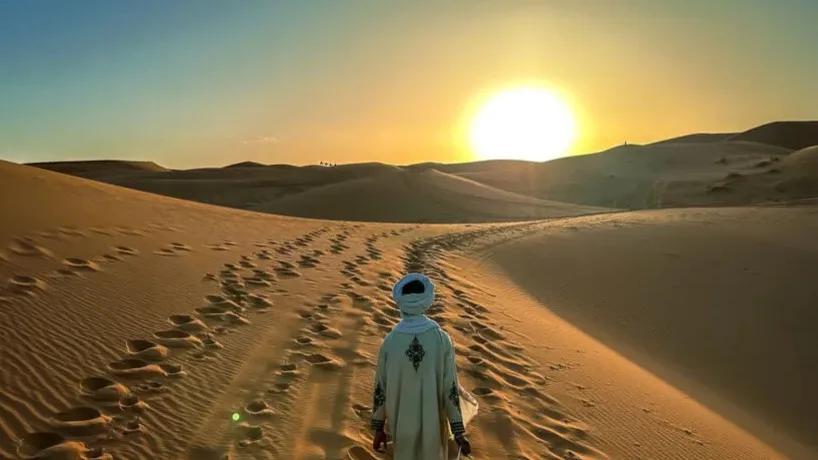
Por qué la mitad de las reseñas de tours por el Sahara son decepcionantes
Casi cada semana leo una reseña de un turista diciendo que su tour por el desierto fue "agotador" o "se sintió apresurado" o "el campamento eran tiendas en suelo duro". La verdad honesta es que el 90 por ciento de estas quejas provienen de elegir el formato equivocado. El Sahara es uno de los viajes más gratificantes que puedes hacer en Marruecos. También es uno de los viajes que más a menudo se reserva de una manera que casi garantiza una mala experiencia. Aquí está la guía honesta.
Primero, la geografía
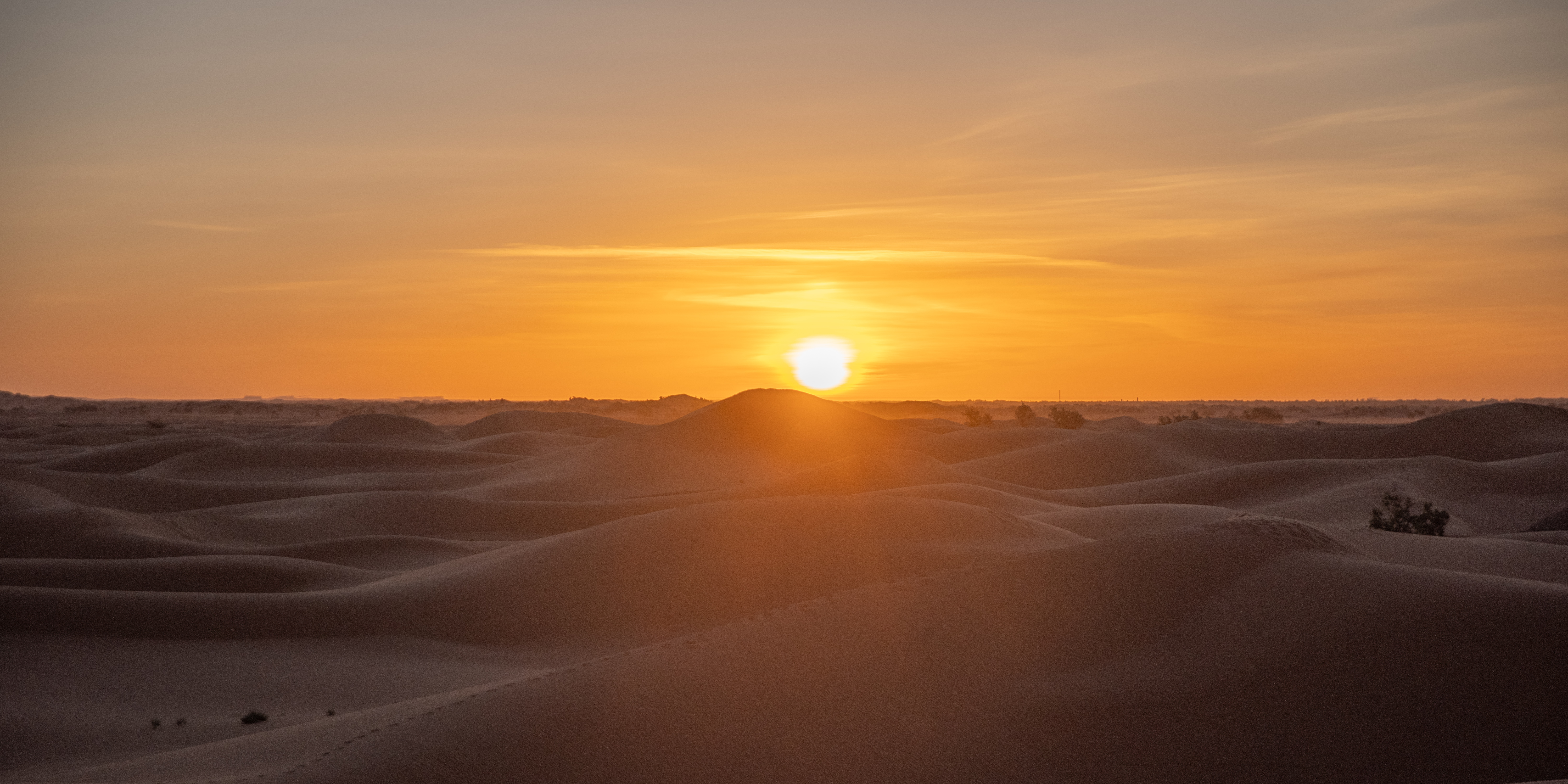
Las dunas del Sahara que todos quieren ver están en Erg Chebbi (cerca de Merzouga, en el sureste) o Erg Chigaga (cerca de M'Hamid, en el sur). Desde Marrakech a cualquiera de ellas, el viaje cruza el Tizi n'Tichka sobre el Alto Atlas, luego desciende pasando por Aït Benhaddou, Ouarzazate y los principales valles del sur antes de llegar al desierto.
La distancia de Marrakech a Merzouga: unos 560 kilómetros. Tiempo de conducción en un 4x4 privado: 9 a 10 horas. En un minibús compartido con paradas: 11 a 12 horas.
Este es el hecho más importante sobre los tours por el Sahara: no puedes hacer esto cómodamente en dos días. Verías las dunas durante 16 horas en total y pasarías 18 horas en un vehículo.
Por qué el viaje de dos días al desierto es un error
El tour de "dos días al desierto desde Marrakech" es la opción más barata que verás en línea. De 600 a 1,000 dirhams por persona. El itinerario se ve así:
- Día uno: salir de Marrakech a las 6am. Conducir a Aït Benhaddou (4 horas). Una parada de fotos de 30 minutos. Conducir a Ouarzazate (40 minutos). Almuerzo. Conducir al Valle del Dades (3 horas). Hotel para la noche. Total de conducción del primer día: unas 9 horas.
- Día dos: conducir a Merzouga (5 horas). Llegar a las 4pm. Paseo en camello al atardecer. Cena en el campamento. Dormir en el campamento. Paseo en camello al amanecer. Conducir de regreso a Marrakech (10 horas). Llegar tarde en la noche.
La realidad de este horario: 27 horas en vehículos en 48 horas. Ves las dunas solo un atardecer y un amanecer. No haces nada significativo en ninguna de las paradas. Llegas a casa destrozado.
Omite esta versión. Siempre.
El itinerario de tres días: el mínimo realista
La versión de tres días es una verdadera experiencia en el desierto.
Día uno. Marrakech, el Tizi n'Tichka (Montañas del Atlas, 2,260 metros), Aït Benhaddou (kasbah de la UNESCO, el sitio más fotografiado de Marruecos), Ouarzazate, luego el Valle del Dades. Dormir en un hotel en Dades. Unas 8 horas de conducción con paradas adecuadas.
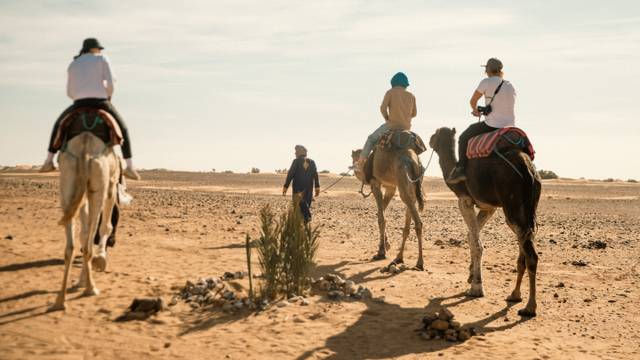
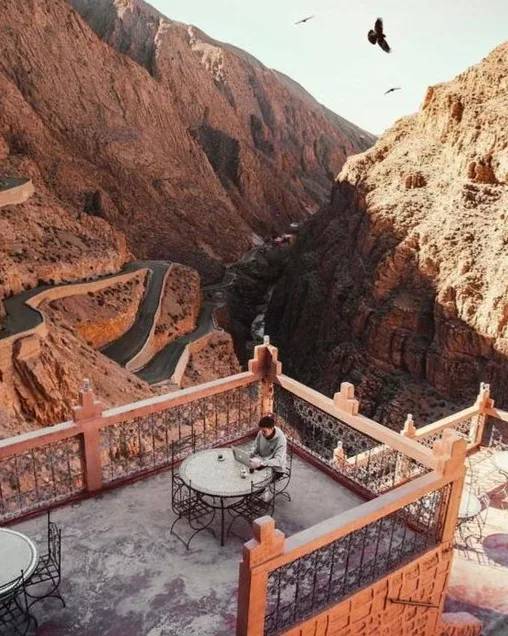
Día dos. El Valle del Dades por la mañana, la Garganta del Todra a media mañana, luego un largo pero hermoso viaje a través de la meseta pre-desértica hasta Merzouga. Llegar alrededor de las 3 o 4pm. Paseo en camello al atardecer (1 a 1.5 horas en las dunas). Cena en un campamento bereber. Música alrededor del fuego. Dormir en un campamento en el desierto. Unas 6 horas de conducción.
Día tres. Amanecer sobre las dunas. Paseo en camello de regreso al vehículo (o un traslado en 4x4 si tu campamento está profundo). Una comida ligera rápida. Luego el largo viaje de regreso a Marrakech. Unas 10 horas.
El tercer día es el día duro. Llegas a Marrakech alrededor de las 7pm a 9pm, cansado pero sonriendo.
Esta es la versión que la mayoría de la gente debería reservar. El costo: 1,200 a 1,800 dirhams por persona en un pequeño grupo compartido, o 3,500 a 5,500 dirhams por persona en un 4x4 privado para una pareja.
El itinerario de cuatro días: el mejor viaje
Agrega una noche extra y el viaje se vuelve mucho mejor. Así es como generalmente se estructura el día extra.
Día uno. Como arriba (Marrakech al Valle del Dades).
Día dos. Como arriba (Dades a Merzouga, paseo en camello al atardecer, dormir en un campamento en el desierto).
Día tres. Amanecer. Una mañana lenta en el desierto. Desayuno en el campamento. Visita al pueblo de Khamlia (el patrimonio de la música Gnaoua del sur). Conducir a Ouarzazate, y dormir en un riad allí.
Día cuatro. Una visita matutina a los Estudios Atlas o Aït Benhaddou, luego conducir de regreso a Marrakech sobre el Atlas. Llegar por la tarde.
Por qué esto es mejor: el tercer día de la versión de tres días es un maratón de conducción de 10 horas. Esta versión de cuatro días divide ese viaje por la mitad. Obtienes la experiencia del desierto sin el shock corporal.
Si tu viaje lo permite, toma la versión de cuatro días. Aún mejor, la versión de cinco días que agrega una noche en M'Hamid para Erg Chigaga (las dunas salvajes) y te permite ver dos desiertos diferentes.
Qué significa realmente "campamento de lujo en el desierto"
La palabra "lujo" se usa de manera laxa. Hay tres categorías reales.
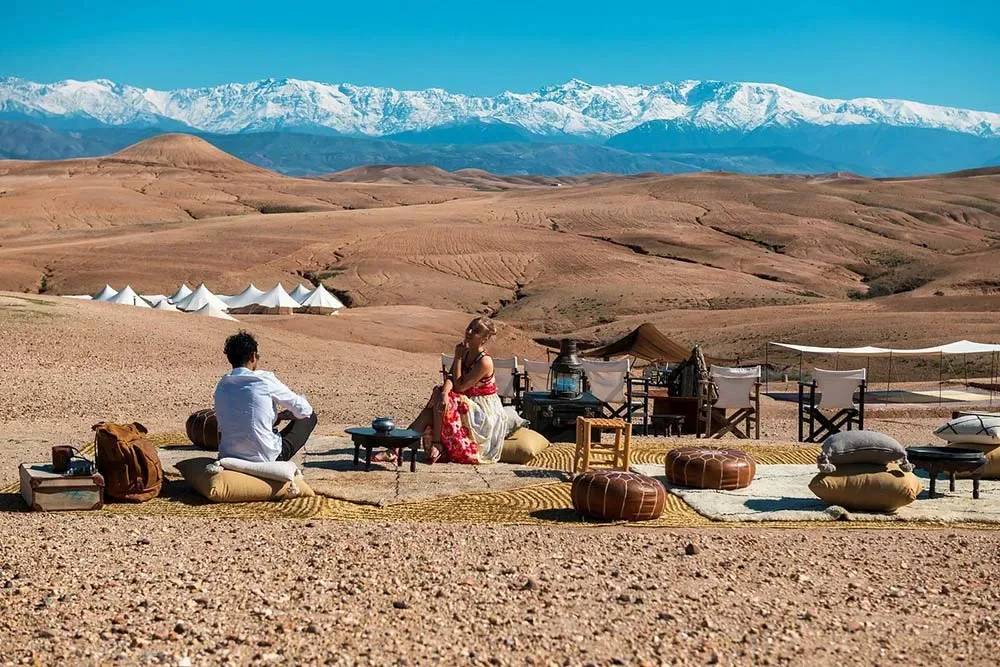
Nivel 1: el campamento bereber estándar. Un baño compartido (a menudo un baño químico en una tienda separada), tiendas en plataformas elevadas con camas simples, mantas de lana, una tienda de cena compartida. 200 a 400 dirhams por persona sobre el precio base.
Nivel 2: el campamento cómodo. Una tienda privada con un baño privado, una cama real con buenas sábanas, electricidad de paneles solares, agua caliente en una tienda de ducha compartida. La cena se sirve, no es un buffet. 600 a 1,200 dirhams por persona extra.
Nivel 3: el campamento de lujo. Grandes suites de lona permanentes con baños privados (un baño real, una ducha caliente real), buena ropa de cama, calefacción en invierno, una pequeña área de estar, una cena de varios platos, a veces una pequeña piscina. Caro: 1,500 a 3,500 dirhams por persona extra.
Lo que se mantiene constante en todas las categorías: tiendas en la arena, sin contaminación lumínica, el silencio, las estrellas. El campamento básico es romántico y simple. El campamento de lujo es romántico y indulgente. Ambos funcionan. Solo entiende lo que has reservado.
Transporte compartido vs 4x4 privado
La decisión más grande después de la duración de la ruta.
El minibús compartido. De 6 a 14 personas, un Mercedes Sprinter con 12 a 16 asientos, un horario fijo. De 1,200 a 1,800 dirhams por persona por 3 días, incluyendo todo. Pros: barato, social, puedes conocer a otros viajeros. Contras: un ritmo estricto, paradas limitadas, la personalidad del grupo puede hacer o deshacer el viaje.
El 4x4 privado. Solo tú (y tus compañeros de viaje), un conductor, a menudo el conductor también es un guía. Un ritmo personalizado, paradas donde quieras, sin paradas en tiendas de alfombras a menos que las desees. De 1,500 a 2,500 dirhams por día para el 4x4 más el conductor. Para dos personas en un viaje de 3 días, eso totaliza 4,500 a 7,500 dirhams, o 2,250 a 3,750 dirhams por persona. Pros: comodidad, libertad, una conversación real con un conductor que a menudo conoce la región íntimamente.