The Road South
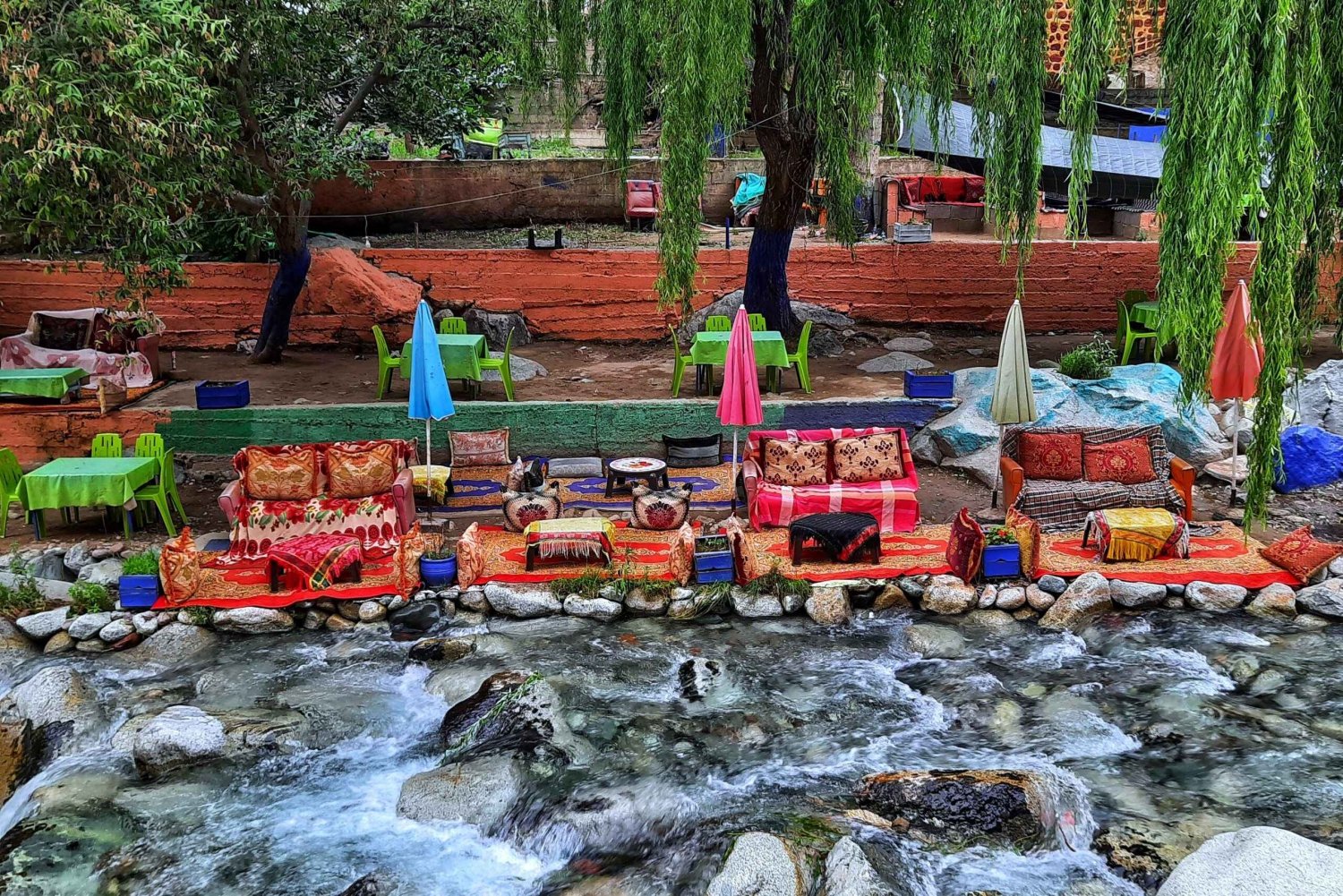
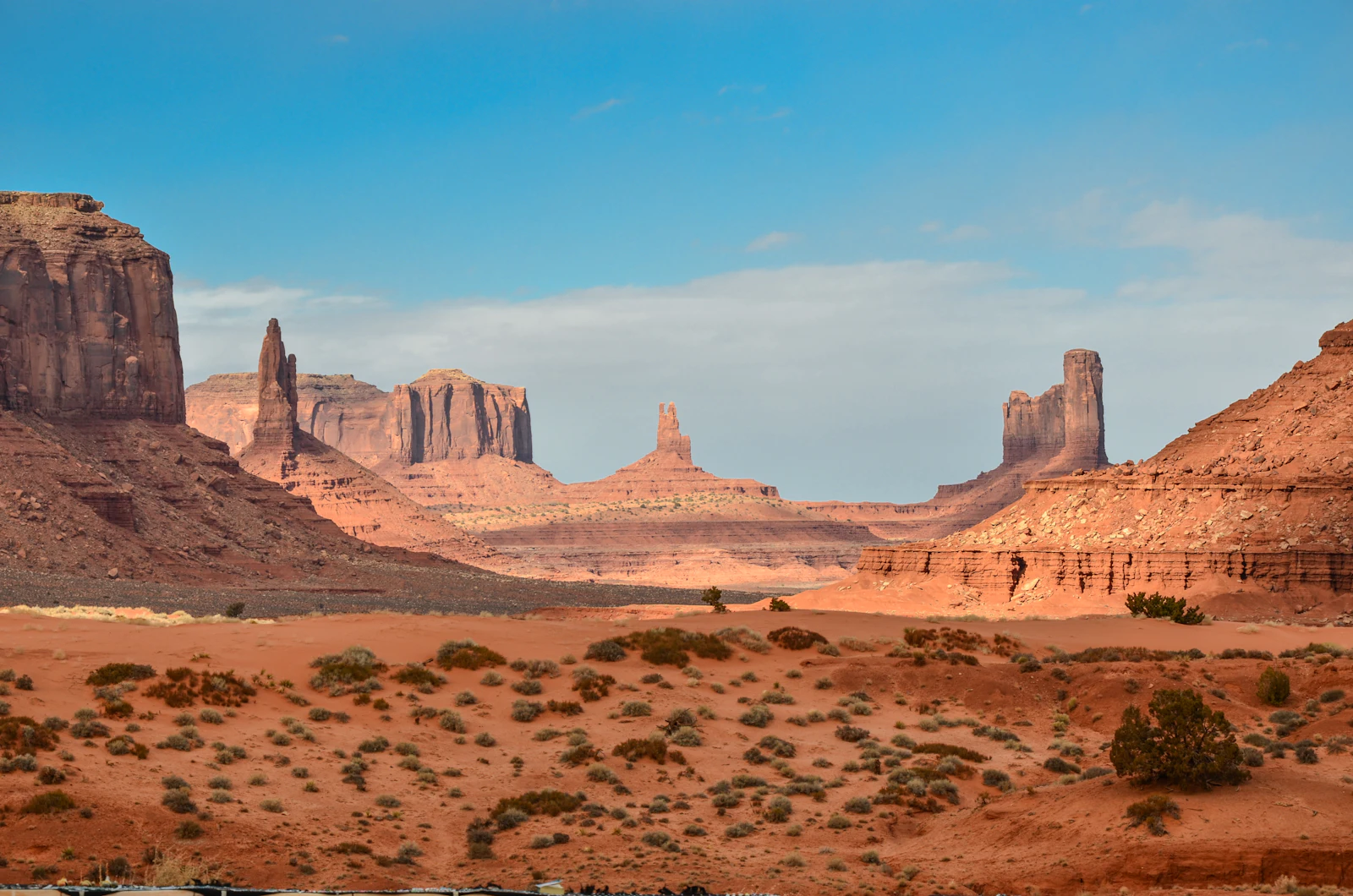
Leave the Atlas behind and the landscape changes completely. The olive trees thin, the earth turns red, and the first kasbahs appear — ancient earthen fortresses rising from the valley floor like something grown from the same red clay.
This is the Route of 1000 Kasbahs: an unofficial name for the network of roads that traces the great river valleys of southern Morocco from Ouarzazate in the west to the Draa Valley and the edge of the Sahara in the east. No road in Morocco rewards the slow traveller more.
The Route
Best driven over 4–6 days. A rental car gives you complete freedom; a 4WD is recommended for piste detours but not essential for the main route.
Stage 1: Marrakech to Ouarzazate (200 km)
The Tizi n'Tichka mountain pass (2,260m) is one of the great drives in North Africa. The road winds through bare Atlas rock, past Berber villages clinging to cliffsides, with the snowy Atlas peaks visible in every direction. Stop at the market town of Aït Oumghar for argan oil and Berber bread.
Ait Benhaddou is 30 km before Ouarzazate. A UNESCO World Heritage Site and Morocco's most famous kasbah, this tiered earthen fortress has appeared in Gladiator, Lawrence of Arabia, Game of Thrones, and dozens of other films. Cross the river ford or take the stepping stones and walk up to the highest tower — the view of the Draa Valley is worth every step.
Stage 2: Ouarzazate to Skoura (45 km)
Ouarzazate calls itself the "Hollywood of Africa" — it has hosted more major film productions than any other location outside the US. The Atlas Film Corporation studios offer tours through standing sets of ancient Egypt, Rome, and Arabia.
Just east, the Skoura palmery is a 10 km belt of date palms along the Draa River. Rent a bicycle in the village and cycle through the palms to the Kasbah Amridil, one of the best-preserved private kasbahs in southern Morocco.
Stage 3: Skoura to Boumalne Dadès via the Roses Valley (90 km)
This section passes through the Valley of the Roses (Vallée des Roses) — so named for the vast fields of Rosa damascena cultivated here for rosewater and rose oil production. Visit in late April for the harvest, when the air is thick with fragrance and you can watch pickers work at dawn before the heat opens the flowers.
The valley narrows dramatically near Kalaat M'Gouna, where the annual Rose Festival takes over the town for three days of music, camel parades, and rose-petal processions.
Stage 4: Boumalne Dadès to Tinghir via the Dadès Gorge (60 km)
Turn north from Boumalne into the Dadès Gorge: one of Morocco's most dramatic landscapes, with 300-metre ochre cliffs rising above a narrow river valley. The road ends near the village of Aït Oudinar, where the rock formations known as the "Monkey Fingers" (eroded pillars of red rock) make for extraordinary photographs at sunset.
Back on the main route east, the Todra Gorge near Tinghir is even more dramatic: sheer walls 300 metres high and only 10 metres apart at the narrowest point, with a clear stream running along the floor. Rock climbers come from across the world for the vertical limestone faces.
Stage 5: Tinghir to Merzouga (160 km)
The final stage descends through the pre-Saharan plain, past date palm oases and eroded stone hamadas, until the first sand dunes appear on the horizon: the Erg Chebbi dunes of Merzouga — the highest and most dramatic in Morocco, reaching 150 metres.
Spend at least two nights in Merzouga to allow for a sunset camel ride into the dunes, a night in a desert camp under the stars, and a pre-dawn climb to a dune crest to watch the sun paint the sand in orange and crimson.
The Kasbahs: What You're Actually Looking At
A kasbah is a fortified residence — originally built by tribal chieftains and wealthy merchants to protect their families and goods. Southern Morocco has hundreds of them because the Draa Valley was the great trade route between sub-Saharan Africa and the Mediterranean — gold, salt, and enslaved people all moved along this road.
Most kasbahs are built from pisé (rammed earth): a technique that creates extraordinarily thick walls (up to 2 metres) that stay cool in summer heat and retain warmth at night. The decorative towers at the corners, with their geometric terracotta patterns, are unique to the region and to this building tradition.
Practical Information
Best time: October–April. Summer is too hot (40°C+) for comfortable driving and the Sahara becomes inaccessible.
Car hire: Available in Marrakech and Agadir. Budget around 300–400 MAD/day for a small manual car. Petrol stations are abundant between Ouarzazate and Tinghir; less so in the final stretch to Merzouga — fill up in Tinghir.
Accommodation: An excellent network of riads and kasbahs-turned-guesthouses lines the route. Book ahead for weekends in April (rose season). Budget 400–800 MAD/night for a double with breakfast.
Connectivity: Spotty after Boumalne Dadès. Download offline maps (Maps.me or Google Maps offline areas) before you leave Ouarzazate.
FAQ
What is the Route of 1000 Kasbahs
A roughly 400 km road from Ouarzazate to Merzouga via the Draa and Dades valleys, lined with hundreds of fortified earth villages (kasbahs). It is one of the most scenic drives in North Africa and the classic overland route between Marrakech and the Sahara.
How many days do I need for the Route of 1000 Kasbahs
Minimum 3 days at a comfortable pace. Day 1 Marrakech to Ouarzazate via Ait Benhaddou. Day 2 Ouarzazate to Dades or Todra gorge. Day 3 to Merzouga and Sahara dunes. Adding one extra day in Skoura or the Dades valley is wise.
Can I drive the Route of 1000 Kasbahs myself
Yes, the road is paved and signposted. A small rental car is fine, you do not need a 4x4 unless you want to leave the main road. Police checkpoints are routine and friendly. Watch out for tight switchbacks on the Tizi n Tichka pass.
What is the most scenic part of the route
The stretch between Boumalne Dades and Tinghir, including the Dades gorges and the Todra canyon. The earth coloured villages against the green palm oases of the Draa valley are unforgettable.
When is the best time to drive this route
Mid March to late May, and mid September to mid November. Summer is very hot, winter can bring snow on the Tizi n Tichka pass and occasional flash floods in the gorges.