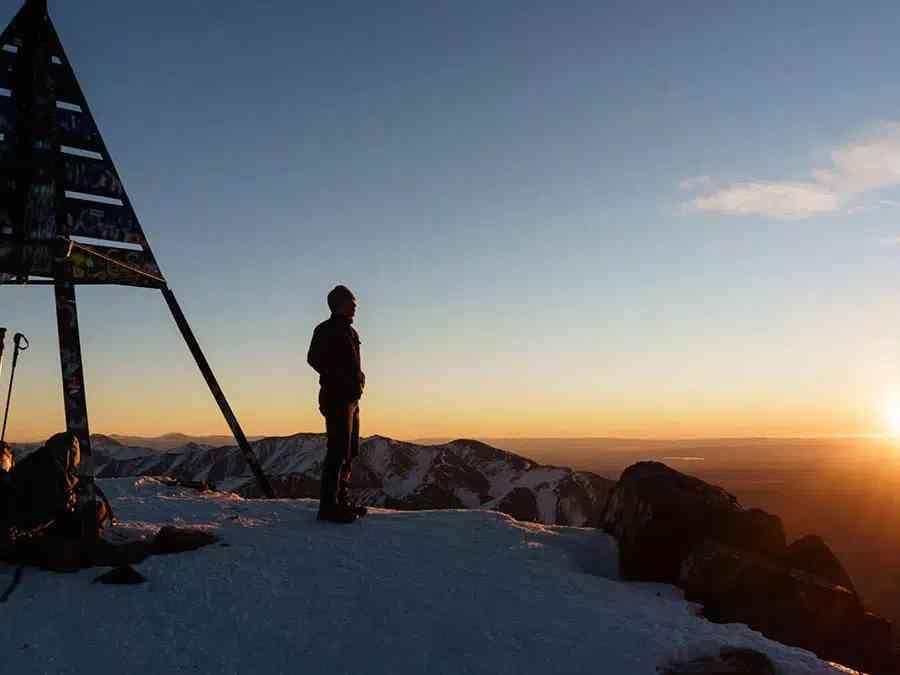
The Roof of North Africa
Mount Toubkal stands at 4,167 metres above sea level the highest point in the Atlas Mountains and the highest peak in all of North Africa. On a clear summit day, you can see the Sahara to the south and, on exceptional days, the Atlas coast to the north.
Toubkal is not technically a difficult climb it requires no ropes, harnesses, or technical climbing skills. But it's a serious mountain. The altitude, exposed terrain, and rapidly changing weather demand respect, good preparation, and ideally a local guide.
The Route: Standard Two-Day Ascent
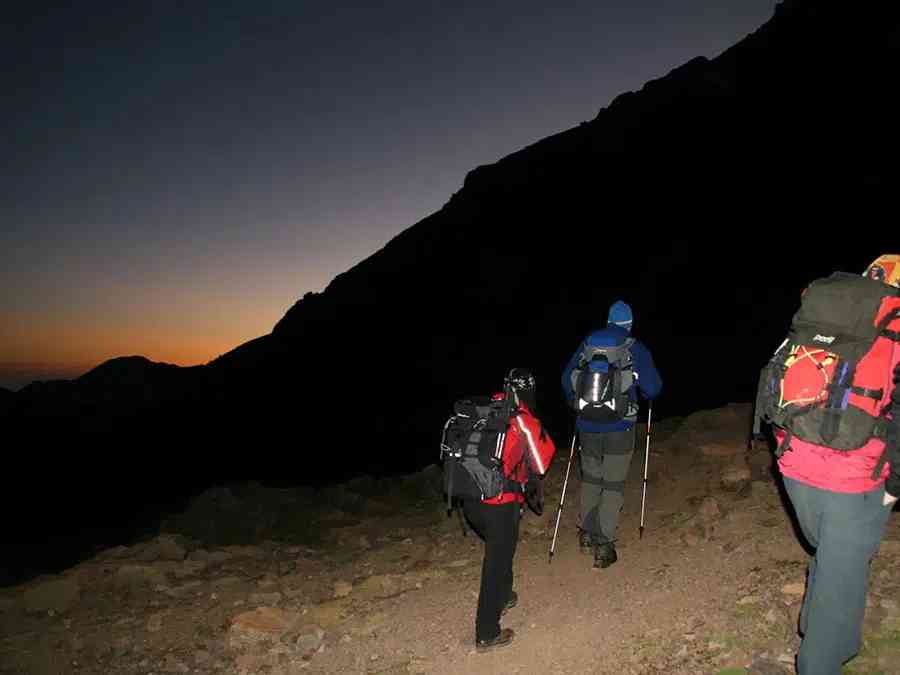
Day 1: Imlil to Toubkal Refuge (3,207m)
Distance: 11 km | Elevation gain: 1,300m | Time: 5–6 hours
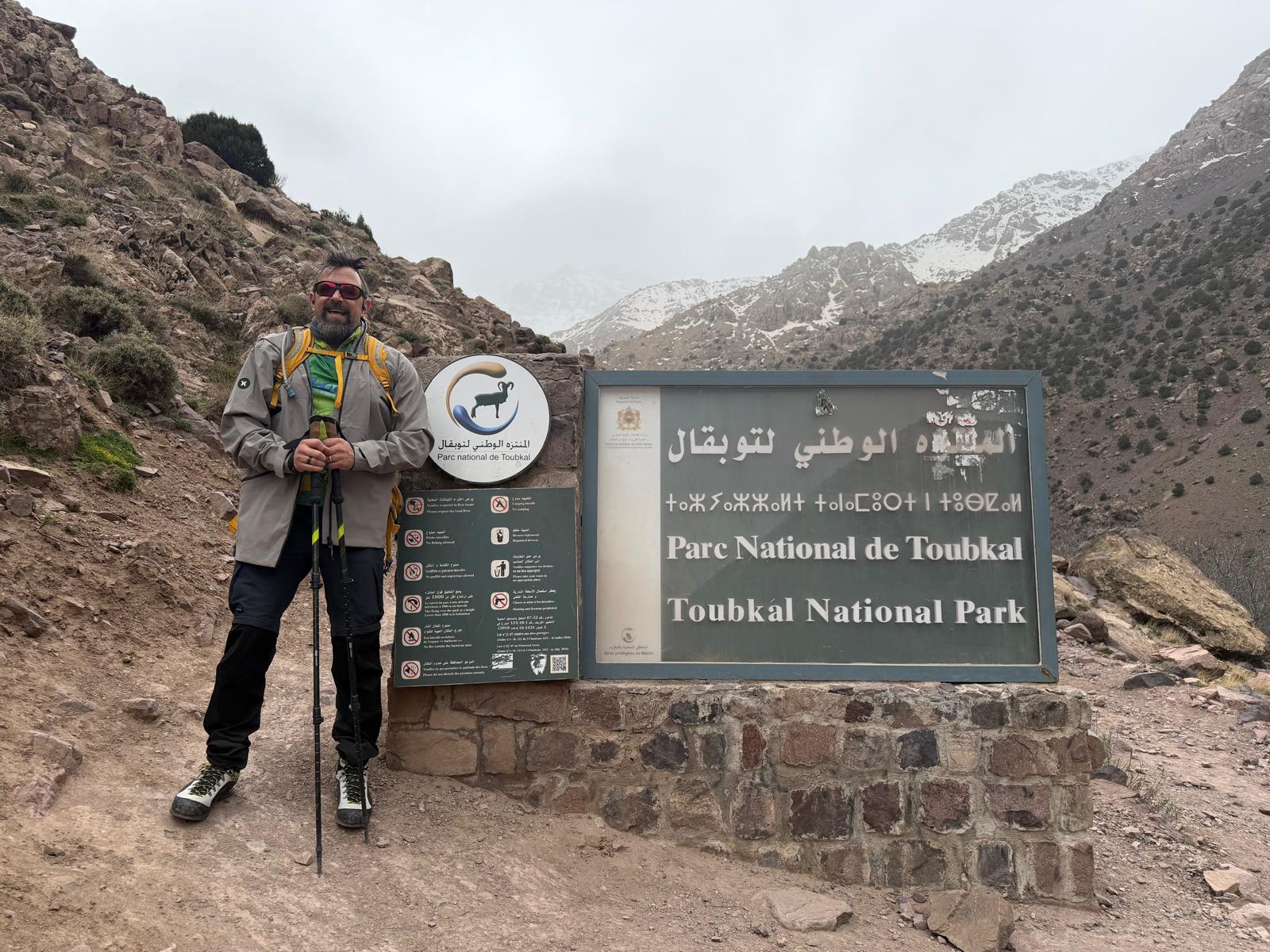
The trailhead begins in Imlil (1,740m), a small Berber village 68 km south of Marrakech. From Imlil, the path winds through walnut and juniper forest, past the village of Aroumd, and up into the increasingly bare high Atlas landscape. The final approach to the refuge follows a rocky valley path beside a glacial stream.
The Toubkal Refuge (also called CAF Refuge) has dormitory beds, basic meals, and hot showers. Book ahead in summer and spring it fills completely. Alternatively, the nearby Neltner Refuge offers similar facilities with better views of the summit cirque.
Key checkpoint: The Sidi Chamarouch shrine at 2,300m a whitewashed sanctuary built into a rock face above a rushing river. Stop, rest, and look up: on clear days you can already see the summit pyramid from here.
Day 2: Refuge to Summit and Return (4,167m)
Distance: 8 km return | Elevation gain: 960m | Time: 6–8 hours total
Start by 5:30–6am. The first hour from the refuge is a long, steady slog up a wide scree field. This section is the mental crux of the climb it looks endless from below but the views back down the valley expand with every step.
At around 3,800m, the path steepens on loose rock and boulders. Take your time here this is where altitude starts to bite. Above 4,000m, the air is noticeably thin.
The summit is marked by a metal pyramid. On a clear day: the Anti-Atlas and pre-Sahara to the south; the High Atlas ranges rippling in every direction; and the distant sparkle of Marrakech to the north.
Return to Imlil the same day, or sleep a second night at the refuge.
When to Climb
| Season | Conditions | Verdict |
|---|---|---|
| Jan–Mar | Snow-covered, crampons essential | Experienced trekkers only |
| Apr–May | Best spring conditions, some snow | Excellent book early |
| Jun–Aug | Hot, dry, fully accessible | Busy but good |
| Sep–Oct | Cool, clear, ideal conditions | Best of year |
| Nov–Dec | Cold, early snow possible | Good for quiet experience |
Avoid: July–August if you dislike heat and crowds. The summit can have 200+ people on peak July weekends.
Hiring a Local Guide
A licensed mountain guide from Imlil is strongly recommended for first-time climbers. Guides provide route knowledge, safety assessment, emergency equipment, and important info an intimate understanding of the mountain's personality. They know when clouds are moving in before you see them, which path to take when snow obscures the trail, and the fastest safe descent if weather closes in.
Our guides at Nmorocco are all certified by the Moroccan Mountain Guide Federation and have summited Toubkal hundreds of times. Youssef Amazigh, our head desert guide, has spent equal time in the Atlas he jokes that Toubkal is his "other home."
Guide fees: from 900 MAD per day for a licensed guide, plus mule fees if you want luggage carried.
What to Pack
Essential:
- Hiking boots (broken in, ankle support)
- Warm layers (temperature drops to -5°C at night even in summer)
- Waterproof shell jacket
- Trekking poles (invaluable on scree)
- Headlamp with spare batteries
- 3 litres water capacity (refillable at the refuge)
- High-SPF sunscreen and lip balm (UV is intense at altitude)
- Snacks: nuts, chocolate, dried fruit, energy bars
In winter (Nov–Mar):
- Crampons (hire available in Imlil)
- Ice axe
- Gaiters
- Balaclava
Getting to Imlil
From Marrakech, shared taxis (grands taxis) run from Bab er-Rob to Asni (45 min, 25 MAD), then another shared taxi from Asni to Imlil (30 min, 15 MAD). Total journey: under 2 hours and under 50 MAD.
Private transfer from Marrakech to Imlil: 800 MAD, 1.5 hours.
Altitude Sickness Know the Signs
Mild headache, fatigue, and loss of appetite are normal above 3,000m. Rest, stay hydrated, and eat.
Descend immediately if you experience: severe headache that won't respond to ibuprofen, confusion, loss of coordination, or fluid build-up in the lungs (crackling breath, persistent cough). These are signs of serious altitude illness.
The golden rule: if in doubt, go down.
Beyond the Summit
Toubkal is the centrepiece of a much larger trekking region. The classic Toubkal Circuit (3–5 days) circumnavigates the peak through remote Berber villages, crossing multiple high passes above 3,000m. Our multi-day treks include homestays in villages where the same family has hosted trekkers for three generations.
FAQ
How hard is climbing Mount Toubkal
Not technical but physically demanding. Toubkal (4,167 m) is a long walk on rough ground with significant altitude. The standard 2 day route involves about 1,800 m of ascent over 2 days. Fit hikers manage it; unprepared ones struggle on the final scree slope.
Do I need a guide for Toubkal
Legally yes, since 2018, after a tragic incident. Every climber must hire a licensed mountain guide. It also makes safety sense: weather, altitude, and the snowfield in spring all benefit from local knowledge.
When is the best time to climb Toubkal
April to October for the standard route. June, September, and early October are the sweet spot. In winter (December to March) Toubkal becomes a serious mountaineering objective requiring crampons, ice axe, and winter skills.
How long does the Toubkal trek take
The standard route is 2 days: Imlil to the Refuge du Toubkal (about 5 to 6 hours), then summit and back down to Imlil on day 2 (8 to 10 hours). Some operators offer 3 day acclimatisation versions.
Where do you sleep on the Toubkal trek
At the Refuge du Toubkal (around 3,200 m), a basic mountain hut with dormitory bunks, blankets, and simple meals. Bring a sleeping bag liner. It is busy in high season so booking ahead through your guide is important.