Die größten "Betrügereien" sind nur Dinge, die Sie noch nicht verstehen
Bevor ich Ihnen von den echten Betrügereien erzähle, möchte ich das Wort ein wenig entschärfen. Vieles, was Touristen in Marrakech als "Betrug" bezeichnen, ist einfach ein kultureller Austausch, der ihnen im Voraus nie erklärt wurde. Der Minztee, der vor jeder Verhandlung angeboten wird, das kleine Trinkgeld, das von einem Fremden erwartet wird, der 200 Meter mit Ihnen gegangen ist, und die Preisflexibilität eines Souks, in dem zwei verschiedene Kunden zwei unterschiedliche Preise zahlen, sind alle normal. Das sind keine Betrügereien. So funktioniert die Stadt.
Das gesagt, gibt es echte Tricks, die Sie kennen sollten. Hier sind die, die wirklich auf Touristen abzielen.
Die echten Betrügereien, die Sie kennen sollten
1. Der Henna-Hinterhalt
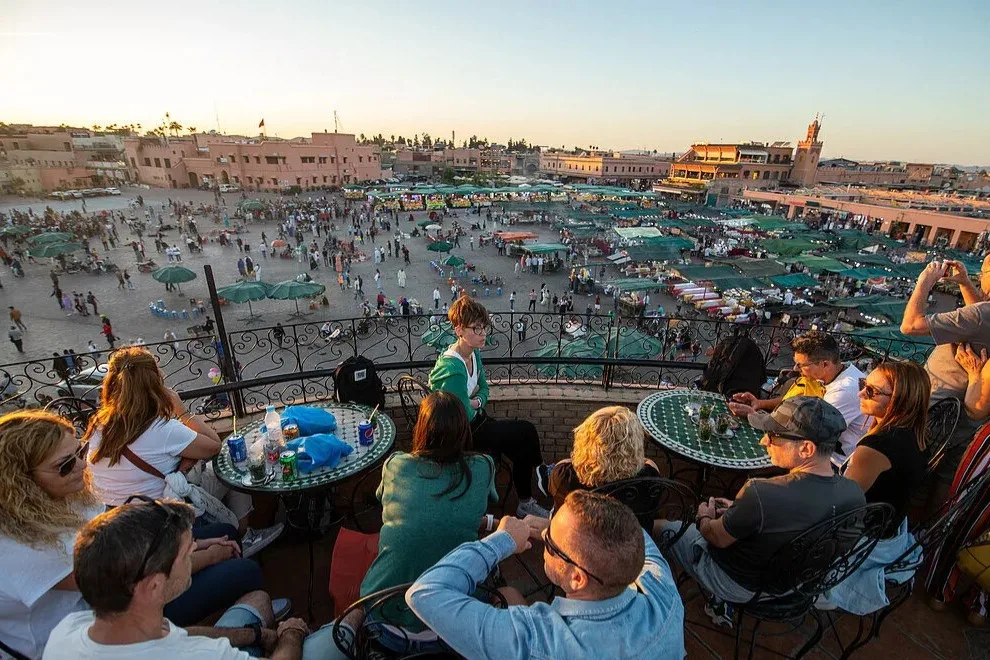
Djamaa El-fna
Wo: Djemaa el-Fna-Platz, besonders am Nachmittag und Abend.
Wie es funktioniert: Eine Frau in traditioneller Kleidung lächelt Sie an, nimmt Ihre Hand, bevor Sie verstehen, was passiert, und zeichnet schnell ein kleines Henna-Muster. Dann verlangt sie 100 bis 300 Dirhams, manchmal mehr, wenn Sie mit Freunden unterwegs sind und sie alle dekoriert hat.
Wie man es vermeidet: Halten Sie Ihre Hände nah am Körper, während Sie über den Platz gehen. Wenn Ihre Hand ergriffen wird, ziehen Sie sie fest zurück, ohne zu schreien, sagen Sie "nein danke" und gehen Sie weiter. Sie werden Ihnen nicht nachlaufen. Und wenn das Henna schon da ist, geben Sie 20 bis 30 Dirhams und gehen Sie. Zahlen Sie nicht mehr.
2. Der "Gerberei schließt"-Trick
Wo: überall in der Nähe der Souks, aber besonders, wenn Sie sich dem Lederbezirk nähern.
Wie es funktioniert: Ein junger Mann fragt, wohin Sie gehen, dann sagt er "die Gerberei schließt in 10 Minuten, ich nehme Sie kostenlos auf dem Hinterweg mit". Er führt Sie durch die Gassen, "zeigt" Ihnen die Gerberei (die nie geschlossen war) und bringt Sie dann zu einem Lederladen, wo Sie unter Druck gesetzt werden, eine Jacke zu kaufen "während Sie hier sind".
Wie man es vermeidet: Die Gerberei ist den ganzen Tag bis spät abends geöffnet. Sie brauchen keinen Führer, um sie zu finden. Wenn Sie sie sehen möchten, fragen Sie Ihr Riad nach einem lizenzierten Führer oder gehen Sie mit einer kleinen Gruppenführung. Der "kostenlose" Weg ist nie kostenlos.
3. Die gefälschte gesperrte Straße
Wo: in der gesamten Medina.
Wie es funktioniert: Sie gehen in eine klare Richtung. Ein freundlicher Einheimischer sagt Ihnen, die Straße sei wegen einer "religiösen Prozession" oder eines "Prinzbesuchs" gesperrt und bietet an, Sie auf einem anderen Weg umzuleiten. Zwanzig Minuten später sind Sie im Teppichladen des Onkels des Mannes.
Wie man es vermeidet: Straßen werden in Marrakech fast nie gesperrt. Lächeln Sie, sagen Sie nein danke und gehen Sie weiter.
4. Die Foto-Gebührenfalle
Wo: Djemaa el-Fna-Platz, die Schlangenbeschwörer, die Wasserverkäufer in roten Kostümen und die Affenhalter.
Wie es funktioniert: Sie richten Ihre Kamera. Sie posieren. Dann verlangen sie 50 bis 200 Dirhams. Der faire Preis ist 10 bis 20.
Wie man es vermeidet: Verhandeln Sie die Foto-Gebühr, bevor Sie die Kamera heben. "10 Dirhams, okay?" Zahlen Sie, bevor Sie das Foto machen. Wenn sie danach mehr verlangen, bleiben Sie standhaft.
Die versteckte Version: Jemand bemerkt, dass Sie im Begriff sind, eine schöne Tür oder Aussicht zu fotografieren, stellt sich dann in Ihr Bild und verlangt, für das "Erscheinen im Foto" bezahlt zu werden. Die Lösung: Lassen Sie sich nicht von Fremden bei Ihrer Fotografie manipulieren. Wenn sie sich einmischen, senken Sie die Kamera und gehen Sie woanders hin.
5. Das kaputte Taxameter
Wo: am Flughafen, am Bahnhof und außerhalb der Medinatore.
Wie es funktioniert: Sie rufen ein Petit-Taxi. Der Fahrer sagt, das Taxameter sei kaputt. Sie einigen sich auf einen festen Fahrpreis und zahlen das Doppelte oder Dreifache.
Wie man es vermeidet: Im Jahr 2026 haben fast alle Petit-Taxis funktionierende Taxameter. Steigen Sie aus und nehmen Sie das nächste. Vom Flughafen zur Medina beträgt der offizielle Tagespreis etwa 100 Dirhams. Vom Flughafen nach Gueliz etwa 80 Dirhams. Nach 20 Uhr 50% Zuschlag. Alles, was viel höher ist, ist der Touristenpreis.
6. Gefälschtes Arganöl
Wo: die Touristensouks und "Argan-Kooperativen" abseits der Hauptstraßen.
Wie es funktioniert: Eine Flasche, die als "100 Prozent Arganöl" vermarktet wird, wird für 50 bis 100 Dirhams verkauft. Es ist im Grunde Sonnenblumenöl mit einem Tropfen Argan für den Geruch. Echtes kulinarisches Arganöl kostet mindestens 250 bis 400 Dirhams pro Liter.
Wie man es vermeidet: Riechen Sie daran. Echtes Argan hat einen unverwechselbaren gerösteten, nussigen Geruch. Das billige Zeug riecht nicht. Kaufen Sie es von einer Frauenkooperative auf dem Weg zu oder von den Atlas (sie sind überall auf der Straße nach Safi und der Straße nach Ourika). Achten Sie darauf, dass die Flasche ein klares Etikett und ein Produktionsdatum hat.
7. Der "Ich spreche Ihre Sprache"-Freund
Wo: auf dem Djemaa el-Fna-Platz oder in der Nähe der wichtigsten Touristenattraktionen.
Wie es funktioniert: Ein junger Mann spricht Sie in Ihrer eigenen Sprache an ("Hallo! Französisch? Spanisch? Ich habe drei Jahre in Madrid gelebt!"). Er ist sehr freundlich. Er fragt nach Ihrer Heimatstadt, Ihrem Hotel und Ihren Plänen. Er geht "einfach so" mit Ihnen. Schließlich führt er Sie zu einem Geschäft oder bittet um ein "kleines Geschenk" für das "Führen".
Wie man es vermeidet: Freundliche Konversation ist in Ordnung. Ihnen zu folgen, ist es nicht. In dem Moment, in dem Sie merken, dass er Sie lenkt, sagen Sie ein herzliches Auf Wiedersehen und bleiben Sie auf Ihrem Weg. Er wird Ihnen nicht folgen, wenn Sie bestimmt sind.
8. Die überhöhte Restaurantrechnung
Wo: Touristenrestaurants in der Nähe der Hauptattraktionen, einschließlich einiger Restaurants auf dem Djemaa el-Fna-Platz.
Wie es funktioniert: Die Tagine kommt zum beworbenen Preis, aber die Rechnung enthält "Service" (10 Dirhams), "Brot" (10 Dirhams), "Tee" (den Sie nicht bestellt haben) und "Steuer". Die Gesamtsumme ist 40 Prozent höher als das Menü.
Wie man es vermeidet: Fragen Sie, ob es zusätzliche Gebühren gibt, bevor Sie bestellen. Lehnen Sie den Brotkorb ab, wenn Sie ihn nicht essen werden (er wird Ihnen berechnet). Bitten Sie um eine schriftliche Rechnung. Wenn Artikel erscheinen, die Sie nicht bestellt haben, bitten Sie höflich darum, sie zu entfernen.
Dinge, die keine Betrügereien sind (auch wenn sie sich so anfühlen)
Minztee vor der Verhandlung
Wenn Sie sich in einem Teppich- oder Lederladen hinsetzen, wird vor Beginn der Verhandlung Minztee serviert. Das ist Gastfreundschaft, kein Betrug. Sie sind nicht verpflichtet zu kaufen, weil Sie den Tee angenommen haben. Sie sind verpflichtet, höflich zu sein, zu trinken und in gutem Glauben zu sprechen. Dann können Sie ohne Kauf mit einem Lächeln gehen.
Das kleine Trinkgeld für Hilfe
Ein junger Mann hilft Ihnen, Ihr Riad zu finden. Sie sind dankbar. Er bittet um ein Trinkgeld. Das ist kein Betrug, es ist der kulturelle Brauch in Marokko für kleine Dienstleistungen. 10 bis 20 Dirhams sind fair. Wenn er 100 Dirhams verlangt, ist das zu viel, und Sie können 20 mit einem freundlichen "das ist, was ich habe" geben und weitergehen.
Zwei Preise für zwei verschiedene Kunden
Ihr marokkanischer Freund kauft Safran für 50 Dirhams pro Gramm. Ihnen wird 90 Dirhams angeboten. Das ist nicht immer ein Betrug, es ist manchmal der Startpreis für Touristen. Durch Verhandeln erreichen Sie normalerweise 60 bis 65 Dirhams, was ein fairer Preis ist. Der "Touristenpreis" existiert, weil Touristen weniger verhandeln. Wenn Sie das wissen, können Sie richtig teilnehmen.
Das Riad-Trinkgeld
Ein Riad hat einen Türsteher, eine Putzfrau und eine Küche. Sie erwarten 30 bis 50 Dirhams pro Tag, die am Ende Ihres Aufenthalts gegeben werden. Das ist kein Trinkgeld im westlichen Sinne, es ist Teil des Einkommens des Personals. Planen Sie dafür.
Wie man einen Betrug erkennt, bevor er passiert
Einige Muster signalisieren fast immer einen Betrug.
Ruhige Orte und Geschäfte mit ausgezeichneten Preisen betrügen Sie selten. Vertrauen Sie Ihrem Instinkt, halten Sie Ihr Tempo und denken Sie daran, dass ein festes, freundliches "nein danke" fast alles in Marrakech löst.